Exit-Intent Popup Fires 400ms Before You Find the Close Button
Why exit-intent popups that fire on the faintest mouse twitch may cost more in trust than they ever earn back in conversions
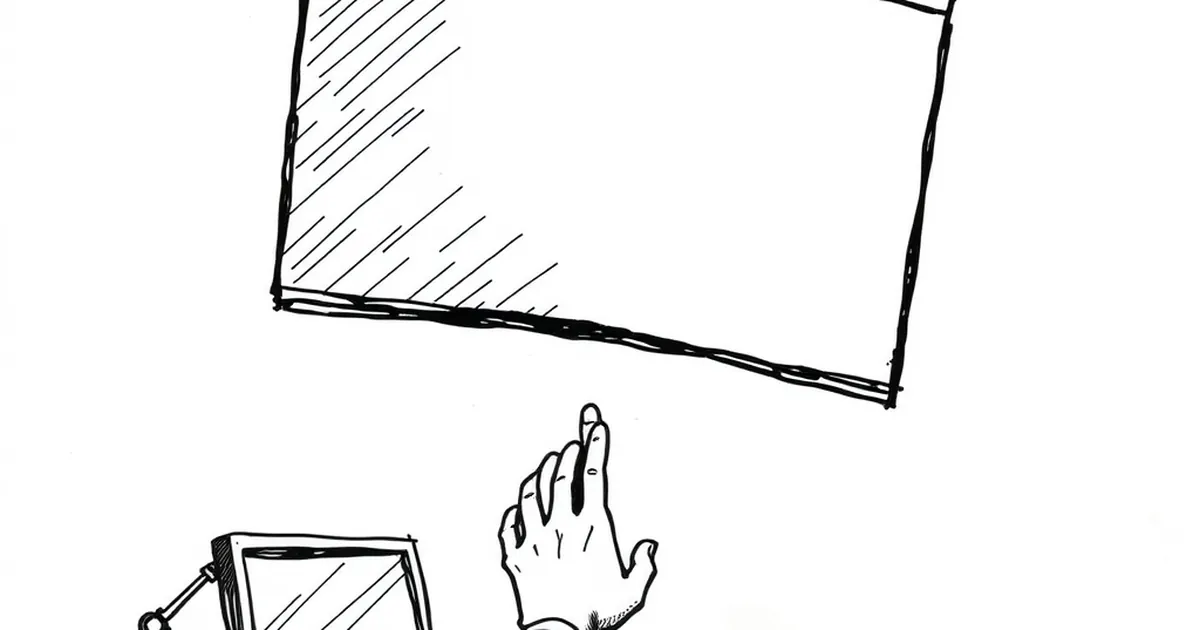
You're three paragraphs into a case study on a design agency's site when your cursor drifts toward the tab bar. Instantly, a modal blooms across the screen: Wait! Before you go… You weren't going. You were checking whether the tab said "Services" or "Service." But now you have to hunt for an X, and the X is a 12-pixel ghost in the corner, and somewhere in your brain a small door quietly closes.
So here's the question worth sitting with: why do so many teams ship exit-intent popups that fire on the faintest twitch of a mouse — and does the short-term conversion bump ever pay for what it costs?
The Mouse Doesn't Know Why It's Moving
Exit-intent detection is an inference, not a fact. Most implementations watch for upward cursor velocity toward the browser chrome and treat it as a departure signal. But the gesture that means "I'm leaving" and the gesture that means "I'm thinking" are physically identical. Fitts's Law tells us that moving to a small, distant target — a tab, a bookmark, a second monitor — requires a fast, ballistic motion. That's the same motion that triggers the popup. You're not detecting intent. You're detecting physics.
Designers know this. Which is why the smarter implementations add a delay — typically 300 to 500 milliseconds — before firing. The idea is to filter out incidental movement. The problem is that the delay is tuned for the tool, not the person. It assumes everyone reads at the same pace, moves the mouse the same way, and has the same tolerance for interruption.
Variable Rewards Cut Both Ways
Behavioral psychology has a well-documented answer for why popups persist despite the annoyance: sometimes they work. Not every time — sometimes. That's a variable-ratio reinforcement schedule, the same pattern B.F. Skinner found produced the most persistent lever-pressing in pigeons. If a popup converts one visitor in twenty into an email signup, the team sees a win and ships more popups. The nineteen who bounced don't file a report.
But here's the part that gets skipped. Variable-ratio schedules are powerful because the reward is unpredictable to the subject. In this case, the subject is your visitor, and the reward is... an interruption. There's no prize at the end. The popup doesn't offer anything the visitor was already looking for. It offers a discount code for a product they hadn't decided to buy.
Kahneman and Tversky's work on loss aversion is relevant here too, but not in the way most marketing blogs use it. The loss isn't "losing the discount." The loss is the momentum the visitor had. They were reading. They were considering. The popup doesn't interrupt a departure — it interrupts a decision.
A Concrete Case: The 400ms Problem
In 2022, a B2B software company ran an internal test on their pricing page. They split traffic: half saw the standard exit-intent popup with a 400ms delay, half saw no popup at all. The popup group had a 6% higher email capture rate. But the no-popup group had a 14% higher rate of returning within seven days and a 9% higher rate of starting a free trial.
The popup won the metric it was built to win. It lost the metric that actually mattered. And because the dashboard only tracked email captures, the team kept the popup for another eighteen months.
The Close Button Is a Design Decision
Where you put the X, how big it is, whether it's a real button or a text link — these aren't afterthoughts. They're the difference between a popup that asks and a popup that traps. The 400ms delay isn't the problem. The problem is treating the close button as a formality.
If you're shipping exit-intent today, try this: make the close button the second most prominent element on the modal, after the offer itself. Give it a real label — "No thanks, I'll keep reading" — instead of an icon. And measure return visits, not just captures. The popup that respects the exit is the one people come back from.
— creative mess