Why Your Exit-Intent Popup Is Rewarding the Wrong Behavior
Generic exit popups may reward bargain-hunters instead of committed buyers, undermining your conversion strategy
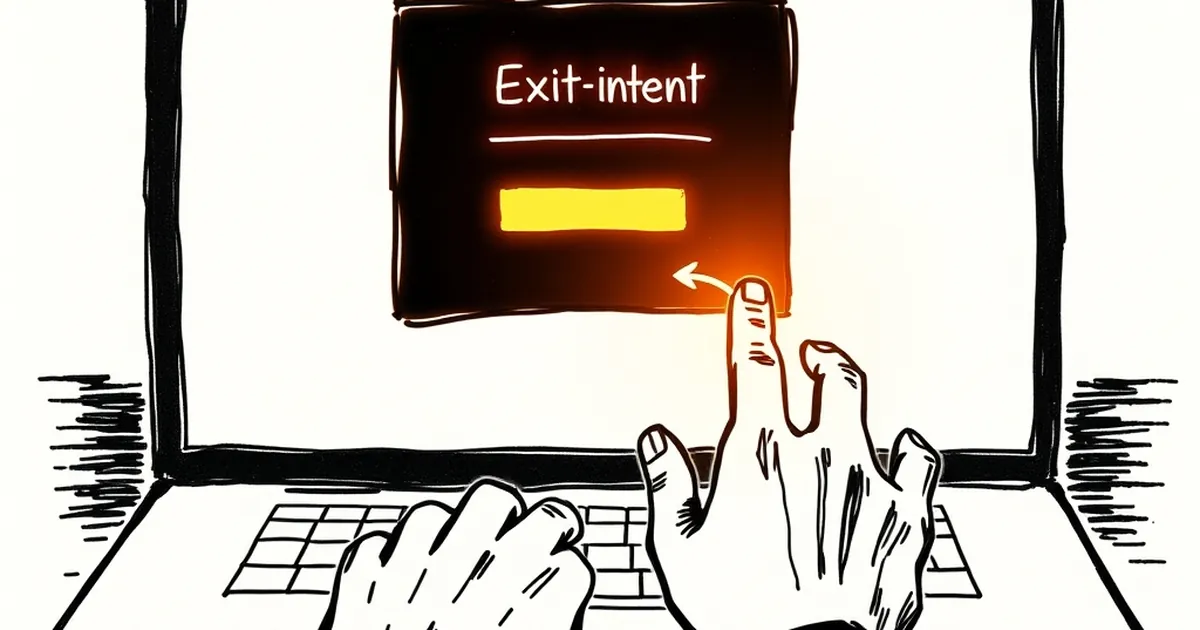
You track a visitor for 45 minutes. They read three case studies, clicked your pricing page, and even opened your "About Us" tab. Then, just as they move their mouse toward the close button, a popup appears: "Wait! Get 10% off!"
That discount might convert a few shoppers. But ask yourself this: are you rewarding the people who were about to leave, or are you training the people who were about to buy to wait for a coupon? Because if you run exit-intent popups with generic discounts, you are probably rewarding the wrong behavior.
The Psychology of the Last-Minute Discount
Exit-intent technology works by detecting when a cursor moves toward the browser's close button or address bar. It's a clever trick, but it has a blind spot. It cannot tell the difference between a visitor who is leaving out of disinterest and one who is leaving to grab their credit card.
When you blast a "10% off" offer at that exact moment, you are effectively telling every high-intent visitor: "Don't buy now. Wait for the popup." Over time, this conditions your returning customers to abandon their carts just to see if a better deal appears. You are no longer capturing lost sales—you are creating them.
When Discounts Work (And When They Backfire)
The Good: Low-Intent, Price-Sensitive Shoppers
If someone has been browsing your blog for three minutes and leaves without engaging, a small discount might genuinely tip the scale. These visitors were not committed, so the offer feels like a bonus rather than a bribe.
The Bad: The Nearly-Converted Buyer
Here is where it gets painful. Imagine a SaaS founder who has spent an hour comparing your plan tiers. They click "Start Trial," but your checkout has a two-step form. They close the tab to get their work email—and your exit popup offers them 20% off. They take it. You just lost full-price revenue from a customer who would have paid full price.
A Better Strategy: What to Offer Instead
Stop rewarding the act of leaving. Start rewarding the act of hesitating.
- Offer help, not discounts. If someone is on your pricing page and tries to leave, show a popup that says: "Not sure which plan fits? Chat with a human." This addresses hesitation without devaluing your product.
- Save their progress. For content-heavy sites, offer to email them a PDF of the page they were reading. You get an email address, they get value, and nobody feels tricked.
- Use scarcity, not price cuts. A popup that says "Your demo slot is still available—book it now" works better for B2B than a generic coupon code.
One Concrete Example
A client of mine ran an e-commerce store selling artisan coffee subscriptions. Their exit popup offered 15% off any first order. Conversion rate? Decent. But repeat purchases were low. When we switched the popup to "Get a free brewing guide (worth $12) with your first order," conversion stayed the same, but average order value jumped. Why? Because the guide felt like a bonus, not a markdown. Customers stopped waiting for the discount code and started buying at full price.
The Forward-Looking Takeaway
Here is what I want you to try this week: audit your exit-intent popup. Ask yourself—is this offer helping the hesitant buyer, or is it rewarding the window-shopper? If the answer is the latter, experiment with a value-add instead of a price cut. You might find that the people who were truly about to leave never needed a discount at all. They just needed a reason to stay.
— creative mess