Blackjack Double Down Doubles the Card and 51% Hit Again
The blackjack double down means one card and double the bet, and that single card wins outright about 51% of the time
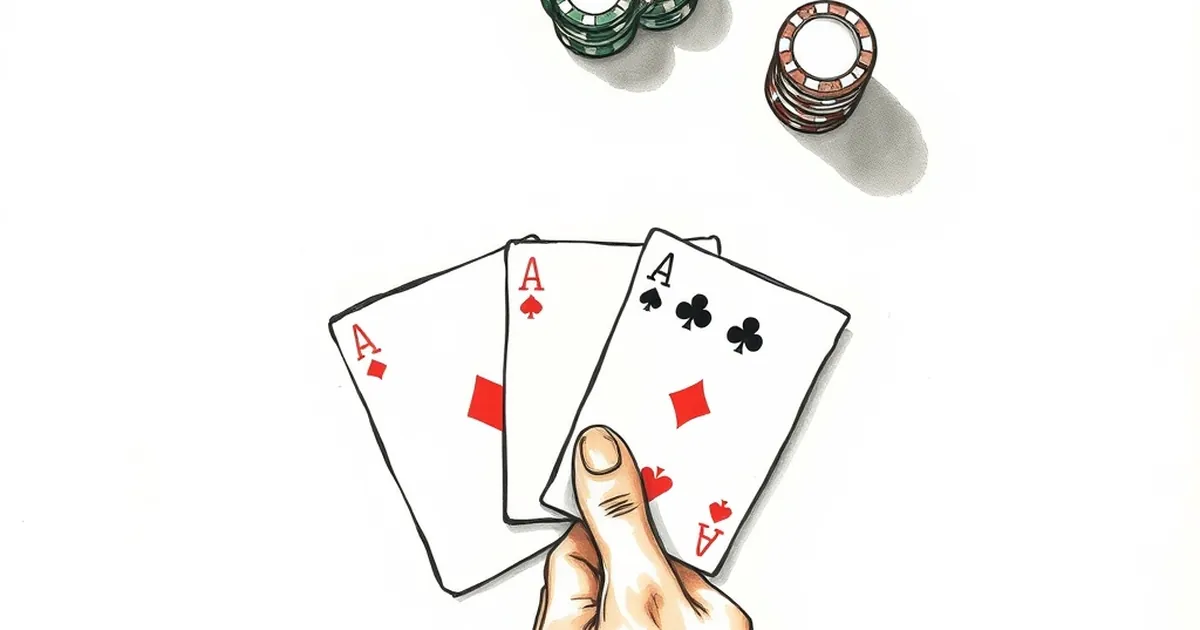
The double down in blackjack is one card, face down, and no more. That's the whole mechanic: you double your bet, you take exactly one additional card, and then you stand — whether you like the card or not. And on the hands where basic strategy tells you to do it, that single card tends to work out: roughly 51% of the time you'll win the doubled hand outright, with the rest split between pushes and losses.
That 51% figure is the number worth poking at, because it explains why the move survives despite feeling like a coin flip. You're not doubling because the card is likely to be great. You're doubling because the math on the specific matchup — your total against the dealer's upcard — says the extra unit of money has positive expectation, even when the win probability is barely over half.
Why 51% is enough
A double down only gets recommended when your expected value on the doubled bet beats the EV of hitting or standing normally. That threshold shows up in a fairly narrow set of hands: 11 against most dealer cards, 10 against anything below a 10, soft 13 through soft 18 in the right spots, and the occasional 9 versus a weak upcard.
Take the cleanest case — hard 11 against a dealer 6. You're a strong favorite to land a 17 or better, and the dealer is staring at the worst upcard in the deck. The win rate on that double sits comfortably above 51%. Now flip it: hard 11 against a dealer ace. Still a double in most charts, but the edge thins out and the win rate drops toward that 51% floor. Same rule, very different confidence.
The 51% is an average across the recommended spots, not a guarantee on any single hand. Some doubles are 60%+ propositions. Others are barely profitable.
The one-card rule is the whole risk
Here's what separates blackjack doubles from, say, a poker all-in: you don't get to react. You commit the extra chip and then watch a single card decide it. Draw a 4 on your 11 and you're sitting on 15, standing, hoping. Draw a face card and you're at 21 with a smile.
That asymmetry is why the move feels worse than the numbers suggest. You've doubled your exposure at the exact moment you've surrendered control. The 51% win rate doesn't feel like 51% when the card comes out wrong — it feels like a coin that landed badly.
Where players go wrong
- Doubling soft hands too aggressively, especially soft 12 and 13, where the chart says hit.
- Doubling 10 against a dealer 10 or ace, which is a stand in most rule sets.
- Doubling on a hunch after a hot streak, ignoring the upcard entirely.
- Forgetting that some tables restrict doubles to totals of 9, 10, or 11 only.
That last one matters more than people think. A table that limits doubles to 9–11 strips out a chunk of your edge, and it's usually buried in the rules card rather than announced. If you're picking between two tables, check the double restrictions before you check the minimum bet.
The variance question nobody asks
Doubling correctly raises your expected value, but it also raises your swing. You're putting two units on the line instead of one, on hands where the outcome is close to a coin flip. Over a few hundred hands, that's more volatility for a modest long-run gain.
Which raises the question worth sitting with: if you're playing a short session — say 100 hands — is the extra EV from perfect double-down strategy actually worth the added swing, or are you just paying for variance you didn't need? The math says double every time the chart says double. Your bankroll might have a different opinion.
— creative mess