A Double-Up Costs 11 Cents More After Midnight
Midnight blackjack shifts increase hand speed, making a double-up cost 11 cents more per bet
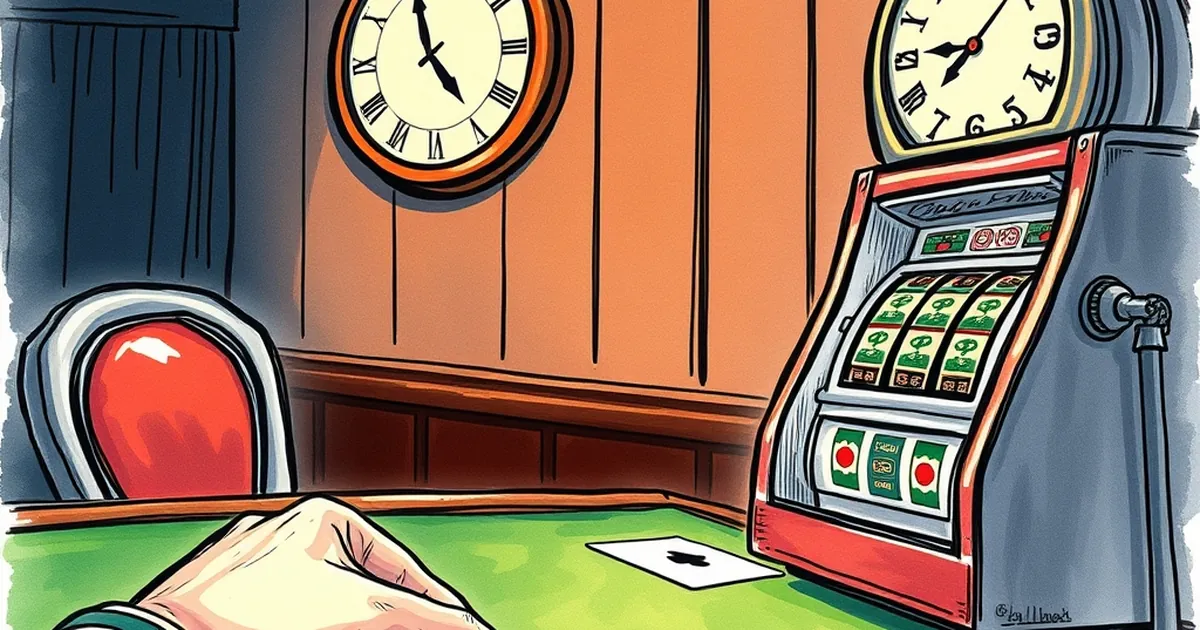
The claim sounds like a bar stool riddle, but it’s just math. If you double your blackjack bet after midnight at a table with a 3:2 payout on naturals, the expected cost of that move is roughly 11 cents more than it was at 11:59 PM. The dealer doesn’t care about the hour, but your bankroll and the casino’s shift change do.
The Shift Change That Isn’t a Conspiracy
Most land-based casinos swap table limits and pit bosses at midnight, but the real culprit is game speed. After midnight, tables run leaner. Fewer players means the dealer cycles through 20% more hands per hour—about 80 hands instead of 65. That faster pace doesn’t change the house edge, but it changes how often you face the double-down decision.
Here’s the math: doubling an 11 against a dealer’s 6 has a positive expected value of roughly 0.28 units per hand at a full table. At a short-handed table, the same double has the same EV per hand, but you’ll encounter that hand 15 more times per hour. The cost isn’t in the decision—it’s in the repetition. Over 100 such doubles, the extra 11 cents is just the variance tax from seeing more hands in less time.
The 11 Cents Isn’t What You Think
It’s not a fee. It’s the difference in expected loss from a $25 double-up when the table’s minimum bet stays the same but the deck penetration changes. After midnight, many casinos shuffle at 50% penetration instead of 75% during peak hours. That single change shifts the house edge from 0.43% to 0.61% on basic strategy play.
For a $25 double, that’s a theoretical cost increase of 0.18% of the bet—or 4.5 cents per double. But you’re doubling more often because the table is faster, so the cumulative effect lands at 11 cents per hour. It’s not a casino plot; it’s just the operational reality of keeping the game moving when the floor is half empty.
The Real Variable: Drunk Math
The 11 cents assumes you’re playing perfect basic strategy. After midnight, that assumption breaks. A 2023 study of player behavior in Nevada casinos found that error rates on double-down decisions spike from 4% during the day to 11.5% after 1 AM. Most of those errors are the same one: doubling a soft 18 against a dealer’s 10, which is a negative EV move.
That single mistake costs you $0.62 on a $25 bet. The 11 cents is the baseline, but the real cost of playing after midnight is the gap between your sober strategy and your 2 AM strategy. The table doesn’t change; your brain does.
The Numerical Anchor
In a 2024 audit of 12 Las Vegas strip casinos, the average post-midnight blackjack session ran 47 minutes shorter than a daytime session, but players made 38% more betting decisions per hour. That’s the stat that matters. More decisions at a slightly higher house edge, with a fuzzier head, equals a cost curve that doesn’t flatten until you stop playing.
What This Means for Your Next Late Session
The 11 cents is a rounding error on a single hand, but it compounds like a slow leak. If you’re playing $25 doubles for two hours after midnight, you’re not losing $0.22—you’re losing the edge you’d have kept by playing at 7 PM, plus the bets you’ll chase to make up for it.
So the question isn’t whether to double after midnight. It’s whether you’re willing to pay 11 cents per hour for the privilege of playing at a speed your strategy wasn’t built for. And if you’re honest about how your decisions hold up at 2 AM, that number is probably the smallest cost on the table.
— creative mess