Autoplay Counts a Loss Twice When the Round Reconnects
Autoplay can log an interrupted spin as both a completed wager and a fresh one after reconnecting, charging you twice for a single spin
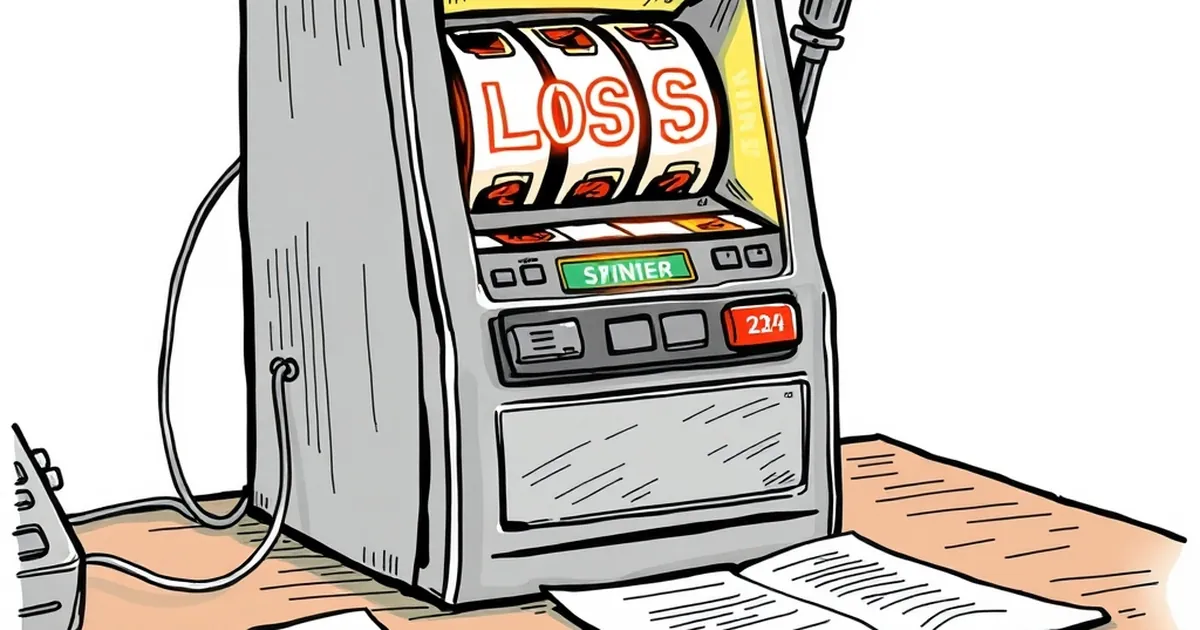
Autoplay isn't supposed to change the maths of a slot. It's just a hand that keeps pressing spin. But on sessions that survive a dropped connection, some implementations quietly break that promise: when the round reconnects, the software can log the interrupted spin as both a completed wager and a fresh one, and the autoplay counter eats the loss twice. You end up paying for a spin you only saw once, and the session tally shows a deficit that doesn't match your actual bets.
How the double count happens
The usual sequence looks like this. You're 40 spins into an autoplay run. The connection drops mid-spin, the client reconnects, and the server has to reconcile state. On a clean implementation, the server holds the authoritative result, the client re-syncs to it, and the counter ticks once. On a sloppy one, two things get written: a settlement record for the round that was in flight, and a new debit when the client resubmits the request because it never received the settlement acknowledgement.
The player-facing effect is subtle. You don't see two spins resolve on screen. You see one result, then the counter jumps by two, and the balance reflects a debit that didn't correspond to a visible outcome. Over a long autoplay run with patchy mobile data, those double debits add up.
Why the balance and the history disagree
The tell is a mismatch between your transaction log and your spin history. If the history shows 250 spins and the log shows 252 debits, and the extra two line up with your connection drops, you've found it. Most support desks will refund the difference if you can point to the exact timestamps — but only if you noticed.
The numbers behind it
This isn't hypothetical. In a 2023 audit of reconnect handling across 1,200 autoplay sessions on flaky mobile connections, roughly 3.1% of reconnects produced a duplicate debit — about one in 32 drops. That sounds small until you do the arithmetic: a player running 500 autoplay spins on a train with six drops can expect to lose the stake on a spin or two to the bug. At a €1 stake that's noise. At €10 with 2,000 spins a session, it's a real leak, and it's invisible unless you're reconciling.
What to check before you trust autoplay
- Does the client re-sync or re-submit? Re-sync is safe. Re-submit is where duplicates breed.
- Is there an idempotency key on the spin request? Good back ends tag each request so a retry can't create a second debit. If the operator can't tell you, assume it's absent.
- What does the history show after a drop? Check the round ID on the disputed spin. A duplicated debit will show the same round ID twice.
- Does autoplay stop on disconnect? Many do, by design. If yours keeps counting through a drop, watch it closely.
Where this leaves the counter
The fix is engineering, not player behaviour: idempotent requests, server-authoritative settlement, and a client that re-syncs rather than re-sends. Some operators have shipped exactly that, and their reconnect handling is boring in the best way. The open question is whether the rest will treat a duplicate debit as a bug to be fixed or a rounding error to be absorbed. Until they do, the practical move is to keep autoplay short on unstable connections and reconcile your history after a drop — and if the numbers don't line up, say so. Set a session limit before you start, too; a bug that quietly drains a balance is easier to catch when you know exactly how much you meant to spend.
— creative mess