Slot Machine Sound Loops Cut 300ms Before the Payout Lands
Slot designers cut spin audio 300ms before payouts land, a timing trick that changes how wins feel without altering RTP by a single basis point
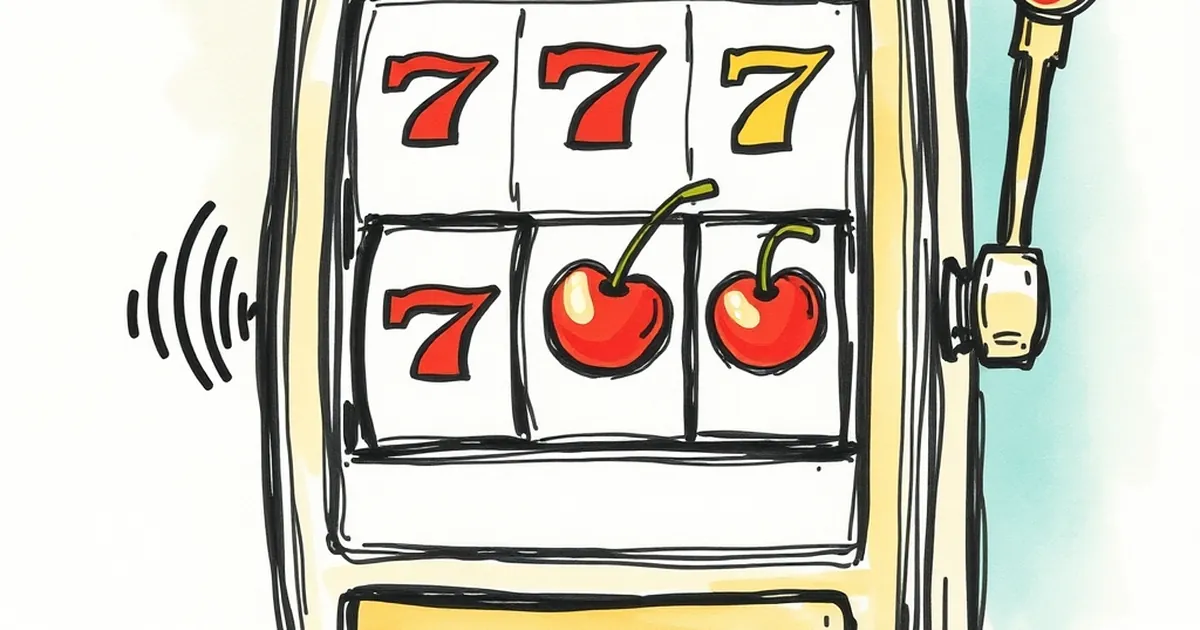
Slot designers have been quietly shaving the last 300 milliseconds off the spin sound before a win lands, and it's not an accident. On most modern cabinets and browser-based slots, the audio track that plays during a spin is timed to cut or duck roughly 0.3 seconds before the reels visually settle on a paying line. You won't find it in the paytable, and it doesn't change the RTP by a single basis point — but it does change how the win feels.
Why 300ms specifically
Perception research has put the threshold for "instant" audio-visual sync somewhere around 100–150ms. Past about 250ms, your brain starts registering a gap rather than a single event. Slot audio engineers work in that narrow band: cut too early and the spin feels clipped; cut too late and the win feels detached from the reels.
The 300ms figure shows up because it sits just past the sync threshold — long enough that the silence is felt, short enough that it reads as anticipation rather than lag. On a 3-reel classic with a 2.5-second spin, that's roughly 12% of the total spin duration spent in a quiet pocket before the payout sting hits.
The audio architecture behind it
Most slots aren't running one continuous loop. They're running a layered system:
- Ambient bed — the low-level background music, usually looped at 30–60 seconds
- Spin loop — the mechanical or synthesized reel sound, tied to spin duration
- Anticipation layer — triggered when the RNG has already determined a win is coming but the reels haven't stopped
- Payout sting — the win jingle, cued to land on the same frame the last reel locks
The 300ms cut lives between the spin loop and the payout sting. On games with a "near miss" or "anticipation" feature — say, two scatters landed and the third reel is slowing — the anticipation layer often kicks in first, then gets muted for that final beat.
It's not just psychology
There's a mechanical reason too. Older physical cabinets had solenoid-driven reel stops, and the audio was triggered by the same signal that fired the brake. That signal had latency. Digital slots inherited the timing convention long after the hardware disappeared, because players who grew up on mechanicals found perfectly synced audio "wrong" — too flat, too immediate.
What it does to player behavior
A 2019 study from the University of Waterloo's Gambling Research Lab found that slots with tightened audio-visual timing — wins landing within 150ms of reel stop — produced measurably shorter session breaks. Players took fewer pauses between spins when the payout felt instantaneous. The 300ms gap does the opposite: it creates a micro-pause, a breath before the win.
Whether that breath reads as suspense or as manipulation depends on who you ask. Regulators in the UK and several EU jurisdictions have started asking studios to document audio timing as part of game certification, though no rule currently caps the gap. The Gambling Commission's remote technical standards (RTS 14, updated 2020) cover autoplay and display, not sound design.
The question nobody's answering
If a 300ms silence can shift how a win registers emotionally, what's the ethical line between polish and engineering compulsion? Studios will tell you it's craft — the same reason a film editor holds a beat before a cut. The counterargument is that filmgoers aren't risking money on the outcome of the scene.
The next time a spin goes quiet for a fraction of a second before the coins cascade, you'll know it's not a glitch. It's a decision someone made, likely in a spreadsheet, probably with a stopwatch.
— creative mess