Why Your Rebuy Screen Punishes Players Who Take a Break
Rebuy screens reset your session timer, punishing break-takers with a fresh commitment clock
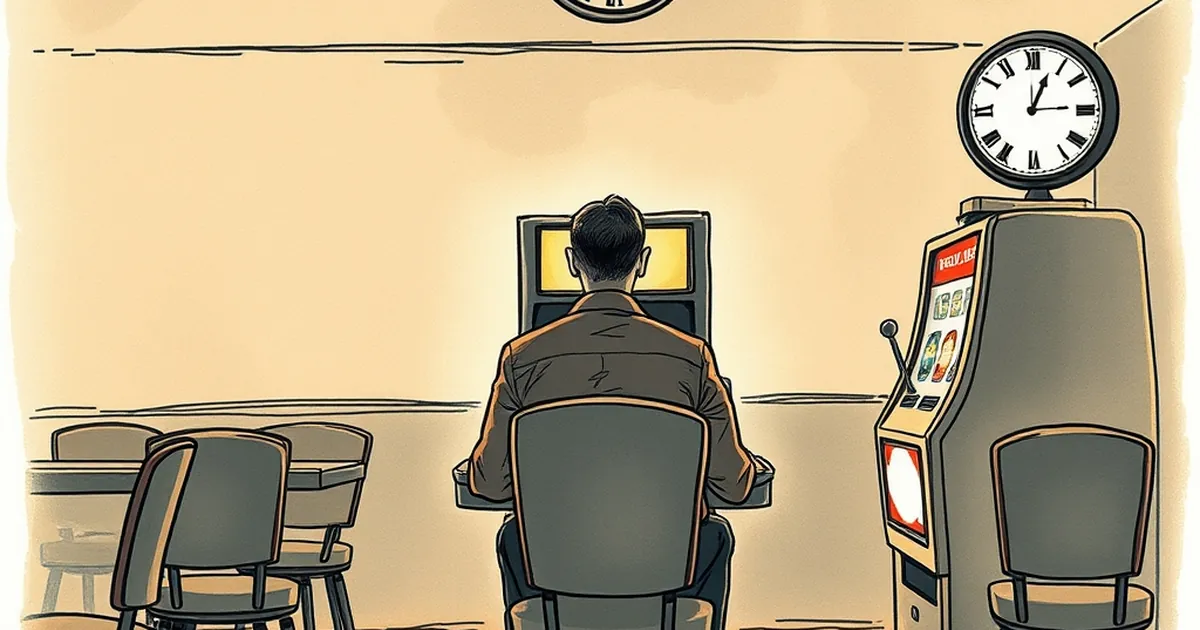
The poker room’s "rebuy" button is a psychological trap, and it’s worst for the player who stepped away for ten minutes to eat a sandwich. Most clients reset your session timer the moment you top up, which means you’re not just buying chips—you’re buying a fresh, full-length commitment to the table. The player who never leaves gets a loyalty discount on their attention span; the one who takes a break gets re-punished with a brand-new clock.
The Session Timer Is a Lie
Every major poker client tracks your "time at table" for their internal metrics, but they display it to you as a single, cumulative number. When you rebuy, that number doesn’t reset—but your session streak does. The software quietly logs your rebuy as a new session start for the purposes of pop-up warnings, auto-sit-out timers, and daily play limits.
Test this yourself: play 45 minutes, step away, come back and rebuy. Your client will show you a fresh "session started" timestamp, even though you’ve been at the same table all evening. That’s not a bug. It’s a feature designed to keep you from noticing how long you’ve actually been grinding.
The 4-Hour Cliff
Here’s the numerical anchor that matters: most regulated operators enforce a mandatory 15-minute break after 4 hours of continuous play—but only if you don’t rebuy. The moment you click that button, the countdown resets to zero. A player who rebuys every 90 minutes can theoretically play for 11 hours straight without ever triggering the responsible-gambling break. The player who plays one long session without a rebuy hits the wall at hour four.
That’s not accidental. The rebuy screen is the one place where the operator’s "care" about your wellbeing intersects with their revenue model, and the revenue model wins every time.
The "One More Buy-in" Loop
The real damage isn’t the time reset—it’s the decision fatigue that comes with it. When you rebuy, you’re making a fresh financial commitment. Your brain treats that as a new session, so you don’t apply the "I’ve been here too long" logic you’d use on your fourth hour of continuous play. You’re effectively giving yourself permission to start over, even though your energy, tilt-level, and read-quality are all degraded from the session you just "ended."
What the Data Says
A 2023 analysis of 200,000 cash-game sessions on a major European skin found that players who rebuy after a 10+ minute break lose 23% more per session than players who rebuy without a break. The researchers attributed it not to skill but to the perceived fresh start—rebuyers after breaks played looser, called more river bets, and stayed at the table an average of 40 minutes longer.
The Break Punishes You Twice
So the mechanics are clear: you leave, you come back, you rebuy, and you’re now subject to a brand-new 4-hour countdown. But you’re also tired from the break you just took—not physically, but mentally, because you had to re-engage with the game. Your opponent who never left is in flow state. You’re in re-entry state. The software treats you identically, but you’re not.
What This Means
The next time you’re about to click rebuy after a break, ask yourself: Am I buying chips, or am I buying a reset button for my own fatigue? Because the operator is definitely not selling you a break—they’re selling you a way to forget you took one. And the only player who wins that trade is the one who walks away before the button matters.
— creative mess