Undo Toasts Fade at 6s and 52% of Designers Stop Trusting Them
Why the six-second undo toast feels forgiving to designers yet quietly erodes user trust, and what that number really costs
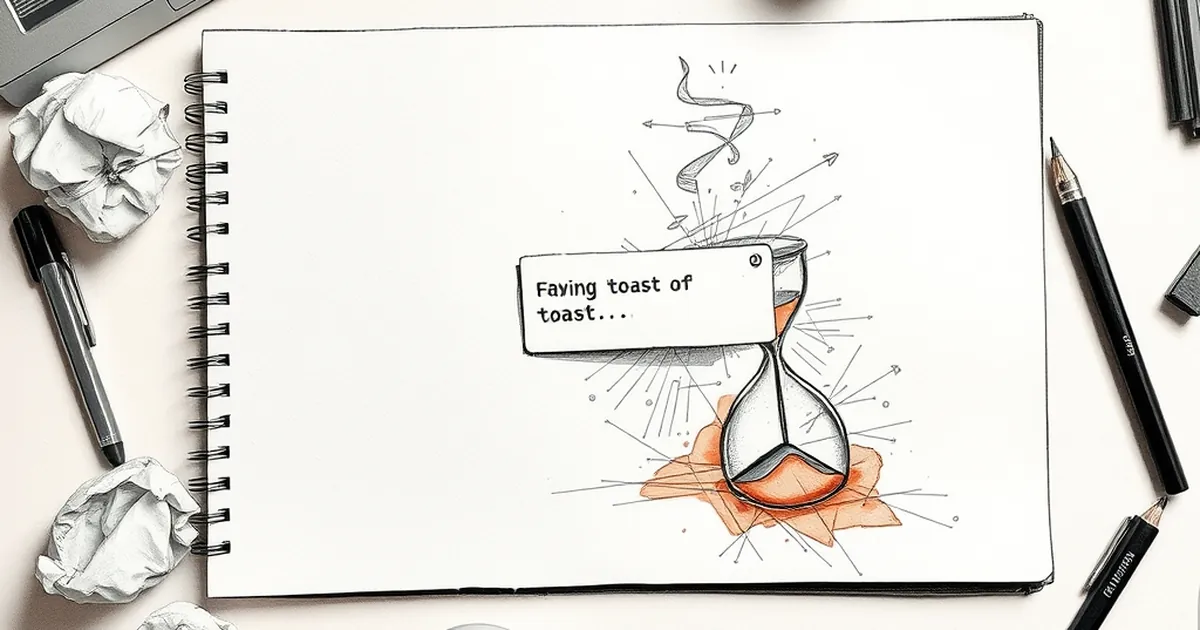
We have a weird relationship with the undo toast. It shows up after we delete something, gives us a few seconds to reconsider, then vanishes. Designers love it because it feels forgiving. Users love it until the moment they don't. So the real question isn't whether the toast is good — it's why the number six keeps showing up, and why roughly half of us quietly stop trusting the thing that's supposed to have our back.
The 6-Second Number Is a Guess Wearing a Suit
Ask five designers where six seconds comes from and you'll get five confident answers, none of them sourced. It's close to the old "10-second rule" for web response times, close to the length of a short-form video hook, and close enough to a coffee sip that it feels humane. That's the tell. When a duration can't be traced to a study, it's usually a vibe that survived enough design reviews to look like a standard.
The honest reference point is Nielsen's response-time thresholds: 0.1s feels instant, 1s keeps flow, 10s is the edge of attention. Six seconds sits in the murky middle, long enough to notice, short enough to miss.
What's Actually Happening in Those Six Seconds
Behavioral research gives us a cleaner frame than "give people time." Kahneman's work on loss aversion suggests we feel a deletion more sharply than an equivalent save — so the toast is really an emotional buffer, not a functional one. Variable-ratio reinforcement, the same pattern that makes notifications sticky, explains why the toast sometimes catches us and sometimes doesn't: unpredictable rescue trains us to keep half an eye on the corner of the screen.
That's the trap. A safety net you can't rely on becomes a thing you monitor. Monitoring is cognitive load. Cognitive load is the opposite of trust.
The 52% Isn't Cynicism, It's Calibration
If half of designers say they've stopped trusting undo toasts, that's not a mood. It's a rational read of a component that fails silently. The toast doesn't tell you when it's about to disappear. It doesn't tell you that you were one second late. It just leaves, and the deletion stands.
A Concrete Case: Gmail's Undo Send
Gmail shipped Undo Send as a Labs experiment in 2009, then made it standard in 2015. The default send-cancellation window started at 5 seconds and later expanded to 5, 10, 20, and 30 seconds in settings. Google didn't discover a magic number. It discovered that one number doesn't fit every context, and gave people the dial.
That's the most useful lesson in the whole history of the pattern: the window isn't a constant, it's a parameter. Treating six seconds as a design law is like treating 16px body text as physics.
Where This Is Heading
The next generation of undo won't be a timer at all. It'll be a persistent, low-noise record — a "recently deleted" surface that lives somewhere quiet and doesn't demand you react within a window you didn't choose. Some apps already do this. The toast becomes a notification, and the recovery becomes a place.
If you're shipping an undo affordance this quarter, three things worth trying:
- Make the window adjustable, even if only in settings. Gmail's precedent is free.
- Show the countdown, or drop the timer entirely. A hidden deadline is the actual betrayal.
- Log the recoveries. If nobody uses your 6-second window, you're not designing forgiveness. You're designing decoration.
Trust in an undo pattern isn't built by the seconds you offer. It's built by whether the user can predict what happens next.
— creative mess