Why Your Skill Tree’s Final Node Feels Like a Tutorial
Why your final skill tree node feels anticlimactic—and what game design teaches us about user adoption in complex dashboards
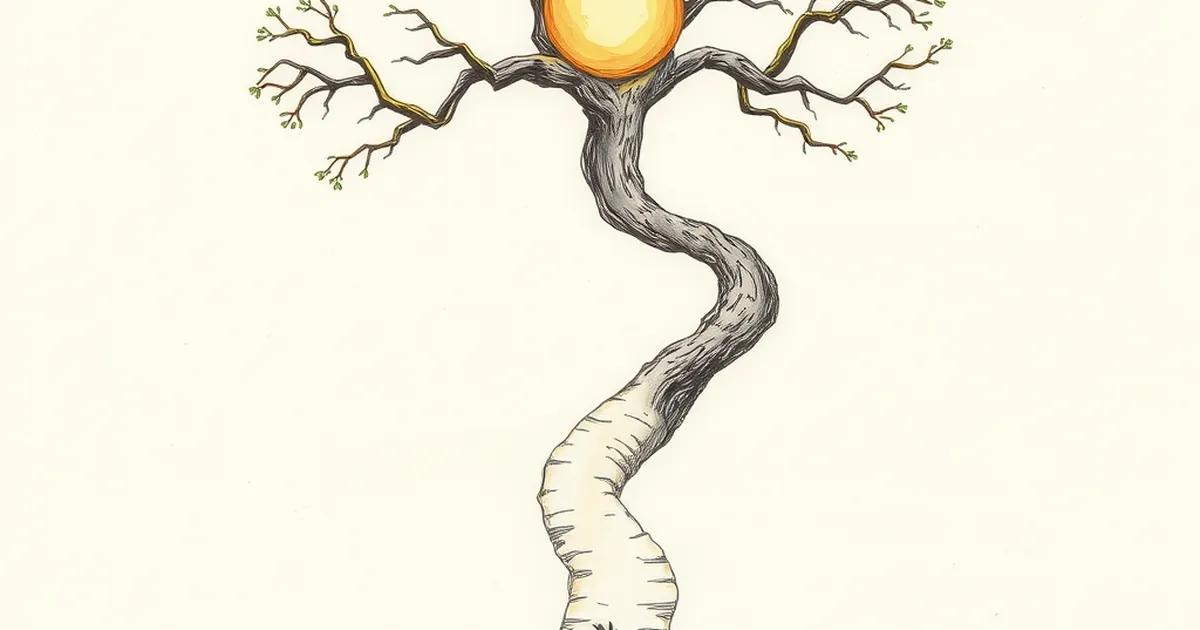
It’s a strange feeling, isn’t it? You grind through a game’s skill tree, investing points and hours into unlocking that final, devastating ability—the one that was supposed to make you feel like a god—and instead, it feels like a tutorial. The explosion is huge, the damage numbers are absurd, but the gameplay loop suddenly feels… hollow.
We see this exact phenomenon all the time in web design, specifically when building complex business dashboards or customer portals. You spend months perfecting the advanced features, only to watch users ignore them completely. They stick to the basic buttons. It’s not a usability flaw; it’s a behavioral one. We’re not looking at a UI problem; we’re looking at a reward-loop architecture problem.
The Illusion of the "Finish Line"
The issue is that we treat the final node as a destination, but the brain treats it as a transaction. According to classic behavioral psychology, specifically the work on expectancy theory, motivation isn’t just about the value of the reward; it’s about the perceived probability of getting it. When a feature is too powerful or too clearly defined as "the end," the brain immediately discounts the effort required to reach it.
In game design, this is why "New Game+" modes often feel flat. The variable ratio reinforcement—the unpredictable chance of a great reward—is gone. You know exactly what you’re getting. When your website’s advanced analytics dashboard is static and predictable, it suffers the same fate. The user clicks the "Generate Full Report" button, gets the exact same PDF they got last week, and the dopamine hit is zero. It feels like a chore because the outcome is a certainty, not a discovery.
The "Certainty" Trap in Business Software
Kahneman and Tversky’s loss aversion theory explains why we cling to familiar tools. We might know the new workflow is 50% faster, but the risk of fumbling with a new interface feels like a loss. The final node—the complex automation tool—represents a high-stakes gamble.
The user thinks: If I click this, I might break the entire client database. That fear triggers a threat response. They retreat to the safe, primitive "Save" button, which offers a guaranteed, albeit small, win. Your advanced feature isn't being rejected because it's hard; it's being rejected because it feels like a risky bet with no visible safety net.
Case Study: The Empty Automation Playground
Let’s look at a concrete example. A B2B SaaS company I consulted for built a brilliant "Zapier-style" workflow builder. It was the final node of their onboarding skill tree. They had tutorials, tooltips, and video guides. Adoption was near zero.
We ran a session where we stripped away the "Build Your Workflow" blank canvas and replaced it with a single, pre-loaded, imperfect template. The template had a deliberate error—a broken trigger.
Suddenly, the users were engaged. Why? Because fixing a mistake is a variable ratio reward. They didn’t know if their fix would work on the first try, the third try, or if it would break another part of the chain. The uncertainty created a feedback loop. They were no longer trying to reach the end; they were trying to fix the middle. The final node became a playground, not a prize.
Designing for the Loop, Not the Node
The practical takeaway for your business website isn't to dumb down your features; it's to inject risk and variability into the experience.
1. Remove the "Finality" of the Button
Don't label the advanced action as "Finalize" or "Complete." Label it as "Iterate" or "Test." Change the language from a conclusion to an experiment.
3. Introduce "Soft Failure" States
Let users break things without consequences. Add a "Sandbox Mode" where the automation can run wild and fail spectacularly, but with zero cost. The thrill of the gamble—without the loss—is what builds mastery. This mimics the competitive play loop where you push your limits because you know you can respawn.
3. Curate the Unknown
Don't show the user the entire skill tree. If the final node is visible from day one, the mystery is gone. Hide the advanced features behind behavioral triggers—like "You’ve run this report 5 times. Want to try the predictive version?" This introduces a new variable reward: the surprise of unlocking something you didn't know existed.
The future of business software isn't about making the complex simple. It's about making the complex feel like a game worth playing—one where the outcome is uncertain enough to keep you clicking. Stop building final nodes. Start building branching paths that lead to unexpected, delightful failures.
— creative mess