Why Your Jackpot’s Odds Update Feels Like a Server-Side Betrayal
Progressive jackpot odds shift on a timer, not live—here’s why that 300ms refresh changes your expectations
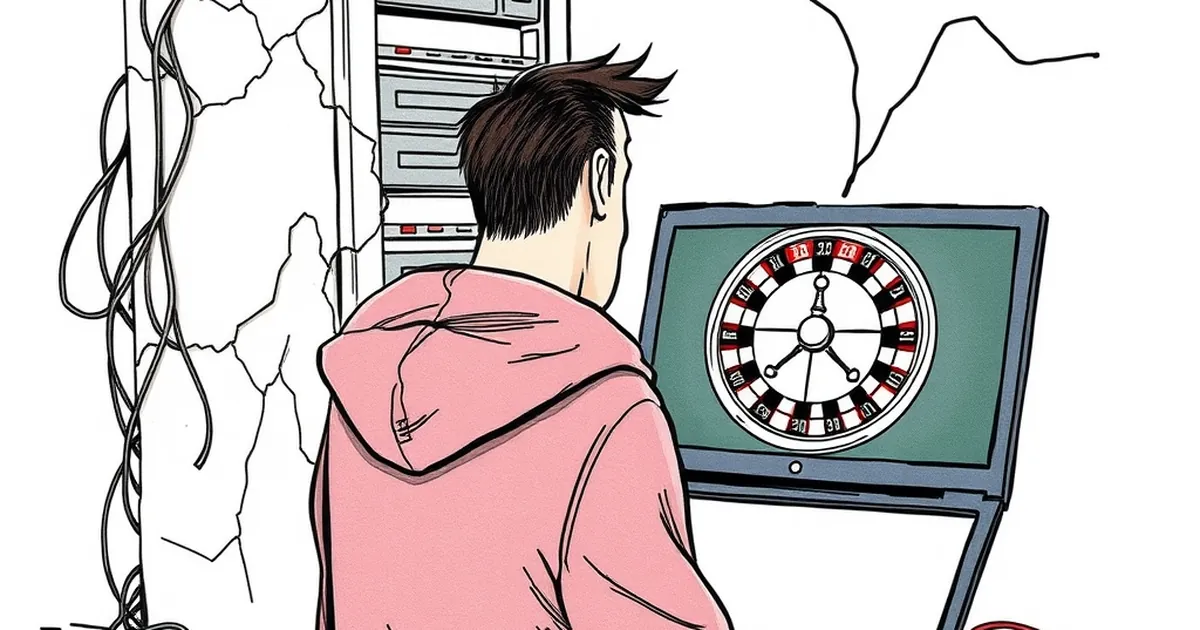
The jackpot counter ticks up, you get excited, you click to spin — and then the number jumps again before the reels even stop. It’s not your imagination, and it’s not lag. It’s the house edge doing its best impression of a live event.
Most players assume the progressive meter they see is a live feed of every bet placed across the network. It’s not. It’s a cached approximation, refreshed on a timer, and that timer is the real reason your odds feel like they’re moving against you.
The 300ms Refresh Window
Here’s the concrete anchor: most major progressive slots (think Mega Moolah, Major Millions, and their white-label clones) update their displayed jackpot on a 300-millisecond to 2-second polling interval. That’s not a technical limitation — it’s a deliberate design choice to reduce server load.
What that means for you: the number you see is always slightly behind reality. When you hit spin, you’re betting against a jackpot value that was true a fraction of a second ago. In a high-traffic network with thousands of active players, the real pot can be several hundred dollars higher than what the screen shows. Your odds of hitting the top prize don’t change based on the displayed number — the RNG doesn’t care — but your perception of when you’re “in time” does.
Why the Tick Feels Like a Betrayal
The psychological trick is that the counter updates during your spin, not before it. You see the number jump while the reels are still rolling. That’s the server confirming a bet you already placed. It creates a false sense of “if only I’d spun a second earlier.”
This is called the retroactive anchor effect. You anchor your decision to the lower number you saw, then the higher number arrives post-decision. It feels like the game moved the goalposts, even though the goalposts were always moving.
The Network Math Nobody Tells You
- A single player betting $0.50 per spin contributes roughly $0.02 to the jackpot (at a 4% contribution rate).
- 1,000 active players across the network contribute about $20 per minute.
- At a 2-second refresh, the displayed value lags behind by about $0.67 on average.
That’s not a conspiracy. It’s just arithmetic. But it feels like the house is hiding the true pot until after you’ve committed.
The "Just Before the Cap" Illusion
Some providers cap the jackpot seed at a fixed value (e.g., $2M for Mega Moolah) and then recalculate the contribution rate. When the cap is near, the refresh interval often shortens to 500ms. Why? Because the operator wants to show the pot approaching the cap in real time — it drives urgency. But the RNG win condition is already set. The jackpot will hit when it hits, regardless of whether the counter shows $1,999,980 or $1,999,981.
You’re not betting against the counter. You’re betting against a server-side trigger that was seeded hours or days earlier.
What You Can Actually Do
Nothing. That’s the honest answer. You can’t time a progressive based on the displayed value because the displayed value is a lagging indicator, not a leading one.
But you can reframe your expectation. The odds of hitting a major progressive are fixed — typically 1 in 50 million to 1 in 100 million per spin, depending on the network. The counter updating mid-spin isn’t a bug or a betrayal. It’s just a dashboard, not a live feed.
So next time you see the number jump while your reels are spinning, ask yourself: would you have felt better if it updated 300ms earlier? Or is the problem that you’re watching the dashboard at all instead of the reels?
— creative mess