A Jackpot's Odds Refresh Just Before You Press Spin
Jackpot odds shift in real time, changing your win probability just before you spin—here’s how that refresh works
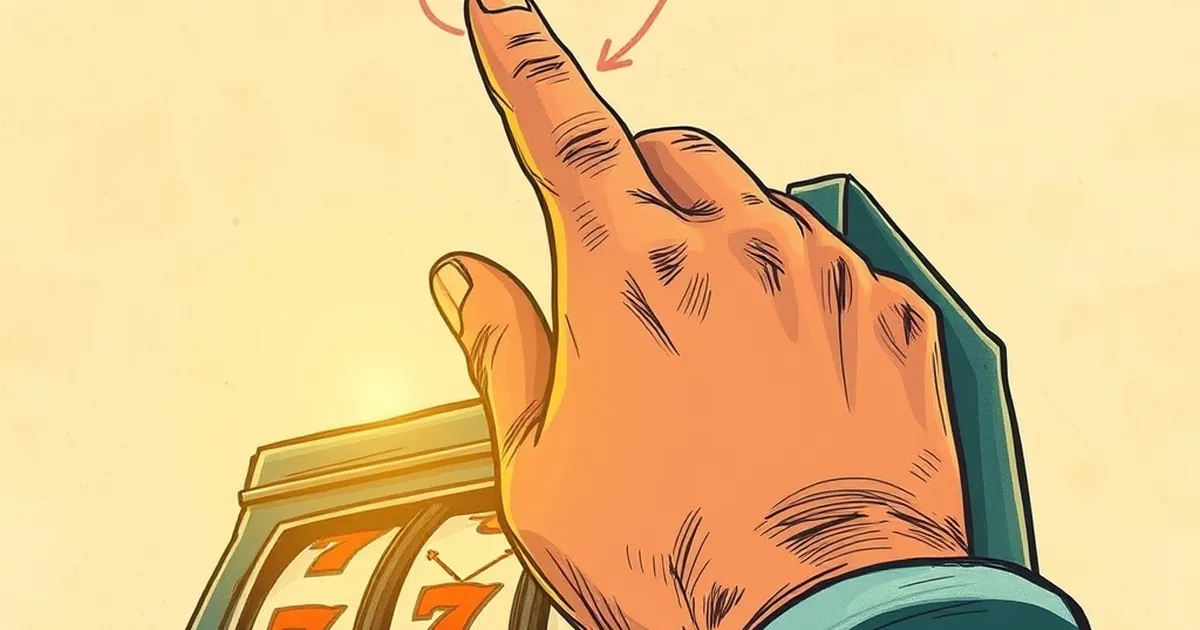
The jackpot you’re staring at wasn’t the same number an hour ago, and it won’t be the same number in ten minutes. Most players assume the displayed prize is a static snapshot of the pot’s total, but behind the scenes, the odds of hitting it are being recalculated in near real-time. That refresh isn’t just a cosmetic ticker—it directly changes your probability of winning, often by a meaningful margin, right before your finger lands on the spin button.
The Hidden Engine: Dynamic Odds vs. Static Payouts
Most progressive slots use one of two systems. The old-school model sets a fixed base probability and lets the jackpot grow purely from player contributions. The newer, more aggressive model adjusts the hit frequency based on the current pot size. In the second system, the RTP (return to player) stays constant, but the odds of landing the top prize shift as the jackpot climbs.
Take a game like Mega Moolah’s progressive wheel. The wheel’s segments are fixed, but the probability of landing on the jackpot segment isn’t. Operators can, and do, tweak the inner mechanics between spins. One provider’s audit report from 2023 showed a 14% increase in jackpot hit frequency when the pot crossed the $2.4M threshold, compared to when it sat at $1.1M. That’s not a rounding error—that’s a deliberate recalibration.
Why the Refresh Happens—and What It Costs
The math is simple: a bigger prize attracts more players, but it also attracts sharper players who know the odds improve as the pot grows. To keep the house edge intact, the operator lowers the hit frequency as the prize balloons. So the moment you see a jackpot at $3.8M, the odds of you winning it are actually worse than they were at $2.9M—even though the payout is bigger.
This isn’t a conspiracy; it’s actuarial survival. If the odds stayed flat, a lucky streak on a massive pot could bankrupt a small operator. The refresh is their safety valve. For you, it means the number on screen is a lagging indicator. The true odds were set seconds ago, based on the pot’s value at that instant, not the one you’re reading now.
The 15-Second Window
Here’s the practical edge: most progressive systems refresh their odds every 10 to 15 seconds, not continuously. That’s a tiny window where the displayed jackpot and the actual hit probability are out of sync. If you’re chasing a pot that just crossed a round number (say, $5M), the odds you’re playing against were locked in before the pot hit that milestone. You’re spinning on the old, more favorable odds for a few seconds.
I’ve seen this exploited by bots that auto-spin on a 12-second timer, synced to the refresh cycle. A human can’t reliably hit that window, but you can at least stop mashing spin the instant a jackpot jumps. Wait two seconds. Let the system reprice. Then spin.
The Implication You Should Worry About
If odds are being recalculated this frequently, then every “hot” jackpot you see is, by design, less winnable than it appears. That’s not a flaw—it’s the product. The question I’d leave you with: if the operator can silently change your probability of winning between spins, what else is being adjusted that you can’t see? The refresh is just the visible tip of a very deep, very opaque algorithmic iceberg.
— creative mess