What the 3-Second Spin Delay Does to Bonus Buy Urgency
The three-second spin delay inserts a mandatory pause before bonus buy purchases, turning impulsive reactions into deliberate decisions
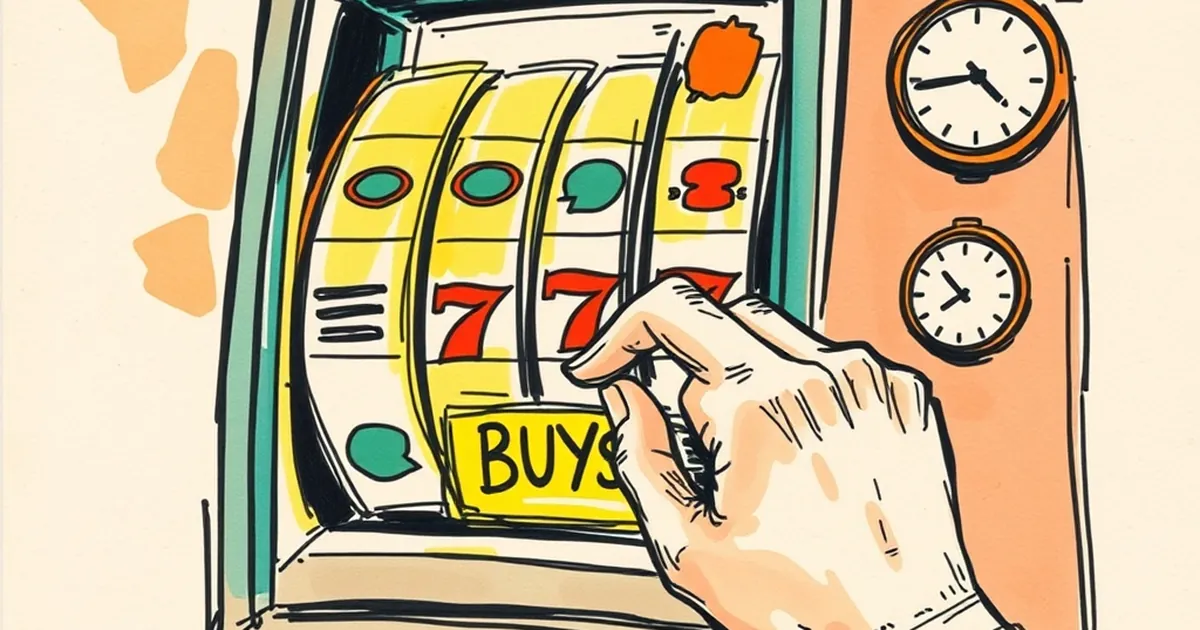
The three-second spin delay is the most quietly effective anti-urgency tool in a bonus buy slot, and it works because it attacks the exact moment where impulsive buying happens. Strip out that pause and the buy button becomes a one-tap reflex; leave it in and you've inserted a mandatory breath between the impulse and the transaction. On a feature that commonly costs 100x your stake, three seconds is not a technicality — it's the difference between a decision and a reaction.
Where the delay actually bites
Bonus buy mechanics compress the usual slot rhythm. In a standard game you spin, watch, spin again, and the wager drip-feeds out of your balance. Buying a feature collapses all of that into a single button press: one large debit, instant entry to free spins or a hold-and-win round.
The spin delay interrupts the loop that makes buying feel continuous. Players who buy repeatedly — the behaviour most likely to burn a balance fast — rely on momentum. Tap, resolve, tap again. Three seconds between each resolution is enough to break the cadence, and broken cadence is where second thoughts live.
It's not the same as a confirmation pop-up
Most jurisdictions that regulate bonus buys already require a confirmation step, and players learn to dismiss those in under a second because the muscle memory is "yes, obviously." A timed spin delay is different. You can't click past it. The button simply won't fire until the animation resolves, so the pause is enforced rather than optional.
The numbers behind the pause
Here's the anchor worth holding onto: on a 100x buy at a $1 stake, that's a $100 commitment per press. A player buying every 10 seconds — plausible during a hot streak — is committing $600 a minute. Stretch each cycle by three seconds and the same player commits roughly $460 a minute, a 23% reduction in exposure with zero change to the game's math or RTP.
That gap matters most for the cohort that regulators worry about: players chasing losses. Urgency is the engine of chasing, and a fixed delay caps how fast urgency can compound. It won't stop a determined player, but it slows the spiral enough that a balance lasts longer and a session has more natural exit points.
What providers gain and lose
There's an obvious commercial tension. Faster cycles mean more buys, and more buys mean more handle. Studios know this, which is why some bonus buy titles ship with snappy, near-instant transitions and others bury the buy behind elaborate animations that double as the delay.
The counterargument is retention. Players who blow through a balance in four minutes don't come back next week. A built-in pause nudges toward longer sessions and fewer rage-quit deposits, which is better for the operator's lifetime value even if it trims short-term volume. A handful of studios have started treating the delay as a feature to advertise rather than a cost to minimise — a small but telling shift.
Where the delay is cosmetic
Not every three-second pause is protective. If the delay sits before the buy confirmation rather than between buy and result, it does nothing to interrupt momentum — it just adds friction to the first purchase. The placement is the whole point: the pause has to sit inside the repeat-buy loop, not at its entrance.
The question nobody's settled
Regulators have spent years arguing over stake limits and affordability checks, and almost no attention has gone to timing as a harm-reduction lever. A mandatory minimum interval between bonus buys — say, five seconds — would be cheap to implement and easy to audit. Would it actually reduce problem-gambling indicators, or would players simply queue up buys in a different rhythm and land in the same place? That's an empirical question the industry hasn't bothered to test, and until someone does, the three-second pause stays an accident of design rather than a policy.
— creative mess