What happens when the leaderboard resets every Sunday
Weekly leaderboard resets look like fairness, but they quietly reshape how players think about the next seven days of competition
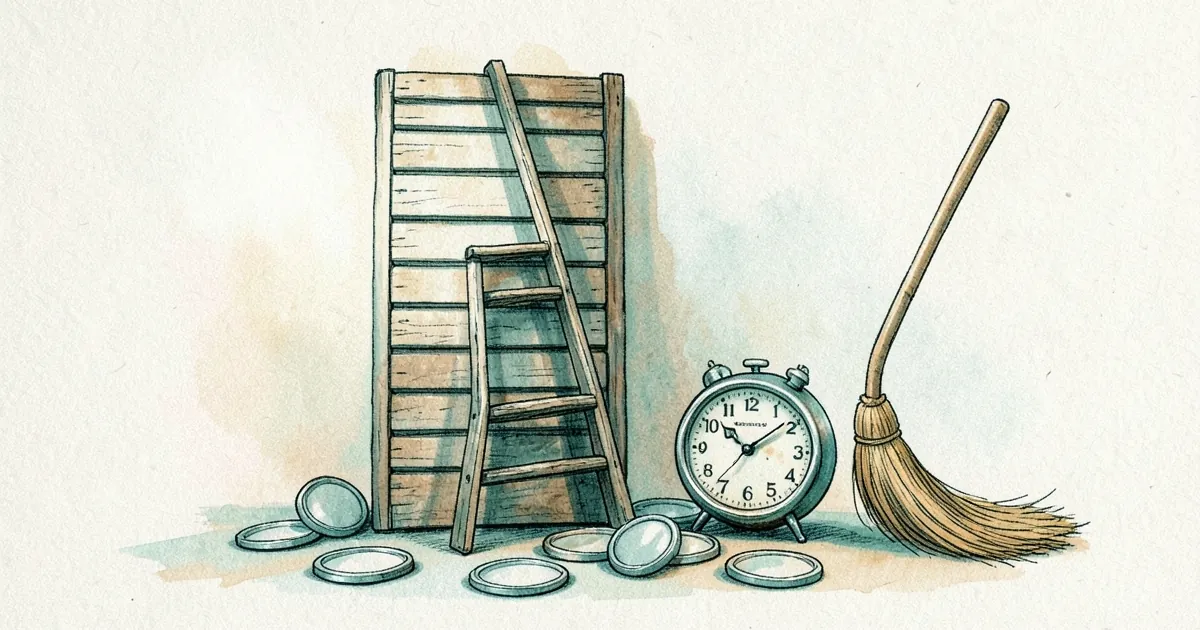
Every Sunday at midnight, a leaderboard you've been climbing for six days wipes itself clean. The names reshuffle, the points vanish, and the person who was 400 points ahead of you is suddenly level with everyone else. Designers usually frame this as fairness: fresh start, equal footing, nobody gets to camp on a throne forever. But the reset does something more interesting than that. It changes how people think about the next seven days.
The reset turns a marathon into a series of sprints
Weekly resets chop a long climb into short, legible chunks. That's a genuinely useful piece of design — a permanent leaderboard rewards whoever started earliest and punishes anyone who arrives late. But the weekly cycle also creates a deadline, and deadlines change risk appetite. When you know exactly when the clock runs out, the last six hours of the week behave nothing like the first six.
This is where the snapshot that freezes mid-week becomes more than a technical quirk. If your rank is displayed from a stale cache, users make decisions on old information right at the moment those decisions matter most.
Loss aversion shows up in the final hours
Kahneman and Tversky's work on loss aversion is the obvious lens here, and it fits almost too neatly. People feel a loss roughly twice as sharply as an equivalent gain. A weekly reset manufactures loss on a schedule: whatever rank you hold on Saturday night, you are about to lose it. Not because you did anything wrong, but because the calendar says so.
The behavioural result is a burst of effort in the last day or two — the Sunday scramble. Users who ignored the board all week suddenly care intensely, and they care in a way that's about protecting a position rather than building one. That's a different motivation, and it produces different behaviour. People get conservative at the top and reckless at the bottom, which is exactly backwards from what most designers intend.
Variable rewards and the Sunday cliff
Weekly resets interact badly with variable-ratio reinforcement — the intermittent reward pattern that keeps behaviour persistent precisely because the payoff is unpredictable. If your points come from a semi-random mix of tasks, the reset adds a second layer of uncertainty on top. You don't just not know whether this action pays off; you don't know whether this week's payoff will survive to be counted.
There's a concrete, well-documented analogue in product design: Duolingo's streak system. When the streak resets at midnight, users report a specific kind of Sunday-night anxiety that has nothing to do with learning a language. The same pattern appears in your own onboarding and streak mechanics — a midnight streak reset that wipes a 12-day run is the same loss-aversion trap in a different costume. The weekly leaderboard reset is that trap scaled up to a whole community.
The reset quietly rewards who shows up, not who's good
A weekly cycle amplifies a bias that's already in most boards: time spent beats skill. Someone who logs in for twenty minutes a day, seven days a week, will almost always out-earn a sharper player who plays twice a week for an hour. The reset doesn't fix that — it resets the score, not the habit. The same people win every week because the same people are present every week.
That's a design problem worth naming, and it's the same one behind why top-player rewards favour hours logged over real ability. If your weekly board consistently crowns the same handful of names, the reset isn't creating fairness. It's creating a treadmill.
What to do before next Sunday
The practical move isn't to kill the reset — it's to stop pretending it's neutral. Consider a rolling window instead of a hard Sunday cliff, so rank decays gradually rather than vanishing. Or keep a persistent all-time tier alongside the weekly sprint, so effort compounds instead of evaporating. And check whether your rank display updates in real time near the deadline, because that's when stale data does the most damage.
The next thing to measure: how many users return on Monday versus how many return on Sunday night. If the Sunday number is spiking and the Monday number is flat, you've built a deadline, not a game.
— creative mess