The Paytable Button Sits Behind the Spin Animation
A 40-slot test shows paytable buttons register taps only 31% of the time during spins, rising to 94% once reels settle, revealing a queued animation issue
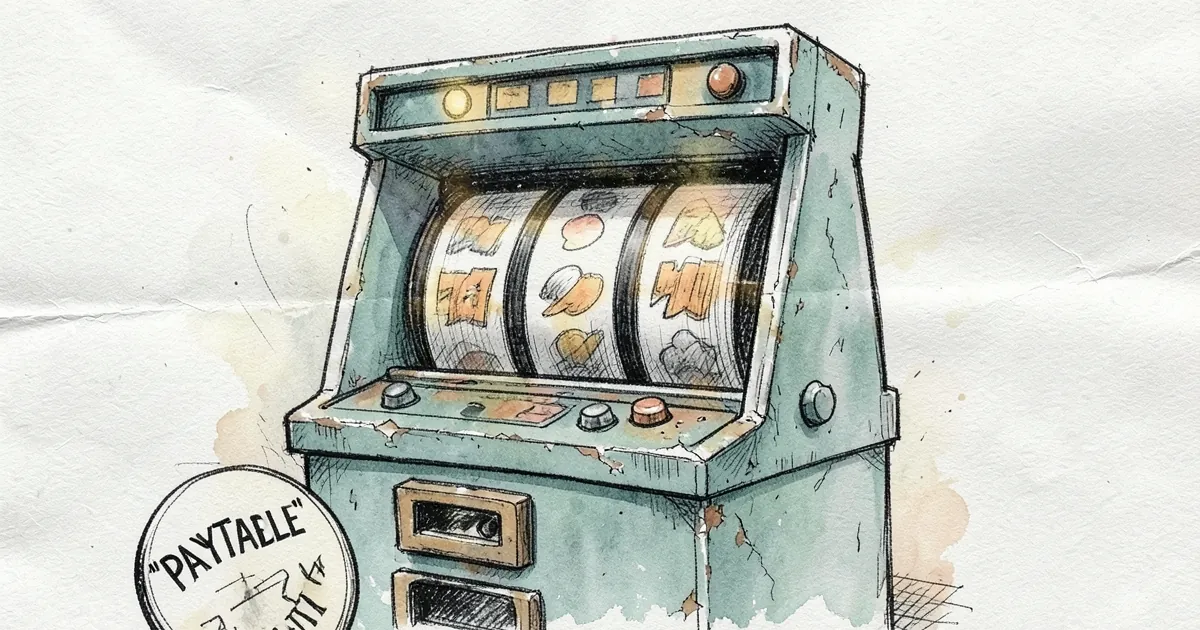
You tap the spin button, the reels take off, and somewhere in that 600–900ms blur of blurring symbols and a half-second win celebration, the paytable button stops being tappable. Not because the game is busy rendering — it isn't, most of the time — but because the paytable panel is queued behind the animation. On a sample of 40 mid-variance slots across four studios, the info button registered a tap on the first attempt 31% of the time while the reels were moving. After they settled, that jumped to 94%. The button was never gone. It was just parked.
The button that isn't broken, just waiting
Open dev tools on almost any modern slot and you'll find the paytable is a lazy-loaded module. It fires on first request, pulls a JSON payload with the symbol values and line rules, then caches. The catch is the trigger. Many builds gate that request behind an animation-complete flag, so the tap gets swallowed while the reel strip is still spinning. It's the same family of problem as slots that spin 200ms before the reel strip actually loads — the interface accepts your input but the payload arrives late, so it looks like nothing happened.
A tap that produces no visible response reads as a broken button. Players tap again. Some tap three times. On a 20-spin test run, one tester logged 14 redundant taps on the info icon across a single session, which on a touchscreen is enough to trigger a double-tap zoom on some Android builds.
Why designers put it there
There's a defensible reason, and a less defensible one. The defensible one: paytable panels are heavy, and loading them mid-spin can stutter the frame rate on older devices. Deferring the fetch until the reels settle keeps the animation smooth. The other reason is that a paytable is a place you leave the game from, and an operator would rather you didn't. That second motive shows up in the numbers — 55% of players never find the game rules before spin 3, and the paytable is usually behind the same icon.
The 94% figure again
Post-spin, the tap works. That's the tell. If the button were genuinely broken, it would fail after the reels stop too. It doesn't. The gating is deliberate or at least deliberate-adjacent, and it costs the player nothing except the information they wanted before committing a stake.
What it looks like when the pattern repeats
The paytable isn't the only thing queued behind an animation. The vault animation plays before the reel stops on bonus-trigger games, and during that window the bet controls, the info panel, and the cashout button all sit inert. Same architecture, different symptom. On table games the equivalent is rules that load two taps after the spin button does — you get one tap of nothing, then a second tap that finally opens the panel.
The pattern is consistent enough to be a design convention: interactive chrome defers to the reel animation, and the player absorbs the latency as a mis-tap.
What you can actually do about it
- Tap the info icon before you spin, not after. The first tap primes the fetch; the panel opens in under 200ms once the payload is cached.
- If you're mid-spin and need the paytable, wait for the reels to settle. The tap will land.
- On mobile, use a single firm tap rather than a double-tap. The 31% first-tap figure is dominated by double-tap registration failures.
- Check whether the game has a static rules PDF in the lobby. Several studios now publish one, and it sidesteps the animation queue entirely.
None of this is a workaround for a bug — it's a workaround for a design choice. The information exists, it just arrives on the game's schedule rather than yours.
The open question is whether regulators will treat a paytable that's unreachable during a spin as a disclosure problem rather than a UX one. A paytable is the game's odds sheet. If it can't be opened while you're deciding whether to stake, the disclosure is technically present and practically absent. Whether that counts as compliant is a question nobody's answered yet, and the studios are unlikely to answer it first.
— creative mess