Odds Boost Tokens Expire Mid-Scroll, 2 Rows From the Fold
Sportsbook apps hide odds boost tokens below the fold while timers keep running, turning a simple scroll into a race against an indifferent countdown
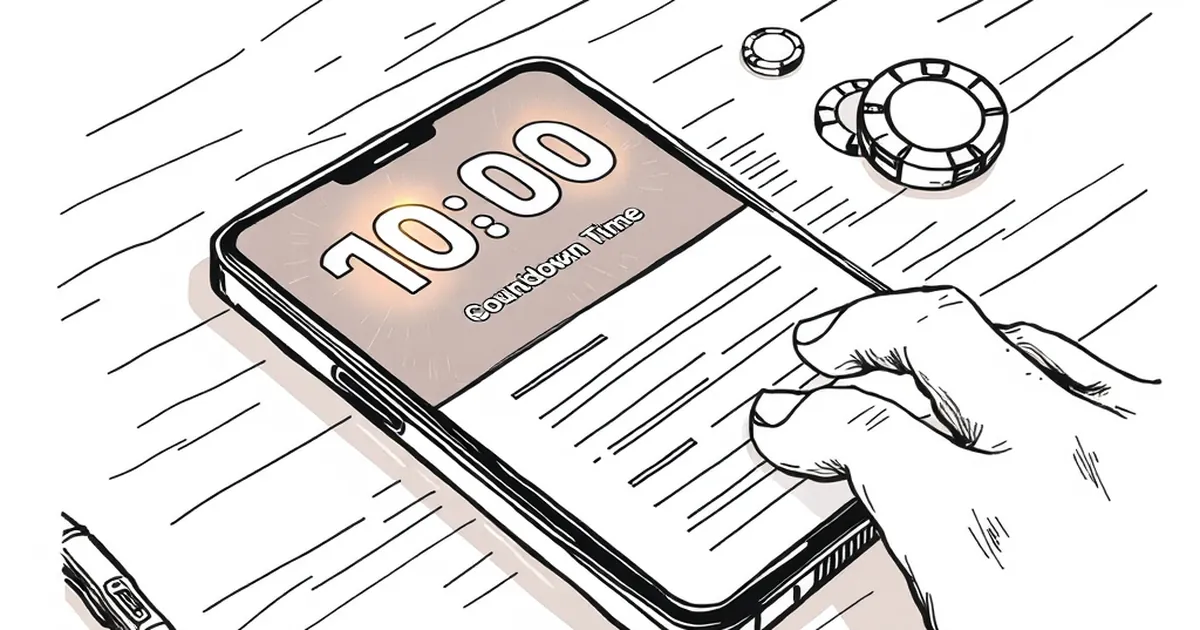
Sportsbook apps have quietly settled on a layout where the most perishable thing on the screen — your odds boost token — sits two rows below the fold, and its countdown keeps running while you scroll to find it. On a 6.1-inch handset, that's roughly 380 pixels of vertical space you have to cover before the token is even visible, and the timer doesn't care.
The mechanics aren't sinister, exactly. They're just indifferent. A boost token that expires in 15 minutes is a marketing device designed to be redeemed fast, and the interface it lives in is designed to sell you something else first: a parlay builder, a live-in-play carousel, a "trending now" module with three animated thumbnails. The token is real money in the sense that it changes the price of a bet. It's just not the priority.
What the placement actually costs you
Run the numbers on a typical 10% profit boost capped at $25 in extra winnings. To capture the full cap on a +150 underdog, you need a stake around $167. If the token expires while you're three taps deep in a same-game parlay screen, you don't lose the stake — you lose the delta between boosted and unboosted odds, which on that bet is about $25 of expected value.
That's per token. Sportsbooks issue these in batches. A moderately active user might see 4 to 7 boost tokens a week across welcome-back offers, accumulator insurance cross-sells, and "your team is playing" triggers. Miss half of them to placement friction rather than to genuine disinterest and you're leaving something in the low three figures on the table annually.
The scroll problem is a timing problem
The real issue isn't that the token is below the fold. It's that the countdown starts on push notification, not on first impression. You get the alert at 7:42pm, you're doing something else, you open the app at 7:51pm, and you've already burned 60% of the window before the token has rendered on screen once.
Some operators have moved to a sticky tray — a persistent row pinned above the bottom nav that holds live boosts. Others bury them in a "Rewards" tab that requires a separate load. There's no industry standard, which means the same user behaves differently on three different apps for reasons that have nothing to do with the odds.
Why operators don't fix it
A boost token that converts is a customer acquisition or retention cost. A boost token that expires is free. From a pure margin perspective, friction is a feature: the operator gets the goodwill of issuing the offer and only pays out on the fraction of users who navigate the interface fast enough to claim it.
That's not a conspiracy, it's just how promotional budgets get modeled. The number that lands in the marketing deck is "tokens issued," not "tokens redeemed." Nobody's bonus is tied to your redemption rate.
What you can actually do
Two habits help. First, when a boost notification arrives, check the expiry before you check anything else — if it's under 20 minutes and you're not in a position to bet now, ignore it and move on. Second, filter your app's notification settings so you only get boosts from one or two books. Fewer alerts means each one gets a real look instead of a reflexive dismiss.
None of this is a strategy. It's damage control on a UI decision you didn't make.
The question nobody's asking
If boost tokens were surfaced at the top of the screen with a 60-minute window instead of 15, redemption rates would climb — probably a lot — and promotional spend would rise with them. So the honest question isn't whether operators can fix the placement. It's whether the current expiry window is calibrated to user attention or to the fraction of users the promo budget can afford to actually pay. Watch your own redemption rate for a month. The answer usually shows up in your own numbers before it shows up in theirs.
And if you're chasing expiring tokens at 11pm on a Tuesday, that's worth noticing too. Set a deposit limit before you need one.
— creative mess