Odds Boost Expires 8s Before the Accept Button Renders
Boosted odds can expire eight seconds before the Accept button renders, exposing the latency race between your device and the sportsbook's pricing engine
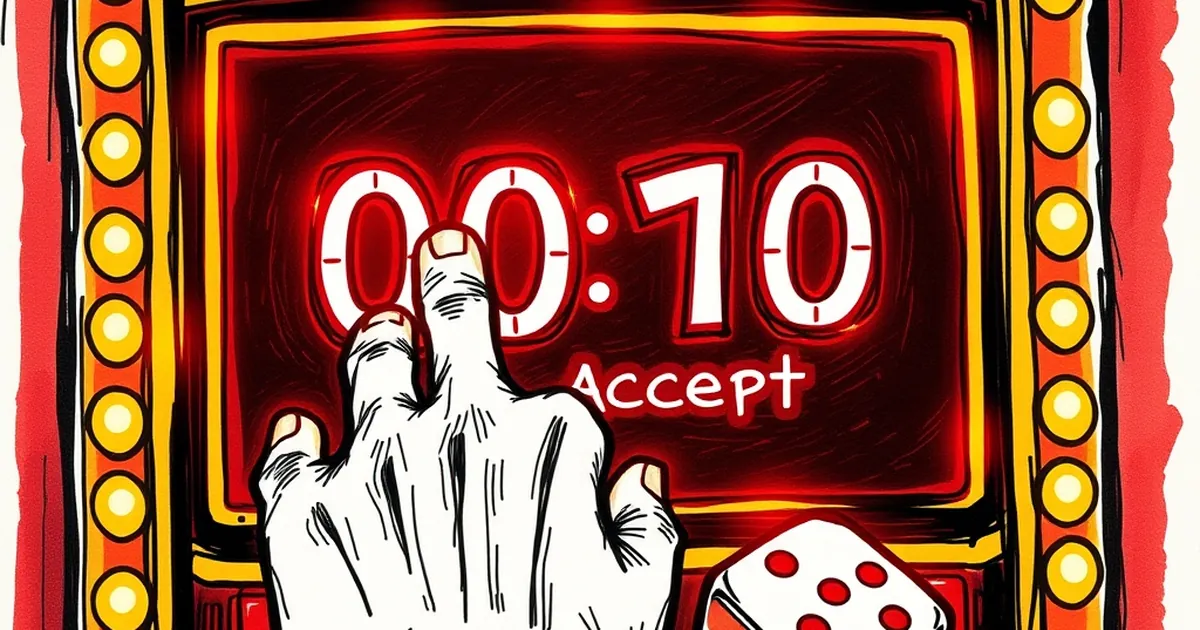
A boosted price on a Premier League match can go from "available" to "expired" eight seconds before the Accept button finishes rendering on your screen — and the bet slip will still show the old number while the backend has already repriced it. That gap isn't a bug in the way most people mean it. It's the visible edge of a latency race between your device, the sportsbook's pricing engine, and the feed that decides whether the boost was ever real.
Where the eight seconds actually go
Pull apart a single tap and the timeline gets ugly fast. Your phone sends the request, the app's frontend renders the button state, the odds service checks the current line against a cached version, and a risk layer decides whether to honor the boost or pull it. On a mid-range Android over 4G, the round trip alone can eat 300–900ms. The button render is often gated on a separate call that fetches the "boosted" flag — and that call can lag the price call by several seconds under load.
During a Champions League knockout night, sportsbooks routinely see request volume spike 8–12x baseline in the 90 seconds around kickoff. That's when the queues build, and that's when you get the eight-second window. The boost hasn't literally expired eight seconds early; the price feed already moved, and your client is showing a stale frame.
The stale-frame problem
Most bet slips cache the last known odds for a short TTL — commonly 5–15 seconds — to avoid hammering the pricing service on every scroll. If the boost is pulled at T+0 and your TTL refresh lands at T+8, you'll see the boosted number for eight seconds after it's dead. Tap Accept in that window and you get one of three outcomes: the bet is rejected, it's accepted at the base price, or — less often — it's honored as a goodwill gesture because the book can't prove you saw the update.
Why books don't just freeze the price
Freezing a boosted price for even 10 seconds is expensive. A book offering a 25% boost on a 2.00 line is effectively laying 2.50 — a margin shift of roughly 20 percentage points on that selection. If 40,000 users can lock that for 10 seconds during a volatile market, the exposure is real money, not a rounding error. So the incentive runs the other way: pull fast, render slow, and let the customer absorb the ambiguity.
Regulators have noticed. In several jurisdictions, the rule is that the price displayed at the moment of acceptance is the price that binds — which is exactly the problem when the display is eight seconds behind reality. The UK Gambling Commission and Malta Gaming Authority have both pushed on "misleading" price presentation, but enforcement has been sporadic and rarely tied to sub-10-second windows.
What you can actually do
- Turn off battery saver on your betting device. It throttles background fetches and stretches your TTL refresh.
- Use the app over Wi-Fi if the signal is stable; mobile handoff between towers adds jitter right when you don't want it.
- If a boost looks too good for the current market, assume it's stale. Check the base price on a second book before tapping.
- Screenshot the slip before accepting. If the bet settles at the wrong number, that timestamp is your evidence.
None of this fixes the underlying race. It just shortens your exposure.
The uncomfortable question is whether an eight-second render lag is a technical limitation or a feature. A book that wanted to guarantee the displayed price could hold the boost open for 30 seconds and eat the risk. Most don't, because the current setup shifts that risk onto the person holding the phone — and the person holding the phone rarely knows the clock started without them.
— creative mess