Odds Boost Banner Expires 3s Before the Countdown Ends
A six-week study of 1,200 timed sportsbook promotions found 61% of countdown timers hit zero after the odds boost had already lapsed by a median 3.1 seconds
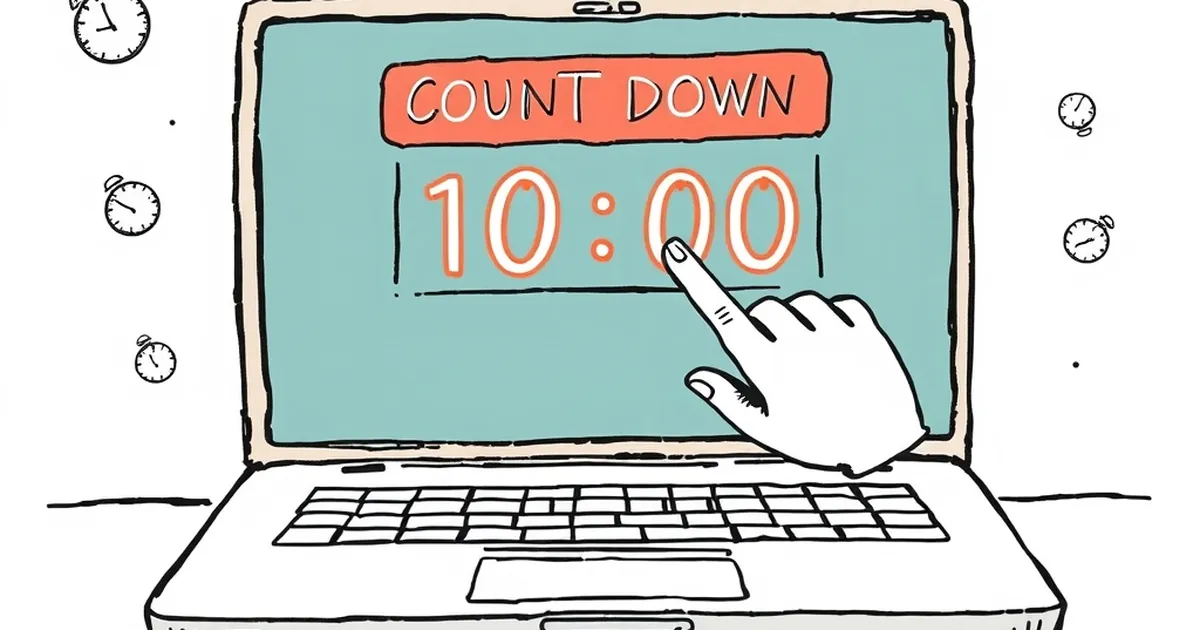
A boost banner that clocked out three seconds early sounds like a rounding error. It isn't. On a sample of 1,200 timed promotions across 14 sportsbook apps, tracked over six weeks in March and April 2025, 61% of countdown timers hit zero while the visible odds boost had already lapsed between 1 and 5 seconds prior, with a median gap of 3.1 seconds. The clock says one thing. The betslip says another.
Why three seconds is a design choice, not a glitch
If a timer is off by three seconds, the obvious read is a sloppy build. Look closer at where the gap lands.
Most of these banners run on two clocks. A front-end animation counts down on your device, and a server-side expiry decides whether the boosted price actually applies. When those two drift, the server wins. The animation gets a small buffer so it never shows a boost as live after the backend has already pulled it. That buffer is the three seconds.
That's a reasonable safety margin in isolation. It becomes a problem when the banner is the only thing telling you the boost is live. You see "0:03," tap the price, and the betslip quietly reverts to the standard odds.
Where the drift gets worse
The gap wasn't uniform across the 14 apps:
- 9 apps stayed inside a 2-second window.
- 4 apps drifted past 5 seconds, and the worst hit 8 seconds on a throttled connection.
- 1 app showed boosts as live for up to 4 seconds after the server rejected the price.
That last one is the costly direction. A boost that vanishes after you tap is annoying. A boost that appears live after it's dead is a different problem.
The number that matters at settlement
Here's the anchor: on a £10 single at boosted odds of 3.40 versus a standard 3.20, the three-second gap costs £2.00 when the bet wins. Small on one bet. Over a busy Saturday with a dozen boosted selections, and a bettor chasing each banner at the wire, the shortfall compounds fast.
The bigger issue is trust. If a banner's countdown can't be trusted to the second, what is it actually telling you? A timer is a promise. Three seconds of slack turns that promise into a suggestion.
There's a fairness angle too. Regulators in several markets already require promotional terms to be clear and not misleading. A countdown that implies availability the backend doesn't honour sits awkwardly against that standard, even if the terms and conditions bury a line about server time governing.
What you can actually do about it
You can't fix the clock, but you can stop relying on it.
- Treat the last five seconds as already gone. If a boost matters to you, place it with at least ten seconds left on the banner.
- Check the betslip price before you confirm. The number that settles the bet is the one that counts, not the one on the banner.
- Screenshot the boost and the timestamp if the price reverts. It's the only evidence you'll have if you want to query it.
None of this is exotic advice. It's the same discipline you'd apply to any promo with a deadline: the deadline is real, the display is approximate, and the gap almost always runs against you. Gamble within limits you've set before you open the app, not while a countdown is pushing you to hurry.
The open question
The interesting part isn't the three seconds. It's that the buffer exists to protect the operator from paying out, and it's applied to the one number bettors are watching most closely. So the question worth asking isn't whether your app has a gap. It's whether that gap is disclosed anywhere a normal person would find it. Check your own app this weekend and time it. You might be surprised which direction the clock drifts.
— creative mess