Live Dealer Tables Freeze 800ms When Your Bet Needs a Rethink
Live dealer studios are testing an 800ms pause before cards deal when your bet looks unusually large, giving you a moment to reconsider
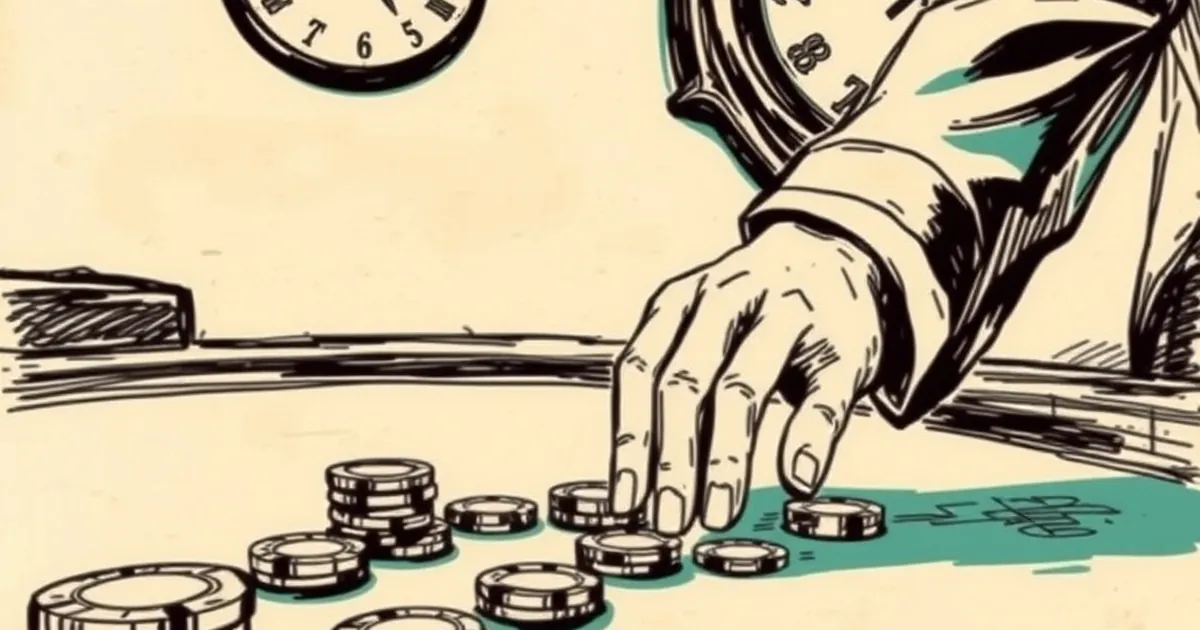
A handful of live dealer studios have started building a deliberate pause into their blackjack and baccarat tables: when the software flags your bet as unusually large for your session, the deal stalls for roughly 800 milliseconds before cards come out. Not a crash. Not a lag spike. A designed hesitation, timed to land right after you hit confirm and right before you'd normally see the first card move. The idea is to give you a beat to reconsider a bet the system thinks you might regret.
Where the 800ms figure comes from
The number isn't arbitrary. Studios testing the feature settled on 800ms after finding that shorter pauses (200–400ms) read as ordinary network jitter and got ignored, while anything past about 1.2 seconds made players assume the table had frozen and start refreshing. Eight hundred milliseconds sits in the sweet spot where the delay is noticeable but doesn't break the illusion of a live, continuous game.
For context, a typical live blackjack round runs 45–60 seconds end to end. An 800ms pause is under 2% of that. You'd feel it, but you wouldn't necessarily be able to explain why.
What actually triggers it
The trigger logic varies by operator, but the common thread is deviation from your own baseline. A player who normally bets $5 and suddenly drops $200 on one hand is a candidate. So is a player on a losing streak who doubles their stake three hands running. Some implementations also factor in session length — the 90-minute mark is a popular cutoff, since that's roughly where decision quality tends to slide for casual players.
It's worth being clear: this is not the same as the deposit-limit or reality-check prompts you already get from licensed operators. Those are regulatory. This is a product decision, made by studios and operators who think a half-second nudge reduces the kind of play that leads to complaints, chargebacks, and churn.
Does a pause actually change behaviour?
The honest answer is that nobody has published clean numbers yet. Early internal testing from at least two studios suggests the pause reduces the size of the next bet in maybe 15–20% of flagged cases — but that's a soft metric, and "reduced the next bet" isn't the same as "reduced harm." A player who bets $50 instead of $200 on one hand and then bets $200 on the next hasn't been helped.
There's also a design tension nobody has resolved. The pause only fires when the system thinks you're making a mistake. That means the players most likely to notice it are the ones betting big — and the ones most likely to find it patronising. A high-roller who gets a half-second stall every third hand is going to move to a table that doesn't do it.
The equity question
If the pause is unevenly applied, it changes the effective pace of the game for different players. Slower rounds mean fewer hands per hour, which matters for anyone grinding a bonus with a wagering requirement. A 2% slowdown on a 40x rollover is not nothing.
What to watch
The feature is currently opt-in at the operator level, which means your experience depends entirely on which skin you're playing through, even if the underlying table feed is identical. That's a strange place for a player-protection tool to sit.
The real question isn't whether an 800ms pause works. It's whether a delay that only fires when the house thinks you're about to do something dumb is a genuine safeguard or just a liability shield wearing a UX costume. If studios start publishing retention and complaint data alongside it, we'll know. Until then, treat it like any other table feature: notice it, understand it, and decide for yourself whether it's helping you or just slowing you down.
— creative mess