Free Spins Award 1 Hour Before the Wagering Clock Starts
Some operators credit free spins an hour before wagering terms activate, giving you time to see your winnings and judge the deal first
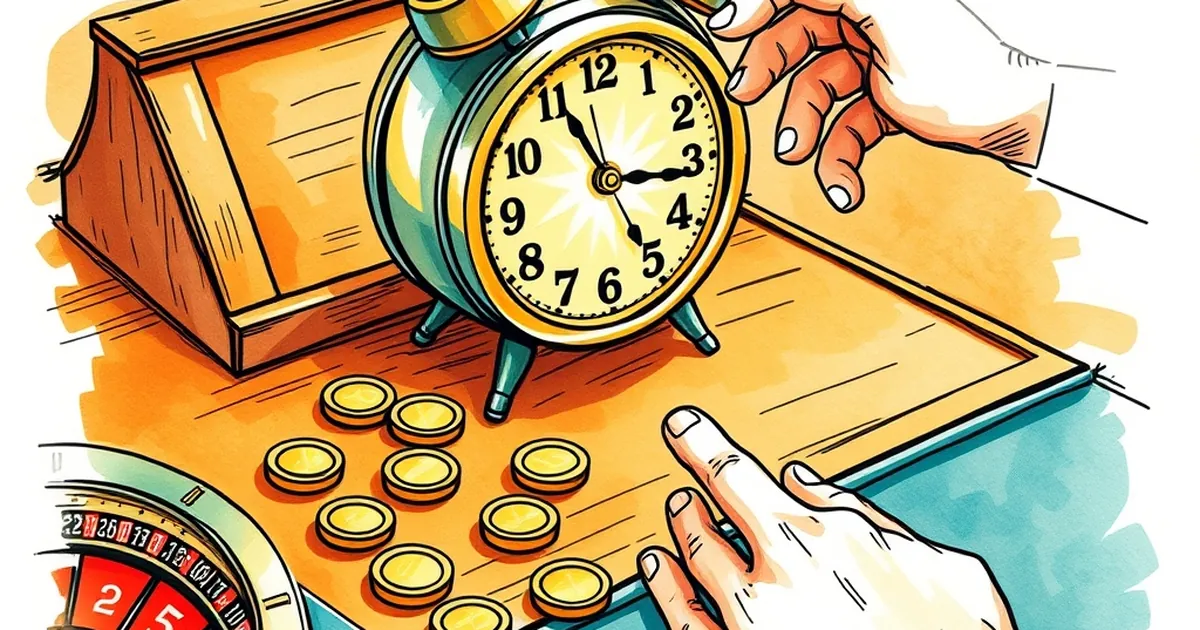
A handful of operators now credit free spins to your balance a full 60 minutes before the wagering requirement attached to them goes live. The clock on the bonus terms starts at T+60, not at the moment the spins land. In practice that means you can burn through the entire spin allocation, see exactly what you've won, and still have an hour to decide whether the wagering terms are worth touching.
That sounds like a rounding error. It isn't.
Why the gap exists at all
Standard bonus mechanics start the wagering clock the second the reward hits your account. If you get 50 spins at 09:00, the 40x requirement on any winnings is already running. Miss the window — usually 7 or 14 days — and whatever you spun is void.
The delayed-start model flips the sequence. Spins are playable immediately, but the wagering period is timestamped to begin 60 minutes later. Some operators frame this as a "cooling-off" feature, letting you review the terms before committing. Others just quietly code it in and don't market it, because the maths still favours the house either way.
The maths of an hour
Here's the part the marketing copy skips. If you spin 50 times at €0.20 and land a €12 win, that €12 is now the stake base for a 40x requirement — €480 in wagering. The extra hour doesn't reduce that number by a cent.
What it does change is your information position. You know the win size before the clock starts. On a high-variance slot, 50 spins can return anywhere from zero to a few hundred euros. A player who wins €3 on those spins faces a very different decision than one who wins €180. The delayed clock lets the first player walk away without ever triggering a wagering obligation, and lets the second player commit with eyes open.
Worth noting: at 96.2% RTP, 50 spins at €0.20 carry an expected return of about €9.62 against €10 staked. The house edge on the spins themselves is small. The edge on the wagering requirement is where operators make their money, and an extra 60 minutes of thinking time doesn't touch it.
Where this gets murky
Not every "delayed" bonus works the same way, and the differences matter.
- Clock starts on first spin vs. fixed timestamp. Some sites begin the hour from account credit, others from your first spin. The second version can stretch the effective window to hours if you spin slowly.
- Win confiscation clauses. A few T&Cs state that winnings are only "locked in" once wagering begins. If you spin out during the free hour and hit a max-win cap, check whether the cap applies pre- or post-clock.
- Game weighting. The hour delay is irrelevant if your chosen slot contributes 10% toward wagering. A €480 requirement becomes €4,800 of real play.
The 60-minute figure itself is soft. I've seen 30, 45, and 120 minutes. There's no industry standard, which is exactly why the terms page is the only place to confirm what you're actually getting.
What it says about the direction of bonus design
Bonus terms have been getting tighter for years — higher wagering multipliers, shorter expiry, lower max-cashout caps. A delayed wagering clock is a small concession in the other direction, but it costs operators almost nothing. It doesn't change expected value. It changes how the offer feels.
Which raises the obvious question: if a 60-minute delay is cheap enough to hand out, why not make the wagering clock start only after you've seen the win? Or drop the requirement on small wins entirely? The answer is that neither of those would move the needle on player acquisition the way a headline feature does — and that tells you the delay is a marketing device wearing a consumer-protection costume.
Set a deposit limit before you test it. The hour is useful. It isn't a safety net.
— creative mess