Bonus Wagering Counts Spins Before the Opt-In Loads
Some operators start counting bonus wagering before you opt in, adding thousands in turnover to a clock you never agreed to start
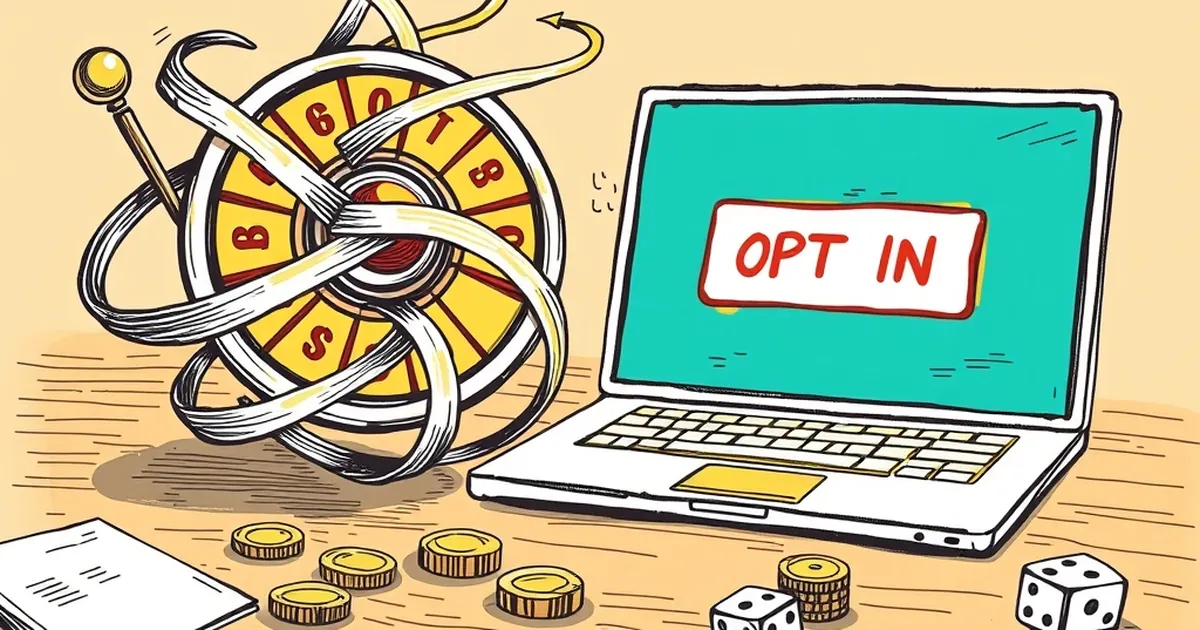
A handful of mid-size operators have started counting qualifying bets from the moment a deposit lands, not from the moment you tick the opt-in box. On a 20x wagering bonus, that gap is usually 30 to 90 seconds — the time it takes the offer banner to render, the terms modal to load, and you to scroll past clause 4.3. On a €200 bonus at 20x, that's up to €4,000 of turnover accruing against a clock you didn't agree to start.
The opt-in is a UI event, not a ledger event
Wagering systems don't track intent. They track timestamps on settled bets and compare them to a bonus_start field. Historically that field was written when you clicked the opt-in button, because that was the only reliable signal the backend had.
What changed is that some platforms now write bonus_start at deposit confirmation and treat the opt-in click as a formality that retroactively validates bets already in the queue. Support scripts call this "seamless activation." It's seamless in the same way an auto-renewing subscription is seamless.
The practical effect: any spin or bet you place in that window counts toward the requirement, even if you were still reading the terms and hadn't decided whether to take the bonus at all.
Where the numbers get ugly
Take a 40x requirement on a €100 bonus. That's €4,000 of turnover. If you're spinning a 96.2% RTP slot at €1 per spin, expected loss per spin is €0.038, and clearing the full requirement costs roughly €152 in expected value before the bonus is worth anything. The bonus itself is €100. The math only works if you hit a multiplier during the run — which is the entire sales pitch, and also why the house edge on the requirement is the real product.
Now compress the window. If a player fires 40 spins in the 45 seconds before the opt-in loads, that's €40 of turnover already banked against the requirement — 1% of the total, for free, from the operator's perspective, because those spins would have happened anyway. Multiply across a few thousand daily depositors and it's a measurable shift in expected margin that never appears in the advertised terms.
Some jurisdictions have started to care. The UK Gambling Commission's 2023 guidance on bonus terms pushed operators toward "clear and unambiguous" activation language, and a few EU regulators followed with similar language in 2024. But "clear" is doing a lot of work in a sentence that doesn't define when the clock starts.
What to check before you deposit
- Whether the bonus is auto-applied or opt-in. Auto-applied bonuses are the ones most likely to start the clock at deposit.
- The exact wording of the activation clause. "Bonus activates upon deposit" and "bonus activates upon opt-in" are different contracts, and the first one is the one that catches people.
- Whether pending bets count. Some systems only count settled bets, which gives you a grace window; others count the moment the bet is accepted.
- The maximum bet rule. Most bonuses cap qualifying bets at €5 or less, and a bet placed before you've read that rule can void the whole bonus.
The question nobody's answering
If the clock starts before consent, at what point does the bonus stop being an offer and start being a default? Regulators have spent a decade tightening how bonuses are advertised. They've spent almost no time on when they begin. That's the gap the next round of enforcement will probably target — and the operators who built the seamless version are the ones who'll have to explain why "seamless" and "pre-consented" ended up meaning the same thing.
If you're playing with a bonus active, set a deposit limit before you deposit, not after. The window where you're deciding is exactly the window these systems are designed to absorb.
— creative mess