The Sportsbook Cash Out Quote Freezes While the Score Moves
A sportsbook cash out quote is a timestamped price, not a live figure, so the gap between the score and the quote is where you get repriced or rejected
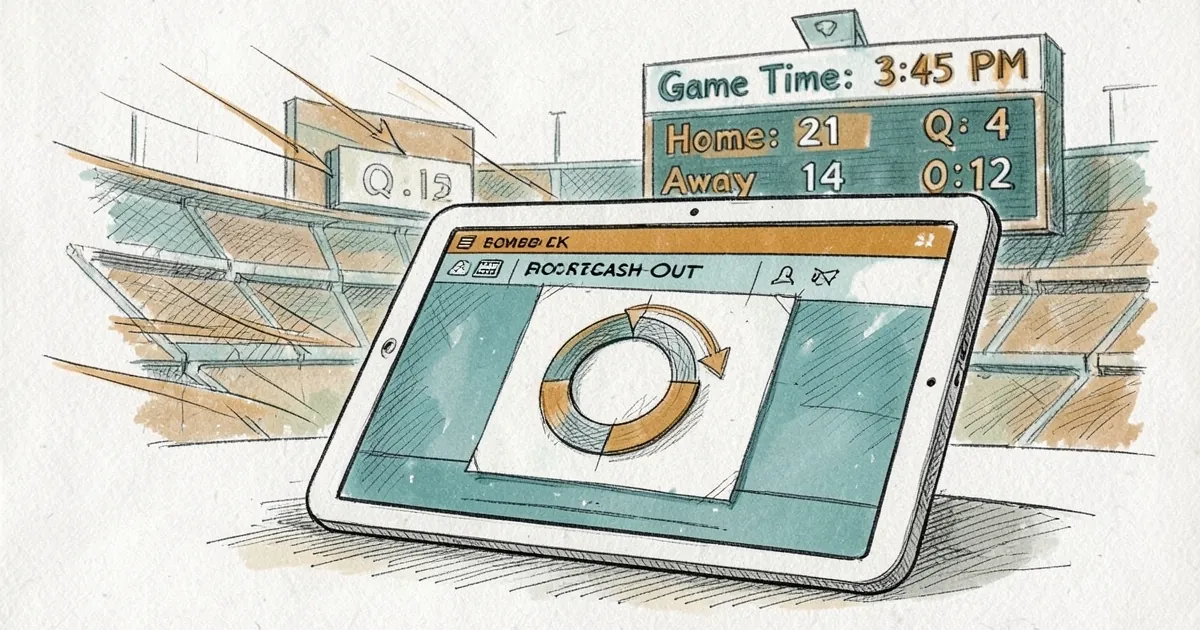
The cash out figure you're staring at is not live. Tap "Cash Out" during a match and the number that pops into the confirmation box is a quote with a timestamp on it, usually a second or two old — and the book isn't obliged to honour it if the underlying price has already moved. That's the whole trick: the score updates on your screen in near real time, the quote doesn't, and the gap between the two is where you get repriced or rejected.
What the quote actually is
A cash out offer is a derived price, not a stored balance. The book takes the current market odds on the remaining outcomes, nets out its margin, and subtracts a cash-out cut — often 3% to 7% of fair value, more on in-play markets where liquidity is thin. That derived number gets cached for the duration of your session or until the next odds tick, whichever comes first. On a fast-moving market like a tennis break point or the last ten minutes of a football match, "until the next tick" can mean the quote you see is a full price generation behind.
This is the same lag family as cash-out quotes shrinking about 3% while the confirm spinner runs — the freeze and the shrink are two symptoms of one architecture.
Why the freeze is worst right when you want out
People reach for cash out during chaos: a red card, a penalty, a goal against. Those are exactly the moments when the feed is busiest and the odds engine is recalculating every market on the event. The quote on your screen was generated before the event that made you want to bail.
Worse, the interface encourages you to trust it. The button sits there with a number on it, and the number doesn't flicker even as the commentary feed two inches above it goes berserk. If you've read why the cashout button shifts 12px when odds drift, you know the layout is already reacting to price changes — it just isn't showing you the new price.
The repricing step nobody reads
Between your tap and the settlement, most books run a revalidation: they check the quote against the current market and either accept it, accept it at a worse number, or reject outright with "offer no longer available." The rejection isn't a glitch. It's the system admitting the quote was stale.
Some operators display a countdown — typically 5 to 15 seconds — during which the quote is contractually held. If you see no countdown, assume no hold. And if the confirmation feels slow, that's often the same latency that makes settlement run a few ticks behind the score feed at the other end of the trade.
What you can actually do about it
- Cash out early, not at the peak of drama. The quote is freshest when nothing is happening.
- Watch the odds, not the cash-out number. If the market price has moved and your quote hasn't, expect a reprice.
- Prefer books that show a hold timer. A visible countdown is a promise; silence is not.
- Treat a rejected cash out as information. It means the number you saw was fiction.
None of this is illegal, and none of it is hidden in the small print — it's in the terms under "cash out may be amended or withdrawn at any time." The question worth asking is whether regulators will eventually treat a displayed cash-out figure as a binding offer for its stated lifetime, the way a quoted FX rate is. Until then, the number on the button is a suggestion, and the score is the truth.
— creative mess