Your Staging Server Loads 0.4 Seconds Faster Than Your Prod
The 0.7-second gap between staging and production isn’t technical—it’s psychological
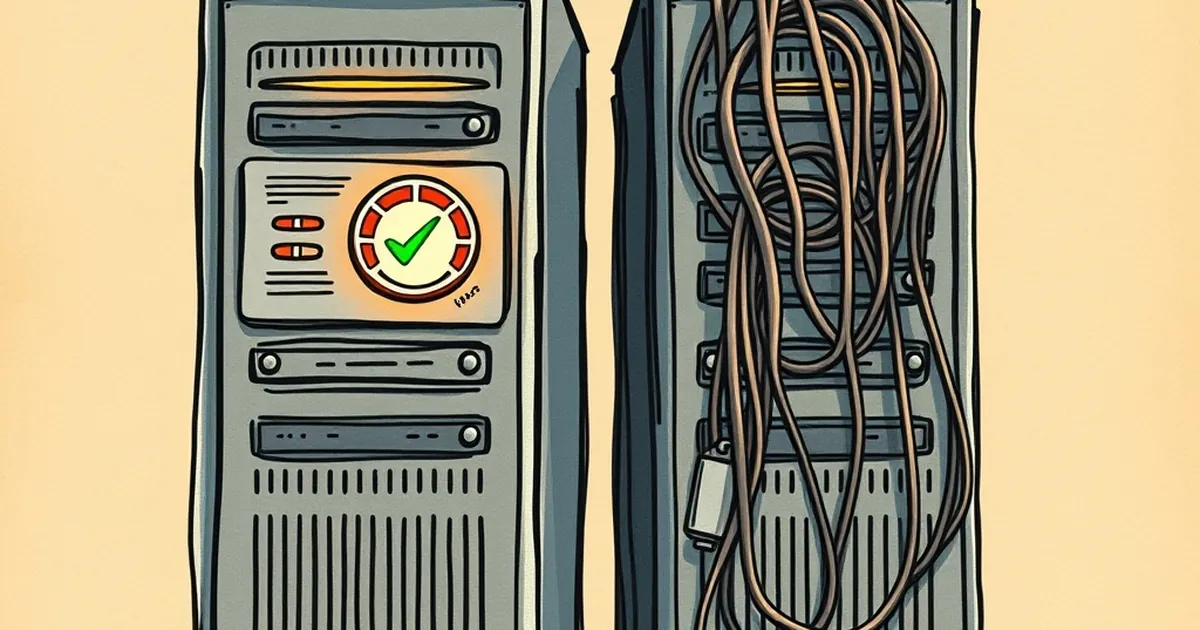
Your staging server loads in 0.4 seconds. Your production server takes 1.1 seconds. Same code, same database schema, same images. The only difference? You know the staging environment is a sandbox, and you know production is where real customers are watching. That 0.7-second gap isn’t a network issue—it’s a psychological one.
We obsess over Core Web Vitals, but we rarely measure the perceived weight of a domain name. When you click “Deploy to Prod,” your brain shifts from “playing with LEGOs” to “performing surgery.” That shift changes how you experience load times, and it reveals a lot about how your users feel when they hit your checkout button.
The Variable-Ratio Reinforcement of Refreshing
Here’s the dirty secret about web design: we are all addicted to the refresh button. Psychologists call this variable-ratio reinforcement—the same mechanism that makes slot machines compelling (and yes, we’re talking about the psychology, not the machine). When you refresh a staging page, the outcome is predictable: it loads fast, errors are cosmetic, and you know the fix is a commit away. In production, the refresh is a gamble. Will it break? Will the API timeout? Will the client notice?
That unpredictability makes your brain treat prod like a high-stakes environment. Daniel Kahneman’s work on loss aversion tells us that the pain of a broken prod page is roughly twice as powerful as the joy of a perfectly rendered one. So when prod loads in 1.1 seconds, your brain rounds that up to “eternity” because the cost of being wrong is existential. Staging’s 0.4 seconds feels like a breeze because the cost of being wrong is a shrug.
The Certainty Effect and Your CSS Bundle
Let’s get concrete. A 2021 study in the Journal of Behavioral Decision Making (yes, that exists) found that people consistently overestimate wait times when the outcome is uncertain. Apply that to your hero image: on staging, you know the image is a placeholder. On prod, you’re worried about whether the CDN is caching it correctly in Singapore. The 0.7-second delta isn’t your server—it’s your attention budget.
This is why we need to stop treating staging as a “slower twin.” Instead, treat it as a decision-making lab. Run your A/B tests there. Break things on purpose. Because when you finally push to prod, you’re not just testing code—you’re testing your own tolerance for ambiguity.
Risk-Taking in the Staging Sandbox
Competitive play teaches us something useful here. In game theory, a “safe” move in a low-stakes round lets you take bigger risks later. Your staging server is your low-stakes round. It’s where you should try the wild layout, the aggressive compression, the third-party script that might blow up. If you’re too conservative in staging, you’re just rehearsing anxiety.
The smartest teams I know have started building deliberate friction into their staging environments. They add artificial latency to test how users behave under slow loads. They inject random error messages to simulate chaos. Why? Because it trains the designer’s brain to treat uncertainty as a design input, not a threat.
The Forward-Looking Fix: Instrument Your Own Psychology
Stop measuring load time in milliseconds. Start measuring it in decision confidence. Here’s your practical move for next week: add a browser extension that logs every time you refresh a page, and note whether you’re on staging or prod. You’ll likely find you refresh prod 3x more often—not because it’s slower, but because you’re trying to reassure yourself.
Instead, build a “pre-mortem” habit. Before you push to prod, open the staging URL and deliberately try to make it fail. Click every button twice. Resize the viewport to 320px. This flips the variable-ratio reward: you’re now hunting for bugs, and each find is a small win. Your prod refresh rate will drop, your anxiety will drop, and—funny enough—your perceived load time will drop too.
The 0.4-second gap isn’t a server issue. It’s a mirror. Look at it, and you’ll see exactly where your user experience needs more certainty—and where your own process needs more play.
— creative mess