Withdrawal Fee Notice Lands 1 Screen After the Confirm Tap
A withdrawal fee that appears only after you tap Confirm turns a cost into a receipt, and the pattern is easy to spot once you know it
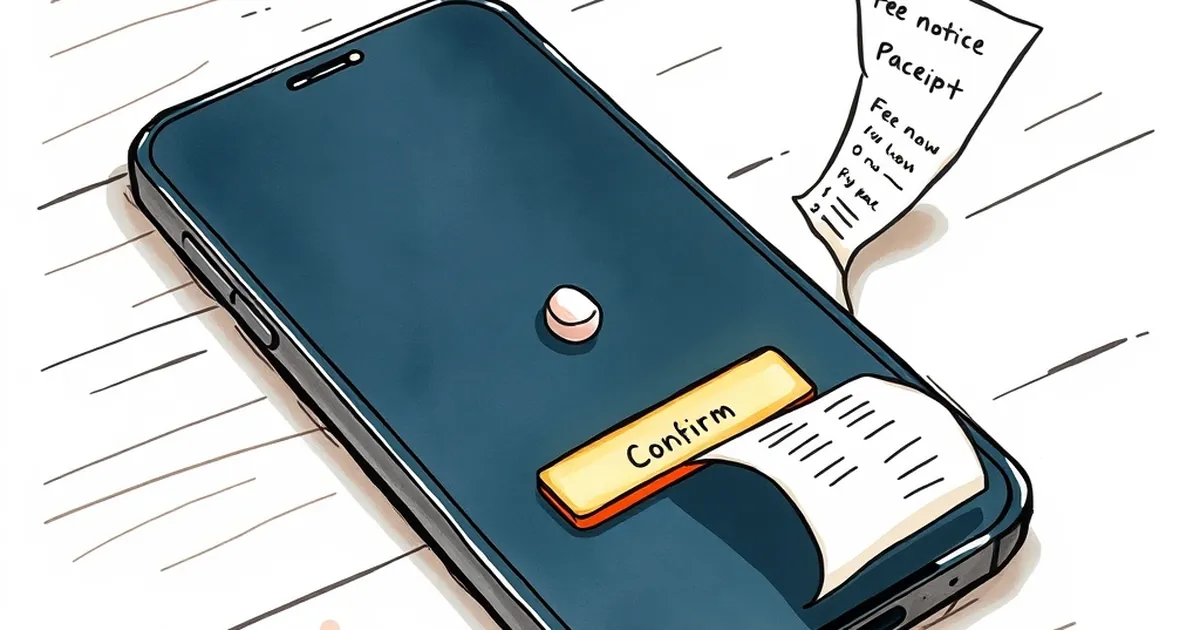
The withdrawal fee shows up one screen after you tap Confirm. Not before. That's the claim, and it's a UI pattern rather than a billing one — the cost is disclosed at the last moment it can be disclosed without blocking the transaction. Once you've tapped, the fee screen reads like a receipt, and most people treat it like one.
The pattern is easy to spot once you know what to look for. The confirm screen shows the amount, the destination, maybe an estimated arrival window. You tap. The next screen says the payout is subject to a 2.5% processing fee, or a flat €5, or a minimum withdrawal of €30 that quietly eats a small balance. By then you've already committed, and the only way out is to back out of a flow you thought was finished.
Why it's the last screen and not the first
Disclosure rules generally care about whether a fee is shown before the transaction completes, not how many taps earlier it appeared. A fee on the screen right after Confirm technically lands before the money moves. That's the gap operators work with.
Some jurisdictions tightened this. The UK's rules on prominently displaying fees took effect in October 2019, and the practical read since then has been that burying a charge behind a confirm tap invites a complaint. Elsewhere, enforcement is thinner, and the screen order does a lot of quiet work.
It's not always a fee
Sometimes the late screen isn't a fee at all — it's a limit. A €2,000 daily cap, a pending period that stretches to 72 hours, a requirement to withdraw to the same method you deposited with. None of these are charges, but all of them change the deal, and all of them tend to appear after the tap rather than before it.
What it costs you in practice
Take a €200 withdrawal with a 2.5% fee applied after confirm. That's €5 gone, and on a 96% RTP slot session it's roughly the expected loss of another €125 of spins. Small on its own. Repeated monthly across a year, it's a real line item nobody budgets for.
The more common version is the minimum-withdrawal trap. You're up €18 on a site with a €20 floor. The confirm screen doesn't mention the floor. The next one does, and now the choice is to keep playing to clear it or forfeit the balance to the fee structure. For a lot of casual players, that's how a winning session turns into a losing one.
How to check before you tap
- Open the banking or cashier page before you request anything and read the withdrawal section, not the deposit section. Fees usually live there, in small type.
- Look for the minimum withdrawal amount and the pending period. Both are terms, not fees, and both get disclosed late.
- Test with a small withdrawal first. A €10 request tells you more about the fee schedule than any FAQ page.
- Screenshot the confirm screen. If a fee appears after it, you have a timestamped record for support.
None of this is exotic. It's the same diligence you'd apply to a hotel's resort fee or an airline's seat charge — check the terms before you commit, because the flow is designed to show you the price after the decision.
The open question
The real issue is whether "after Confirm" counts as before the transaction. Regulators have mostly said yes. Players, judging by complaint volumes, mostly say no. If a fee screen only works because the back button still exists, is it disclosure or is it a speed bump? That's the question the next round of rulemaking will have to answer — and until it does, the last screen is where the money quietly changes hands.
Set a loss limit before you start, and treat any fee you didn't see coming as a reason to check the terms, not to chase the balance.
— creative mess