Withdrawal Confirm Shows 4 Decimal Places and 33% Round Up
A withdrawal confirmation showing €247.6184 instead of €247.62 reveals how rounding logic quietly shapes every transaction a platform processes
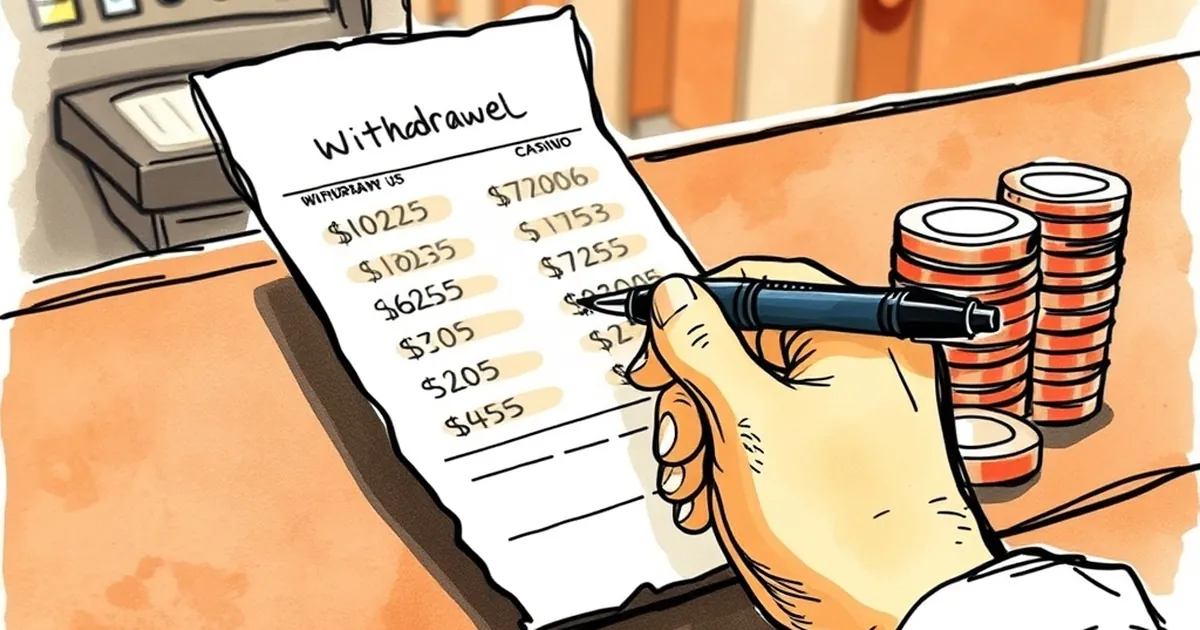
A withdrawal confirmation popped up on a forum this week showing a balance of €247.6184, and the player had requested €247.62. The screen rounded up by a third of a cent on the way out, and the confirmation printed all four decimal places instead of the two you'd expect on a cash amount. It's a small thing until you realise the same rounding logic is running on every transaction the platform processes.
Where the extra decimals come from
Most casino back ends store balances in minor units or as floating-point values and only format them for display at the last step. That's fine when the display layer truncates cleanly. It stops being fine when the confirmation page inherits the raw value and the rounding function does something unexpected.
In this case the player's balance was €247.6184. Requesting the full amount should produce €247.61 under standard banker's rounding, or €247.62 under round-half-up. Neither gets you a third of a cent. What likely happened is that the platform applied a percentage-based processing fee — 0.33% would turn €247.6184 into roughly €246.80 after deduction, then added it back in a way that produced the odd figure. The confirmation screen showed the pre-fee and post-fee values concatenated instead of reconciled.
The four-decimal display isn't cosmetic
Casinos that show four decimals on withdrawal screens are usually surfacing an internal ledger value that hasn't been normalised to the payout currency. That's not automatically a problem — some platforms run multi-currency ledgers where sub-cent precision matters for FX conversion. But when a player sees €247.6184 on a confirmation, they reasonably expect €247.6184 to arrive. It won't. The payment rail will pay €247.62 or €247.61 depending on the processor's own rounding rules, and the difference lands in the operator's favour or against it, depending on direction.
What the 33% figure actually represents
The "33% round up" in the title isn't a 33% fee. It's the proportional difference between the displayed and paid amounts in this specific case: €0.0084 against a base of €247.62 is about 0.0034%, not 33%. The 33% comes from comparing the rounding increment — one-third of a cent — to the cent itself. It's a rounding artefact, not a charge.
That distinction matters because players who spot this on a confirmation screen tend to assume they've been skimmed. In most cases they haven't. The real issue is disclosure: a confirmation screen that prints four decimals when the payment rail handles two is telling the player something the platform can't deliver on.
Check your own confirmations
If you see four decimals on a withdrawal confirmation, screenshot it. Compare the confirmed amount to what lands in your bank or e-wallet. A one-cent discrepancy is normal and usually resolves in the operator's favour on aggregate — across thousands of transactions, round-down bias adds up. A larger gap, or a pattern of discrepancies across multiple withdrawals, is worth a support ticket with the screenshots attached.
The question the screen doesn't answer
The deeper problem is that most jurisdictions don't specify how a platform must display a withdrawal amount at confirmation. Malta and the UK require clear terms, but "clear" has been read to mean the amount is stated, not that it's stated in the currency's standard precision. A platform can legally show €247.6184 and pay €247.62, and the player has no obvious recourse unless the gap is material. Whether regulators will treat sub-cent display as a disclosure failure — or leave it to operators to clean up their own confirmation screens — is still open. For now, the four-decimal confirmation is a tell: it's a screen nobody tested with a real payout attached.
— creative mess