Why Your Spin Button’s Haptic Feedback Creates False Win Certainty
Haptic feedback on spin buttons triggers false win certainty by exploiting dopamine-driven reward prediction errors
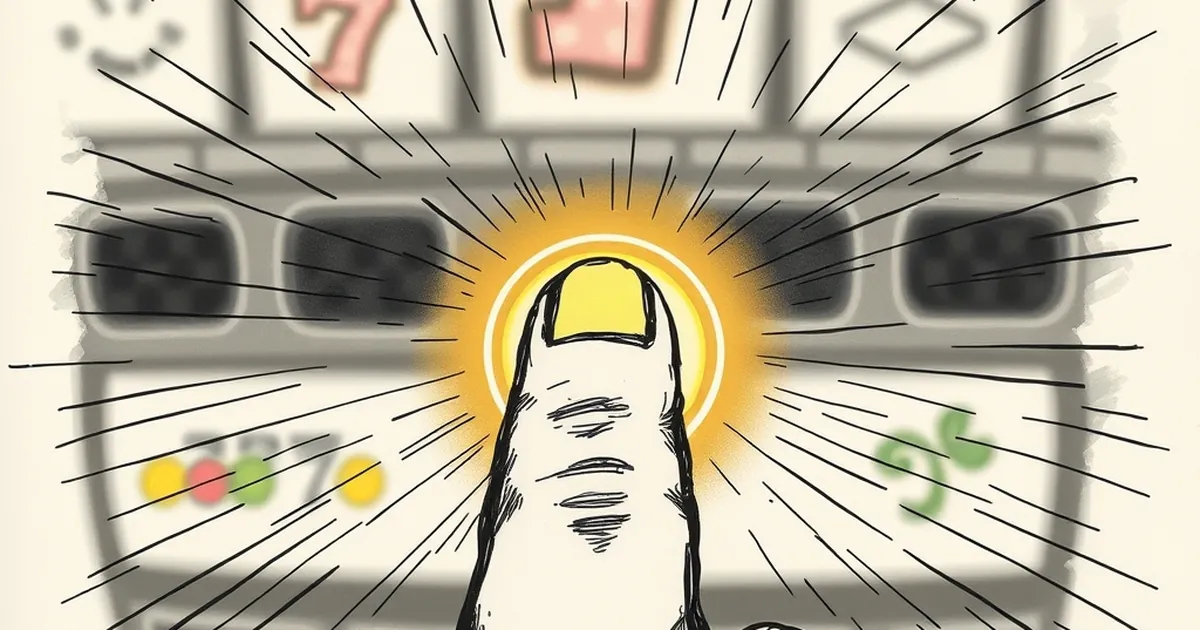
You hit spin, and your phone buzzes back. A short, crisp pulse. Your brain registers it as a tiny confirmation—not that you won, but that something good is about to happen. That’s the problem. Haptic feedback on the spin button doesn’t just tell you the game registered your tap. It manufactures a micro-reward before the reels even stop, training you to associate the act of betting with pleasure, not the outcome.
The Dopamine Pre-Fire
Haptic feedback exploits a quirk called the reward prediction error. Your brain releases dopamine not when you win, but when you anticipate a win. The buzz is a cue that says "action taken, result incoming." Over time, that buzz becomes a conditioned stimulus—like Pavlov’s bell. A 2021 study on mobile gambling apps found that tactile feedback increased spin frequency by 18% compared to silent, vibration-free interfaces. Players weren’t winning more. They just felt like they were about to win more.
The "Near-Miss" Haptic Amplifier
Slots already use visual near-misses (two cherries and a blank) to keep you spinning. Haptics turn that into a full-body experience. When a near-miss lands, the spin button’s buzz syncs with the losing visual to create a false win certainty. You feel the vibration, glance at the screen, see almost-matching symbols, and your brain conflates the two inputs. It’s not just a loss—it’s a loss that felt like a win. Developers know this. Some games even vary the haptic intensity: a stronger buzz on "big" spins or after a losing streak, mimicking the tension of a real machine’s physical lever.
How Your Phone Becomes a Slot Machine
Your smartphone’s Taptic Engine or vibration motor isn’t a neutral tool. It’s a reward delivery system. Casinos didn’t invent this—social media did. But iGaming adopted it fast. The spin button’s feedback loop works because it’s immediate. You don’t have to look at the screen to feel it. You can tap, feel the buzz, glance away, and still feel like you’re playing. This lowers the cognitive barrier to repeated betting. You’re no longer deciding to spin; you’re just responding to a tactile cue.
The 300ms Window
The critical window is about 300 milliseconds. That’s how long it takes for the haptic pulse to register and for your brain to assign it a positive or neutral value. In that gap, before the reels stop, your brain has already processed the buzz as a "go" signal. The actual result—win or loss—arrives after the dopamine spike. You’re not reacting to the outcome. You’re reacting to the expectation the buzz created.
The Silent Gamble
Regulators in the UK and Sweden have started scrutinizing "sensory feedback" in slot design, but haptics remain mostly unregulated. They’re not flashing lights or loud sounds. They’re subtle, personal, and hard to track. A player might not even notice the buzz after an hour of play. But that’s the point. The absence of the buzz—the silent spin—feels wrong now. It feels like the game is broken. That’s how deep the conditioning runs.
So what happens when the tactile feedback is removed? Some players report feeling "empty" or less engaged. They spin slower, bet less. The game loses its frictionless rhythm. The question isn’t whether haptics make you win more—they don’t. It’s whether a technology designed to confirm a tap has become the primary reason you keep tapping in the first place.
— creative mess