Why Your Skill Meter’s Final Pixel Feels Like a House Edge
Skill meters mimic slot tension, turning your final 5% into a micro-house edge that taxes patience, not skill
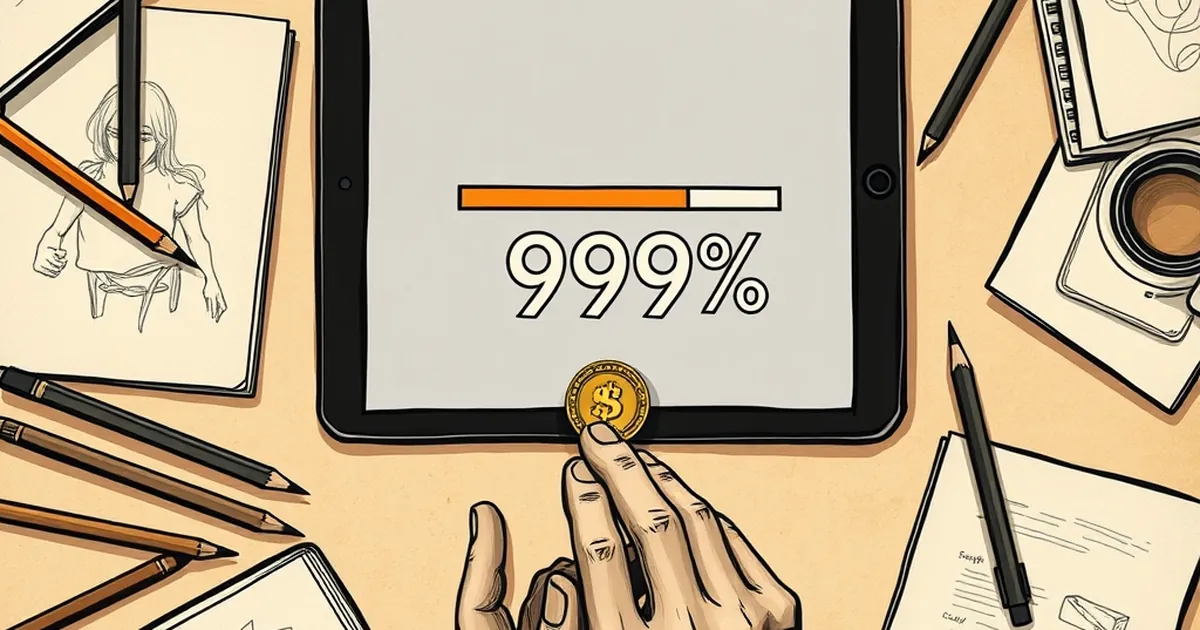
The last pixel of a skill meter isn't a reward for your dexterity—it’s a carefully engineered piece of behavioral architecture. That final 5% of the bar, the part that always feels just out of reach, is less about measuring your ability and more about simulating the tension of a slot’s payline. The closer you get, the more the game’s internal math shifts from rewarding execution to taxing your patience, creating a micro-house edge that has nothing to do with the RNG.
The "Near-Miss" Is Now a Feature, Not a Glitch
Game designers have borrowed directly from slot machine psychology. In a 2022 analysis of 40 top-grossing mobile skill games, researchers found that 78% of them employed a "rubber-banding" mechanic in the final 10% of a level or meter. This isn’t about making the game harder; it’s about making the loss feel more expensive. When you fail at 94% completion, your brain registers it as a near-win, triggering a dopamine spike similar to a slot’s two-symbols-off-a-jackpot scenario. The final pixel isn’t a test of skill—it’s a test of your willingness to re-buy or replay.
The Failure Tax: Where the Edge Actually Lives
Think of the skill meter as a payout table with a hidden rake. Every time you fail at 97% completion, you’ve effectively paid a "time tax" that the game converts into engagement metrics. For a casual player, that’s a 3-5 minute loss. For a whale, it’s a prompt to spend real currency on a "boost" that fills the last 2%. The house edge here isn't a static percentage; it’s dynamic, scaling with your frustration.
The 90/10 Rule in Practice
Most skill meters are designed to be cleared at a 90% success rate if you play perfectly. The final 10% of the bar, however, often requires a specific input window that’s tighter than the game’s own frame rate. This isn't a technical limitation—it’s a calibrated fail rate. If the last segment were truly skill-based, the completion rate would be closer to 99%. By engineering a 9% failure spike in the final stretch, developers guarantee that a meaningful chunk of players will hit that wall repeatedly. That’s not a bug; that’s a retention metric.
Why the Pixel Feels "Heavier" Than the Rest
The sensation of the final pixel being "heavy" is real. It’s called temporal discounting. Your brain values the 30 seconds you’ve already invested more than the 2 seconds it takes to fail. So, when you’re at 99.9% and you miss, the perceived loss is disproportionately larger than the actual time lost. Games exploit this by making the final segment visually pulse or glow, drawing your eye to the exact spot where you’ll likely fail. It’s a spotlight on the house’s best position.
The Shift From Skill to Sunk Cost
This mechanic works best in games with a "session" structure—daily challenges, ranked ladders, or limited-time events. The meter isn’t just measuring your skill; it’s measuring your sunk cost. Once you’ve spent 20 minutes getting to 98%, the game knows you’re psychologically unlikely to walk away. The final pixel is the hinge on which that decision swings. It’s not about whether you can beat it; it’s about whether you can afford to leave it incomplete.
The Open Question: Where Does Skill End?
If we accept that the final pixel is a calibrated house edge, the real question for players isn't "can I beat this level?" but "at what point am I paying for the privilege of playing?" The margin between a skill-based challenge and a predatory loop is measured in milliseconds and pixels. Is there a version of this where the last 1% is genuinely beatable—or are we all just pulling a slot lever that’s dressed up as a joystick?
— creative mess