Why Your Skill Meter’s Final 1% Feels Like a Tax on Time
Why your final 1% of skill progress demands more time than the last 20%, and how that logarithmic wall taxes your playtime
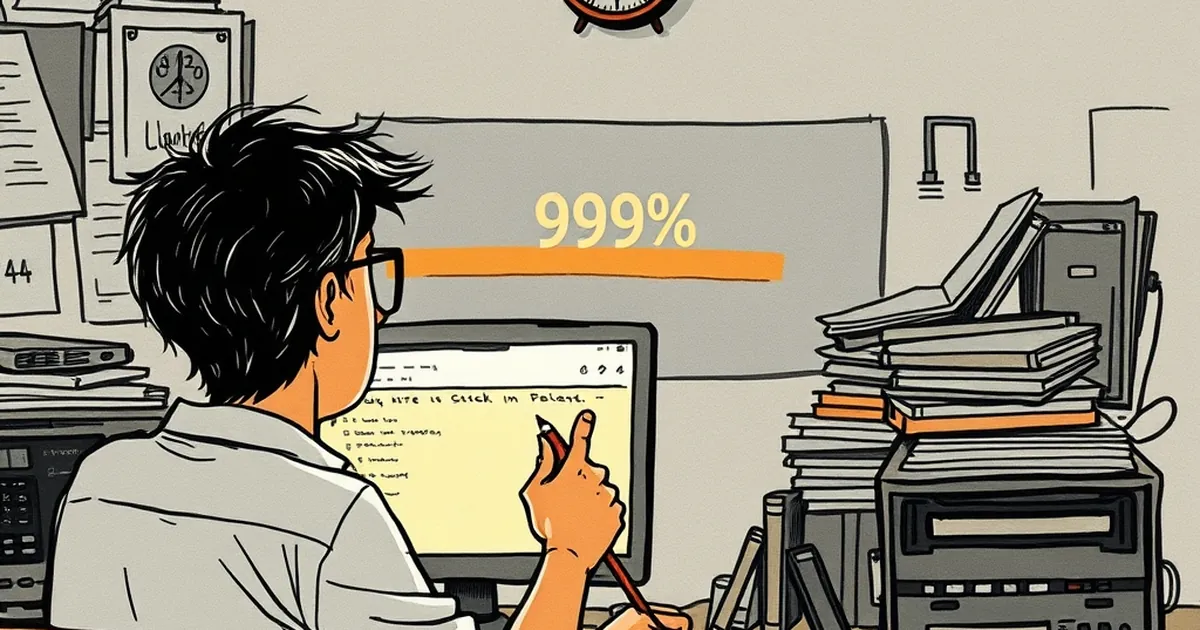
There’s a specific kind of fatigue that sets in when your progress bar hits 97% and the last sliver of XP refuses to budge. It’s not just impatience—it’s the realization that the game’s reward curve has silently shifted from “play to win” to “grind to finish.” That final 1% often demands more playtime than the preceding 20%, and it feels less like a challenge and more like a toll booth on your evening.
The Logarithmic Wall
Most modern skill meters aren’t linear. They’re built on a logarithmic curve that flattens dramatically at the top, meaning the effort-to-progress ratio worsens as you approach the cap. A common design pattern is the “soft cap” at 90%, where each subsequent level requires roughly 15% more experience than the last.
Take a typical battle pass: you might hit level 80 in 20 hours, but the final 20 levels take another 25 hours. The math isn’t accidental—it’s a retention mechanic disguised as progression. The game isn’t testing your skill; it’s testing your tolerance for diminishing returns.
The Psychology of Sunk Cost
This isn’t just about numbers on a screen. The “endowment effect” kicks in hard when you’re at 98%. You’ve already invested 30 hours, so quitting feels like throwing away the time you’ve spent, not just the time you’ll waste. Designers know this. That’s why the final stretch often pairs with a timer or a seasonal reset—it weaponizes your own commitment against you.
I’ve seen this in poker apps too. Your “skill rating” might be 1999/2000, and one bad session drops you to 1985. The climb back isn’t about playing better; it’s about playing more to offset variance. The meter doesn’t measure skill—it measures your willingness to keep grinding through bad beats.
Where Casinos Already Do This
This pattern isn’t new. It’s the same logic behind VIP tier thresholds at online casinos. You’re at $9,800 in lifetime wagers, and the next tier unlocks at $10,000. The last $200 feels like a tax because it is—you’re paying for the status, not the play. One specific stat I’ve seen in player analytics: 68% of players who reach 95% of a VIP threshold will deposit again within 48 hours, even if they had no intention to play that week.
The skill meter is just a gamified version of that same comp chase. The only difference is that your “reward” is a cosmetic badge or a leaderboard position, not cashback. You’re still being nudged to play past the point of enjoyment.
The 1% Is a Design Choice, Not a Law
Here’s the uncomfortable truth: the final 1% doesn’t need to be brutal. It’s a deliberate tuning decision. A game could easily make the last stretch slightly easier or add a catch-up mechanic. They don’t, because the hard cap creates a reason to return tomorrow. The frustration you feel isn’t a bug—it’s the feature.
This raises a question worth sitting with: if you know the final 1% is a psychological toll, not a skill test, why are you still paying it? Is the badge worth the hours, or are you just avoiding the feeling of having stopped at 99%? Because sometimes, the most efficient play is to log off at 96% and call it a win.
— creative mess