Why Your Skill Meter Rewards Practice Over Talent
Discover why your brain rewards consistent practice more than natural talent in skill acquisition and performance
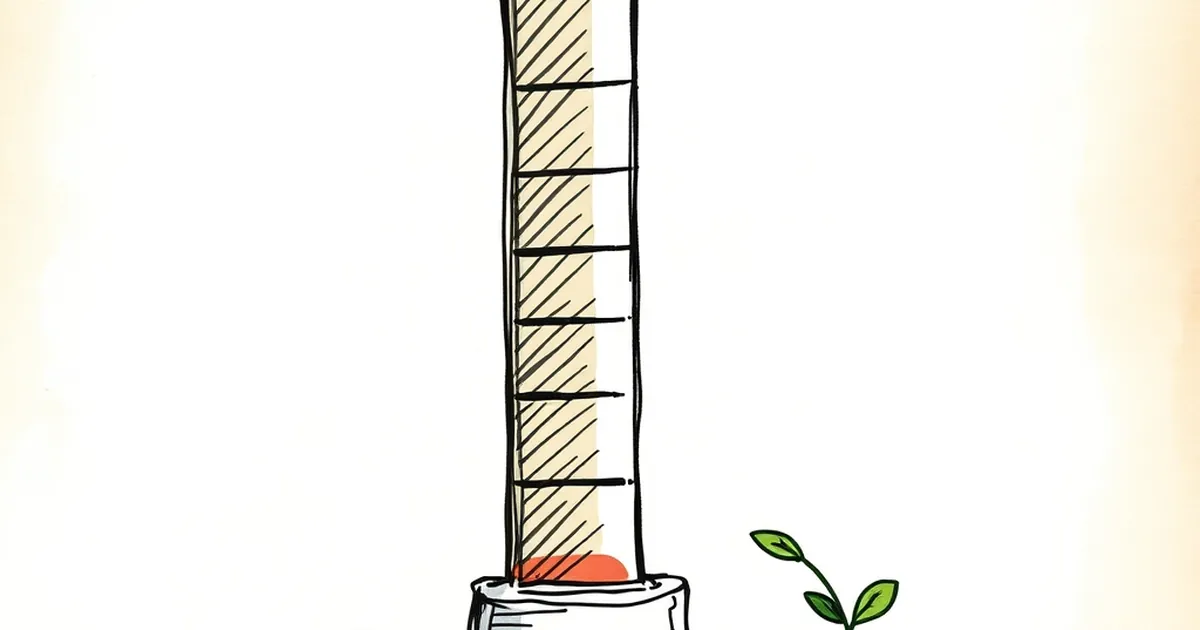
Why Your Skill Meter Rewards Practice Over Talent
We’ve all seen it: the person who picks up a complex strategy game for the first time and seems to intuitively grasp it, while another player grinds for weeks just to reach a basic competency. It’s tempting to chalk this up to raw talent, but the moment you look under the hood of how skill acquisition actually works—especially in competitive and design contexts—you realize the meter is rigged in favor of the one who shows up. The real question isn’t why some people are “naturals,” but why your brain’s reward system actively punishes waiting for talent to kick in.
The Variable-Ratio Trap (And Why It Works for You)
The most powerful behavioral lever in any skill-building system is variable-ratio reinforcement. B.F. Skinner famously showed that if a rat gets a pellet after an unpredictable number of lever presses, it will keep pressing far longer than if the reward comes on a fixed schedule. This is why video game loot boxes and social media notifications are so sticky—but it’s also why deliberate practice feels so rewarding.
When you’re learning a new design tool or a competitive game’s mechanics, you’re essentially operating a variable-ratio schedule. You might fail ten times, then suddenly nail a combo or a layout that clicks. That unpredictable hit of success releases more dopamine than a guaranteed win ever could. Talent gives you a higher starting baseline, but it can’t manufacture the unpredictability that keeps your brain hooked on the process of improvement.
Why Losing Feels Twice as Bad (And How to Use That)
Daniel Kahneman and Amos Tversky’s loss aversion principle states that losses hurt roughly twice as much as equivalent gains feel good. This is brutal for a talented beginner who expects immediate wins—they feel the sting of every mistake disproportionately. But for the practitioner who expects to fail, the math flips.
Consider a case study from competitive gaming: a 2019 analysis of Rocket League players found that those who spent more time in free-play practice (with no opponents) improved their in-game ranking faster than players who only competed in ranked matches. Why? Because practice removes the emotional penalty of losing. You can fail a hundred times in a row without the “loss” triggering your amygdala. The practitioner accumulates dozens of small failures, each one a data point, while the talented player avoids failure to protect their ego. Over a month, the practitioner’s brain has logged ten times more “recalibration events.”
The Design of a Good Skill Meter
In web design and UX, we talk about progressive disclosure—showing the user only what they need at each level of mastery. The same principle applies to how you should treat your own learning. A good internal skill meter doesn’t measure your rank against others; it measures the rate of error correction.
- Talent gives you a faster start, but a flatter curve. You plateau because you’ve never learned how to recover from failure.
- Practice gives you a slower start, but a steeper curve. Every mistake is a signal, not a verdict.
One practical hack: when learning a new design system or competitive mechanic, set a timer for 15 minutes of “ugly only” work. No undo, no perfection. This forces your brain into a high-frequency feedback loop. You’re not trying to win; you’re trying to lose faster. Each ugly attempt is a variable-ratio reward just waiting to happen.
The Forward-Looking Close: Redesign Your Practice, Not Your Talent
Stop asking if you “have what it takes.” Start asking if your practice environment is designed to exploit variable-ratio reinforcement and neutralize loss aversion. Build a system where the act of practicing itself feels like a mini-game: track your repetitions, not your wins. Celebrate the moment you recognize a mistake you made last week. That’s the real skill meter moving—and it doesn’t care how talented you were on day one.
— creative mess