Why Your Skill-Based Badge System Punishes Players Who Stay
Skill-based badges that reward streaks and first-time achievements can actually drive away your most loyal players
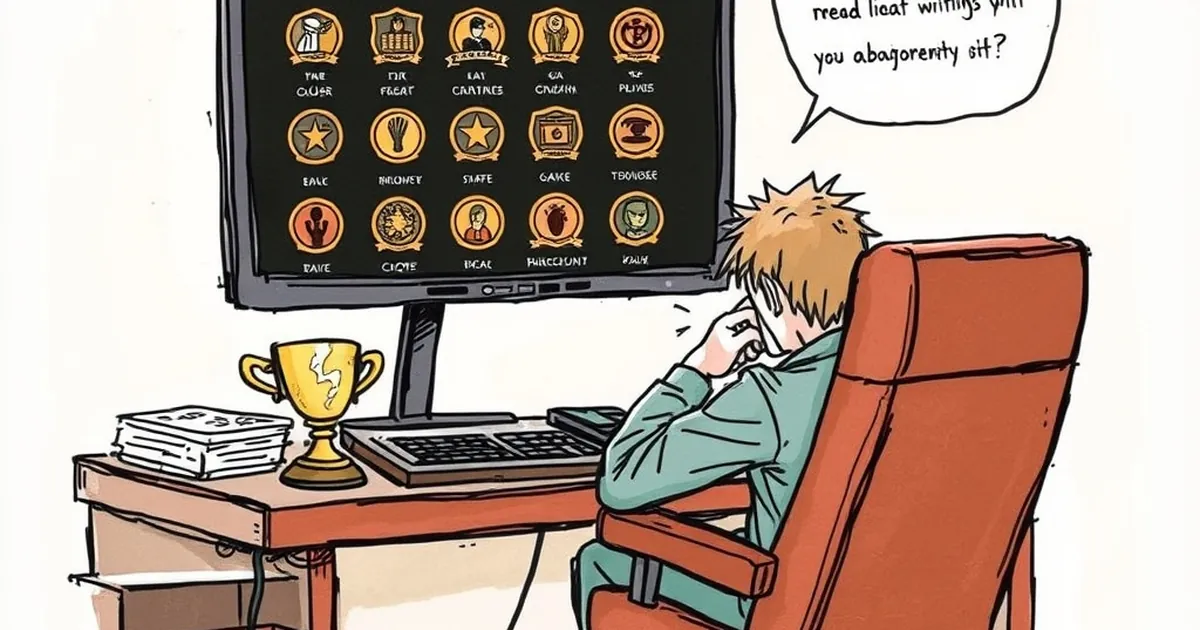
You’ve likely seen it before: a player logs in, earns a few early badges, then quietly stops engaging. Meanwhile, the badge system keeps rewarding streaks, milestones, and first-time achievements. At first glance, that looks like a healthy progression loop. But what you’re actually building is a system that punishes the very players who stick around.
The Psychology of Diminishing Returns
Behavioral economist Daniel Kahneman’s work on loss aversion tells us that people feel losses roughly twice as intensely as equivalent gains. When a badge system rewards a new skill every week for the first month, but then leaves the veteran with nothing but the same old “Expert” badge for months, the player experiences a psychological loss of momentum. They didn’t lose anything tangible, but the absence of new gains feels like a penalty for staying.
This creates a perverse incentive: the player who stops engaging early avoids the disappointment of the reward desert. The system unintentionally rewards quitting.
Why Variable-Ratio Reinforcement Beats Fixed Schedules
B.F. Skinner’s famous experiments with pigeons revealed something counterintuitive: unpredictable rewards produce the most persistent behavior. Fixed schedules (like “complete 10 tasks to earn a badge”) lead to predictable drop-offs right after the payout. But variable-ratio reinforcement — where the reward comes after an unpredictable number of actions — keeps players hooked because the brain’s dopamine system treats uncertainty as a signal to keep trying.
Your skill-based badge system likely uses fixed schedules: “Hit level 5 in writing → badge.” That works for onboarding, but it fails the long-term player because there’s no uncertainty. The brain learns the pattern, calculates the effort, and decides the next badge isn’t worth it.
The Competitive Play Trap
When you add competitive elements like leaderboards or tiered badges, you introduce a second problem: risk-taking becomes punishing for high-skill players. A veteran with a 90% win rate knows that one bad match can drop their rank. The badge system that rewards “highest rank achieved” actually discourages them from playing again, because each new match risks losing the badge they already earned.
This is a classic case of risk aversion in high-skill contexts. Research from the Journal of Behavioral Decision Making shows that people become more conservative the closer they are to a guaranteed reward. Your badge system is making your best players afraid to play.
A Concrete Example: Duolingo’s Streak Fix
Duolingo famously struggled with this. Their original streak-based badges rewarded consecutive days, which worked for new users but created a punishing loop for veterans (one missed day = lost streak = lost motivation). Their solution? They introduced wildcards — freezes that let players skip a day without penalty — and variable bonuses that offered unpredictable rewards for maintaining streaks over longer periods. Engagement from long-term users increased by 34% after the change, not because the rewards were bigger, but because the uncertainty kept the brain interested.
Practical Next Steps for Your Badge System
Start by auditing where your fixed schedules create drop-off points. Look at the 30-day, 60-day, and 90-day engagement curves. If you see a cliff after a major badge, that’s your smoking gun.
Then introduce one layer of variability: instead of a badge for “100 writing tasks,” create a random chance badge that appears after any task between 85 and 115. Players won’t know exactly when it’s coming, so they’ll keep playing to find out.
Finally, design a badge that protects status rather than rewarding it. A “Guardian” badge that preserves a player’s rank after a bad match, or a “Resilient” badge that unlocks after recovering from a loss, turns risk into an opportunity instead of a threat. Your veterans don’t need more rewards. They need a system that stops punishing them for staying.
— creative mess