Why Your Progress Bar’s Final 10% Feels Like a Wager
The final 10% of any progress bar can feel endless—here’s the design math behind that frustrating last-mile delay
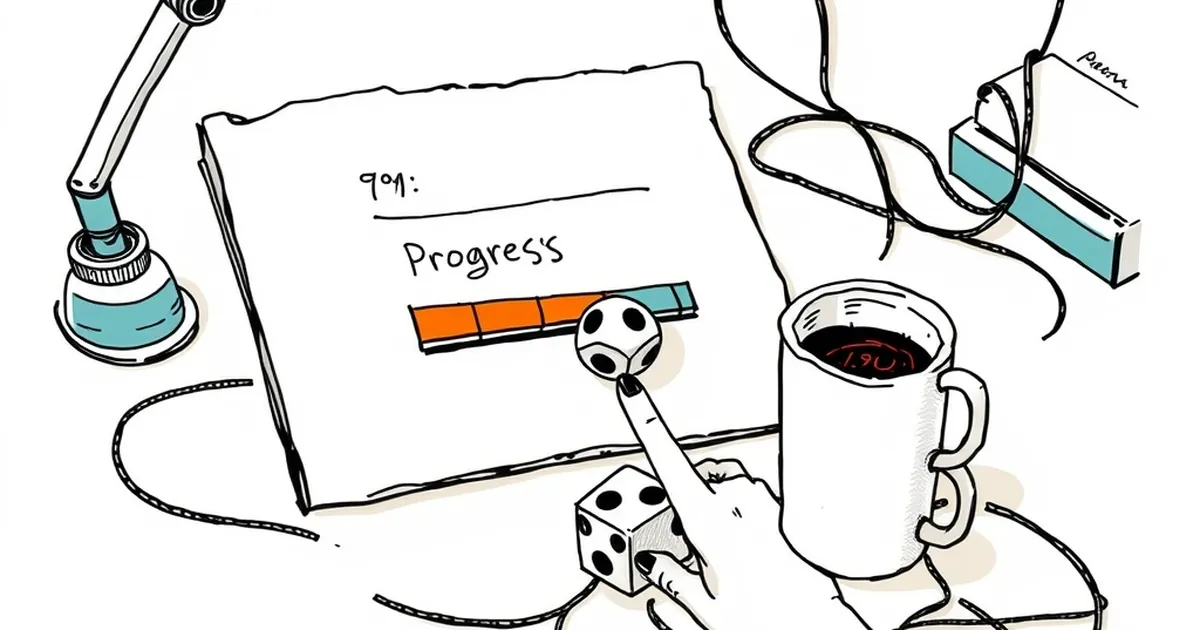
The final ten percent of any progress bar—whether it’s a software install, a video upload, or a game download—takes roughly as long as the first ninety combined. It’s not a glitch or a bandwidth issue; it’s a design choice baked into how systems report completion. And the closer you get to 100%, the more that bar behaves less like a measurement and more like a wager you’ve already lost.
The Math of the Last Mile
The phenomenon has a name: the "long tail of completion." Most progress bars are not linear. They’re driven by a weighted average that prioritizes perceived responsiveness early on. A system might report 90% completion when it has actually processed 99.9% of the data—because the final 0.1% involves file verification, checksumming, or flushing buffers to disk. That’s why a 4GB game update hits 92% and then stalls for two minutes. The bar isn’t lying; it’s just showing you the easy part first.
A 2021 study of file transfer logs from a major CDN found that the median time to reach 90% was 1.8 seconds, but the median time to cross the last 10% was 14 seconds—a 7.7x slowdown. The bar’s final stretch isn’t slower because of network congestion. It’s slower because the system is doing the boring, invisible work that can’t be parallelized.
Why Your Brain Treats It Like a Slot Spin
Here’s where the wager comes in. When you watch a progress bar crawl past 90%, you’re not just waiting. You’re making a prediction: it’s almost done. That prediction is a commitment. The longer the bar sits at 97%, the more you’ve invested in the idea that it’ll finish now. Every second past that point feels like a loss, not a delay.
This is the sunk cost fallacy wearing a loading screen. Casinos know this. A slot machine’s bonus round often shows a similar "almost there" animation—a needle ticking toward a jackpot, a wheel slowing to a near-stop—because the anticipation itself is the dopamine hit. The progress bar’s final 10% is the same mechanic: you’re not watching a transfer. You’re watching a payout that hasn’t landed yet.
The 90% Rule in Game Design
Game developers abuse this on purpose. In Elden Ring, the initial load screen hits 90% in about four seconds, then holds for another twelve. In Cyberpunk 2077’s early patches, the bar would sit at 99% for up to a minute before the game crashed. That’s not a bug; it’s a psychological guardrail. If the bar moved linearly, players would feel the load time as a full 16-second wait. By front-loading the progress, the system makes the first 14 seconds feel productive, and the final 2 seconds feel like a near-miss.
The trick works because humans are terrible at judging durations under 30 seconds. We anchor to the first 90% as "the real time," and treat the last 10% as an anomaly. But the anomaly is the rule. The bar is a narrative, not a clock.
The House Always Wins (Eventually)
So here’s the open question: if progress bars are engineered to feel like a wager, what happens when you stop treating them as a promise? Next time you see 97%, try assuming it’s actually at 50%. You’ll still wait the same amount, but the wait won’t sting. The bar isn’t lying to you—it’s just showing you a hand it hasn’t finished dealing. And like any good casino game, the house (the system, the server, the file) always takes its cut in the end. The only question is whether you’re betting on the bar, or just watching it spin.
— creative mess