Why Your Progress Bar’s False Finish Line Frustrates Users
Discover why progress bars that skip to 99% early break user trust and how to design honest, frustration-free progress indicators
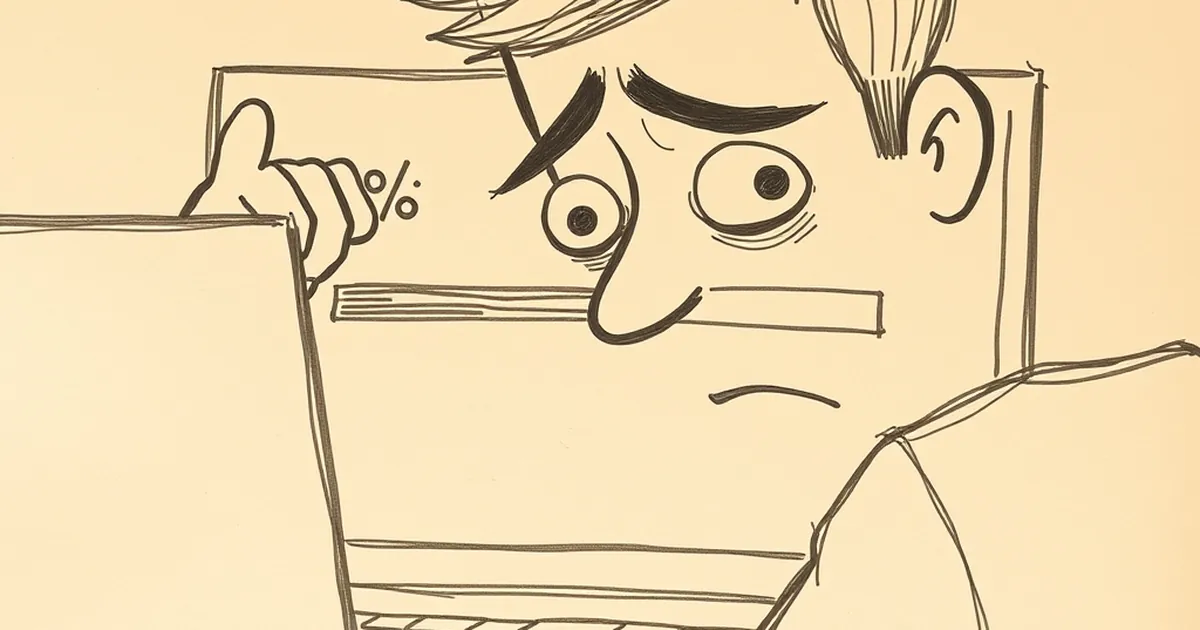
You open a checkout page, fill in your details, and a reassuring progress bar shows you’re 60% of the way there. Then you click “Next” — and it jumps to 75%. One more click, and suddenly it’s 99% — but you’re not done. A spinning wheel appears. A “confirm your email” prompt. A captcha. The bar sits frozen at 99% for an uncomfortable ten seconds before finally snapping to 100%. What happened to the 95% step? Did you miss something? Why does this feel like a trick?
That feeling isn’t just annoyance — it’s a violation of a basic cognitive expectation: progress should be linear, predictable, and honest. When a progress bar lies, it doesn’t just confuse users; it erodes trust in the entire system.
The Psychology of the False Finish Line
We crave closure. Psychologist Bluma Zeigarnik famously observed that waiters remembered unpaid orders far better than settled ones — our brains hold unfinished tasks in active memory. A progress bar exploits this: each incremental step releases a small dopamine hit, rewarding us for moving forward.
But when you artificially slow the final 5% — or worse, add hidden steps after the bar says you’re almost done — you trigger what Nobel laureate Daniel Kahneman calls the “peak-end rule.” Users remember the experience not by its average, but by its most intense moment (the frustration of the stuck bar) and its ending (the deceptive finish). A smooth 80% of the journey is forgotten; that last 10-second stall becomes the story they tell.
Variable-Ratio Reinforcement: The Wrong Kind of Hook
Variable-ratio reinforcement — the principle that unpredictable rewards drive the most persistent behavior — is famously powerful. Slot machines use it. Social media feeds use it. But your progress bar should never use it.
When a user expects steady progress and gets random pauses or fake “almost there” moments, you’re training them to distrust your interface. They learn that 95% doesn’t mean 95%. They start scanning for hidden traps. Instead of feeling guided, they feel played. One study from the Nielsen Norman Group found that users abandon tasks at rates 20–40% higher when progress indicators are misleading, even if the actual wait time is identical.
Loss Aversion and the Sunk Cost Trap
Here’s where it gets sneaky: a false finish line exploits loss aversion — our tendency to fear losing progress more than we value gaining it. You’ve already invested three minutes filling out that form. The bar says you’re at 85%. Do you really want to abandon all that work?
Designers sometimes lean into this, using the bar as a retention hook. “They’ve come this far — they’ll finish.” But this backfires. Users who feel trapped by a deceptive bar don’t just finish the task; they leave with resentment. They may not return. A better approach: make the bar accurate, and if a step genuinely takes longer, tell them why (“We’re verifying your payment — this takes a moment”).
A Concrete Example: The Multi-Step Form That Works
Consider how Airbnb handles booking. Their progress isn’t a single bar — it’s a clear, numbered step list: “1. Choose dates → 2. Add guests → 3. Review details → 4. Confirm payment.” Each step has a known duration. There’s no mystery. If a step takes extra time (like payment processing), they show a spinning icon with a real message: “Processing. This usually takes 10 seconds.”
No fake 99%. No hidden 95%. The user knows exactly where they are and how far they have to go. Trust remains intact.
Moving Forward: Honest Progress, Better Retention
The fix isn’t complicated. Audit your interface for “false finish lines” — any step that jumps from 95% to 100% with no visible intermediate work. Replace vague bars with explicit step counts or time estimates. If a step genuinely has variable duration, show a real-time indicator (like a spinner with a message) rather than a frozen bar.
Your users aren’t lab rats. They’re people trying to accomplish something. Give them a progress bar they can believe in, and they’ll reward you with something far more valuable than a completed form: their trust.
— creative mess