Why Your Loyalty Program’s Tiers Reward Spending Over Skill
Online casino loyalty tiers reward spending, not skill—discover why your play style matters less than your wagering volume
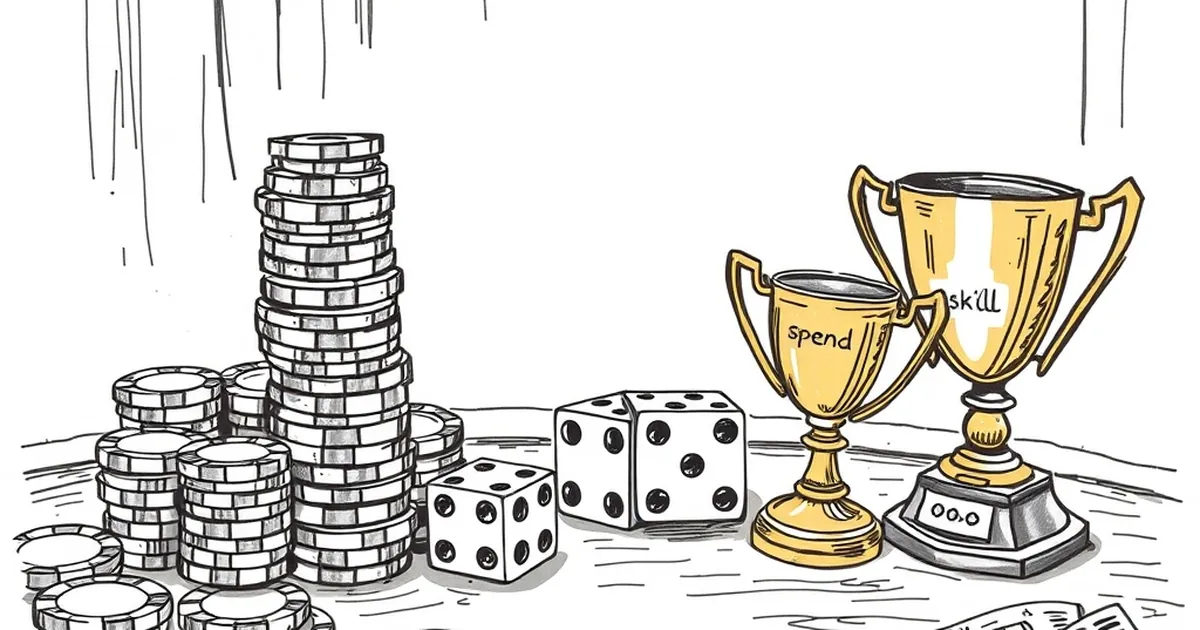
You hit Platinum status last month. You’re expecting a bigger comp rate, faster point accumulation, maybe a dedicated host. What you actually got was a slightly higher cashback percentage on losses and a free-play bonus that requires a 40x wagering requirement. That’s not a reward for loyalty — it’s a reward for losing more.
Most online casino loyalty programs are built on a simple math problem: they track how much you wager, not how well you play. The player who grinds low-edge blackjack with perfect basic strategy earns fewer tier points than the one hammering 96% RTP slots at $5 a spin. The system isn't blind to skill — it actively penalizes it.
The Wagering Weighting Trap
Every tier program assigns points based on house edge. Slots typically earn 1 point per $10 wagered. Blackjack might earn 1 point per $100. Baccarat? Often 1 point per $200. This isn't accidental. The operator knows a skilled blackjack player can reduce the house edge to 0.5% or lower. That player costs the casino money in comps relative to their theoretical loss. So the points are weighted to ensure the house always comes out ahead on the exchange.
A concrete example: at one major program, reaching the top tier requires 250,000 status points per quarter. A slots player hitting 97% RTP at $1 per spin needs to wager about $2.5 million to get there. Their expected loss is roughly $75,000. The same tier chasing a blackjack player using perfect basic strategy (0.5% house edge) would need to wager $50 million. Their expected loss is $250,000. The program isn't rewarding loyalty — it's filtering out players who make the math too tight.
The Comp Rate Ceiling
Most programs cap your "earned" comps at 0.1% to 0.3% of total wagering. Even at the highest tier, that rarely exceeds 0.5%. Compare that to the 1-2% cashback some crypto casinos offer on net losses with no wagering requirement. The tiered program's "exclusive" benefits — faster withdrawals, personal account managers, birthday bonuses — are often worth less than a flat 0.2% rakeback on every bet.
Why Skill Gets You Worse Rewards
The fundamental design flaw is that loyalty programs measure volume, not value. A skilled player generates lower house revenue per dollar wagered. The program's tier thresholds are set so that only high-volume, high-edge players can realistically reach the top. If you're playing video poker with 99.5% return or betting the pass line with full odds, you're effectively locked out of the best comp rates unless you dramatically increase your bet size — which raises your risk of ruin.
The Behavioral Nudge
This isn't a bug. The tier system is designed to encourage higher wagering on higher-edge games. The player who chases status points by switching from blackjack to slots is exactly what the program wants. The points-per-wager ratio makes that switch feel logical, even though it increases your expected loss per hour by 10x or more.
What This Means for You
Next time you're 500 points away from the next tier, ask yourself: is the reward worth the extra wagering required? Most mid-tier benefits — free spins on specific slots, deposit match bonuses with high rollover — are worth less than the expected loss of reaching them. The top-tier perks like all-expenses trips or VIP events are reserved for players who lose six figures annually.
The loyalty program is not a partnership. It's a revenue optimization tool dressed up as appreciation. The question isn't whether you can reach the next tier — it's whether the house is betting on you trying.
— creative mess