Why Your Loyalty Points System Creates Unrewarding Rewards
Why your loyalty points feel more exciting to earn than to spend, and how psychology explains the hollow reward
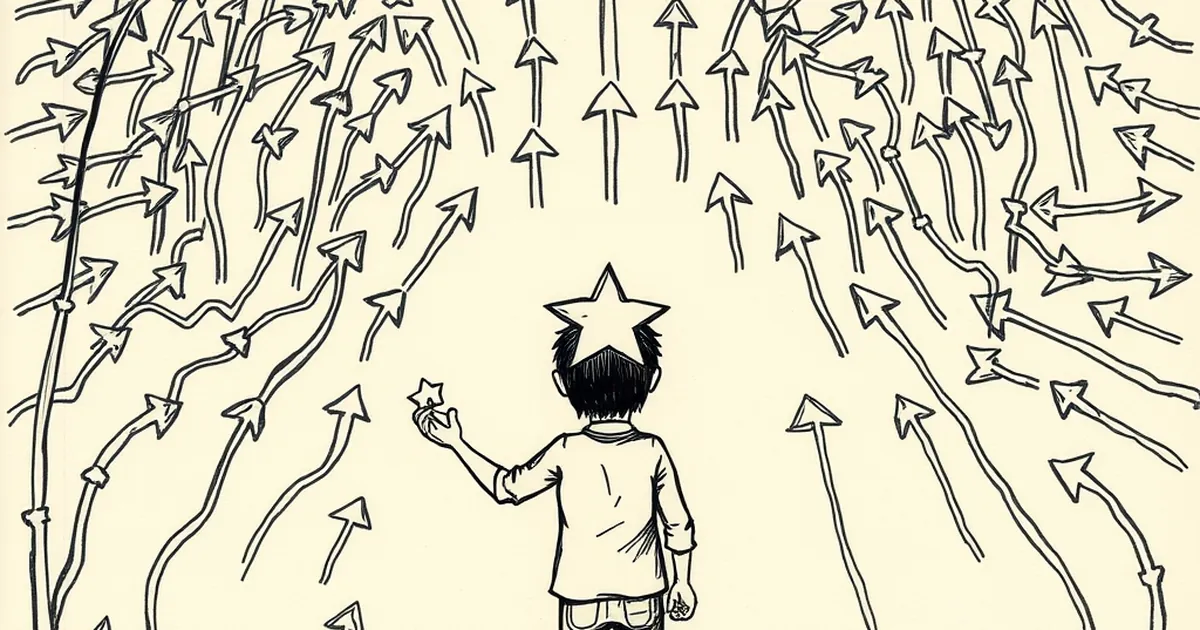
We all know the drill. Swipe your card, earn points, wait for a free coffee or a 10% off coupon that feels less like a treat and more like a receipt for your own loyalty. But have you ever noticed that the reward itself feels... hollow? That the real buzz came from watching the points tick up on the screen, not from actually redeeming them? There’s a reason for that, and it has nothing to do with the value of the free item.
The Dopamine Gap Between Earning and Spending
Behavioral psychology makes a clear distinction between anticipatory pleasure and consummatory pleasure. Anticipatory pleasure is the dopamine hit you get when you’re about to get something good. It’s the feeling of possibility. Your loyalty app's progress bar is a masterclass in triggering this. Every time you see that bar fill up, your brain releases a small dose of the same chemical that makes you crave a notification or a like on social media.
The problem is that the actual reward—the free sandwich, the $5 credit—is a consummatory event. It’s a transaction. Once you redeem, the chase is over. The dopamine pipeline dries up. Your website or app has trained the user to love the game of earning, but it has delivered a payoff that feels more like a conclusion than a celebration. You’ve created a system that peaks before the prize is even handed over.
Variable-Ratio Reinforcement (The Slot Machine Effect)
This is where things get interesting for designers. The most addictive behavioral loop isn't a fixed, predictable payout. It’s the variable-ratio reinforcement schedule, famously studied by B.F. Skinner. In his experiments, pigeons pecked a button obsessively when the reward came at random intervals. They pecked far less when the reward was predictable.
Most loyalty programs are the opposite of variable. They are fixed-ratio: buy 10, get 1 free. It’s boring. It’s predictable. The brain learns to expect the reward, and the novelty fades fast. A smarter design would introduce small, unpredictable bonuses along the way to the big reward. Imagine a loyalty page that occasionally surprises you with a "Double Points Day!" or a random micro-reward (a free add-on, a tiny discount) that pops up after your third purchase instead of your tenth. That uncertainty is what keeps the reward loop feeling fresh. It’s not about tricking the user; it’s about making the journey feel alive.
Loss Aversion: The Silent Killer of Redemption
There’s another problem hiding in plain sight: the reluctance to cash in. Daniel Kahneman and Amos Tversky’s work on loss aversion shows that people feel the pain of a loss roughly twice as strongly as the pleasure of an equivalent gain.
When a user has accumulated 500 points, those points feel like a possession. Redeeming them feels like losing them. You lose the progress bar. You lose the status of "high roller." You lose the safety net. So, people hoard points. They sit on them, waiting for the "perfect" reward that never comes. Your reward system has inadvertently created a behavioral trap where the reward itself is less desirable than the status quo of having the points. The fix? Make the act of redeeming feel like a gain, not a subtraction. Show the user what they unlock (a new tier, a new badge, a new experience) when they spend, not just what they lose.
How to Build a Better Loop
Stop designing for the final transaction. Start designing for the feeling of discovery. If you want a loyalty system that actually feels rewarding, treat the points as a game mechanic, not a currency.
- Introduce surprise milestones. Don't just show a progress bar. Sprinkle in unexpected "level-ups" at random purchase counts.
- Make redemption a new beginning. When a user cashes in points, immediately start a new, exciting mini-progress bar for a different reward. The game never ends.
- Kill the "save up" mentality. Offer smaller, more frequent rewards that are easy to spend. A user who redeems often is a user who stays engaged.
Your loyalty system shouldn’t be a savings account. It should be a playground. The best reward isn’t the free item—it’s the feeling that the next surprise is always just around the corner.
— creative mess