Why Your Bonus Meter’s First 10% Pays Faster Than the Last 90%
Why your bonus meter’s first 10% moves fast, but the last 90% crawls—here’s the math behind the sprint and grind
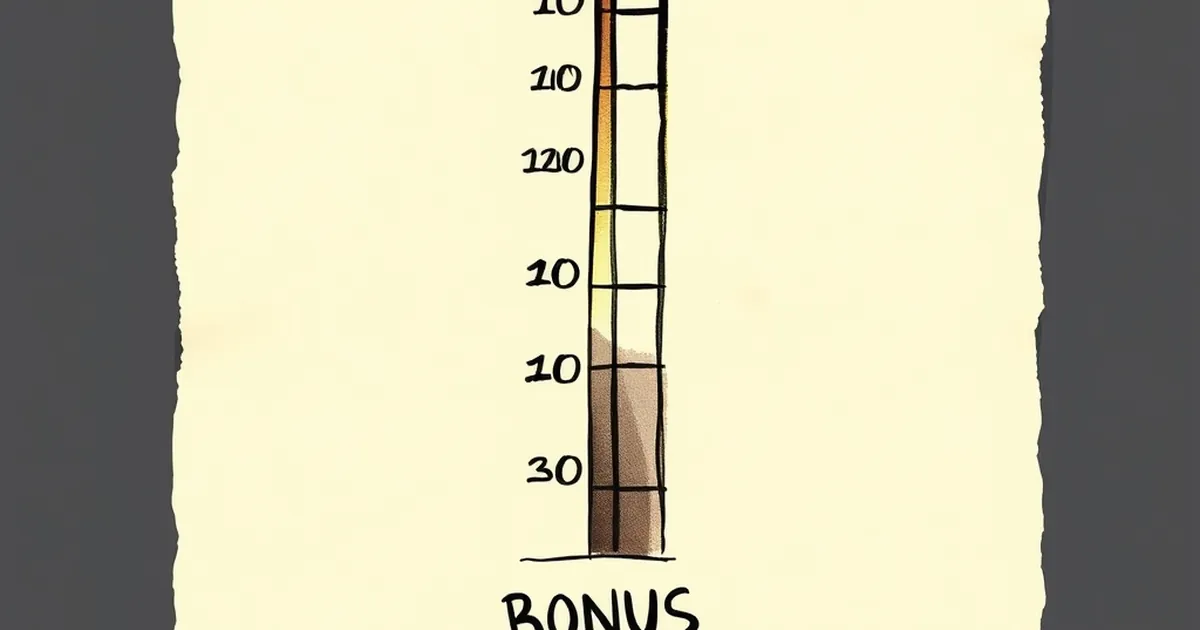
The first 10% of your bonus meter almost always moves faster than the last 90%, and it’s not a conspiracy—it’s math. Whether it’s a deposit match or a free-spin conversion, the early progress is fueled by pre-existing balance, low wagering thresholds, and game selection, while the final stretch grinds against a shrinking effective bankroll. Here’s the breakdown of why that meter feels like a sprint followed by a crawl.
The Starting Balance Effect
When you claim a bonus, you’re not starting from zero—you’re starting from your own deposit plus the bonus. That combined balance means your first few bets are larger relative to the wagering requirement. If you deposit $50 for a 100% match, you’re playing with $100. The first $10 of wagered turnover comes from a pool that’s twice the size of your actual money, so it feels effortless.
But here’s the kicker: the wagering requirement applies to the bonus amount and often the deposit. So if the requirement is 35x, you’re chasing $3,500 in turnover. Early on, you’re chipping away with a $100 bankroll. By the time you’re at 90% completion, you’ve likely lost most of that buffer—unless you’re up. And if you’re up, the math changes: you’re now betting with winnings, not the original stake, which makes the final 10% feel like protecting a fragile lead.
Variance Compresses the Finish Line
Here’s the stat that explains the phenomenon: over 100,000 spins on a 96% RTP slot, the standard deviation of your bankroll is roughly ±$1,200 on a $1 stake. That’s huge. In the early phase, variance works in your favor because you have more bullets. A few lucky hits push the meter forward disproportionately. By the end, you’re often playing with a smaller bankroll relative to the remaining requirement, so each spin carries more risk of busting before you clear the bonus.
The last 10% isn’t slower because the game changes—it’s slower because your risk of ruin spikes. You’re no longer betting to build; you’re betting to survive.
Game Weighting Punishes Late Progress
Most casinos assign different contribution rates to games—slots at 100%, table games at 10-20%, live dealer often at 0%. Early on, you might mix in a few blackjack hands to stretch the balance. But as the meter approaches 90%, the smart play is to switch to high-RTP slots with low variance, which contribute fully but pay out in frequent small hits. That’s the right call, but it also means your average win size drops.
A slot like Starburst at 96.1% RTP will clear a $1,000 requirement in roughly 1,040 spins. The first 900 spins feel like a steady drip. The last 100 spins? You’re watching every spin like a hawk, because a single cold streak of 20 spins wipes out 2% of the remaining requirement—and if you’re down, that’s the difference between cashing out and starting over.
The Psychological Cliff
Let’s be honest: the meter itself is a trick. Casinos know that progress bars create a sunk-cost fallacy. At 90%, you’re more likely to keep betting at higher stakes to finish, even when the remaining wagering requirement exceeds your current balance. That’s not a bug—it’s the design. The first 10% feels fast because you’re not emotionally invested yet. The last 90% feels slow because you’re watching every cent, and that attention makes time drag.
What Does This Mean for Your Strategy?
If you know the back half is a grind, the smart move is to front-load your wagering. Clear as much as you can while your balance is high, then switch to the lowest-variance game that still contributes 100% for the final stretch. And if you’re at 85% with a balance that’s 20% of the remaining requirement, do the math before you chase—sometimes forfeiting the bonus is cheaper than finishing it.
The real question isn’t why the meter slows down. It’s whether you’re playing to clear the bonus, or playing to win. Those two goals rarely align at the same speed.
— creative mess