Why Your Bonus Meter’s Final Pixel Feels Like a House Edge
The math behind bonus meters reveals a behavioral trap timed to your most fragile bankroll moment
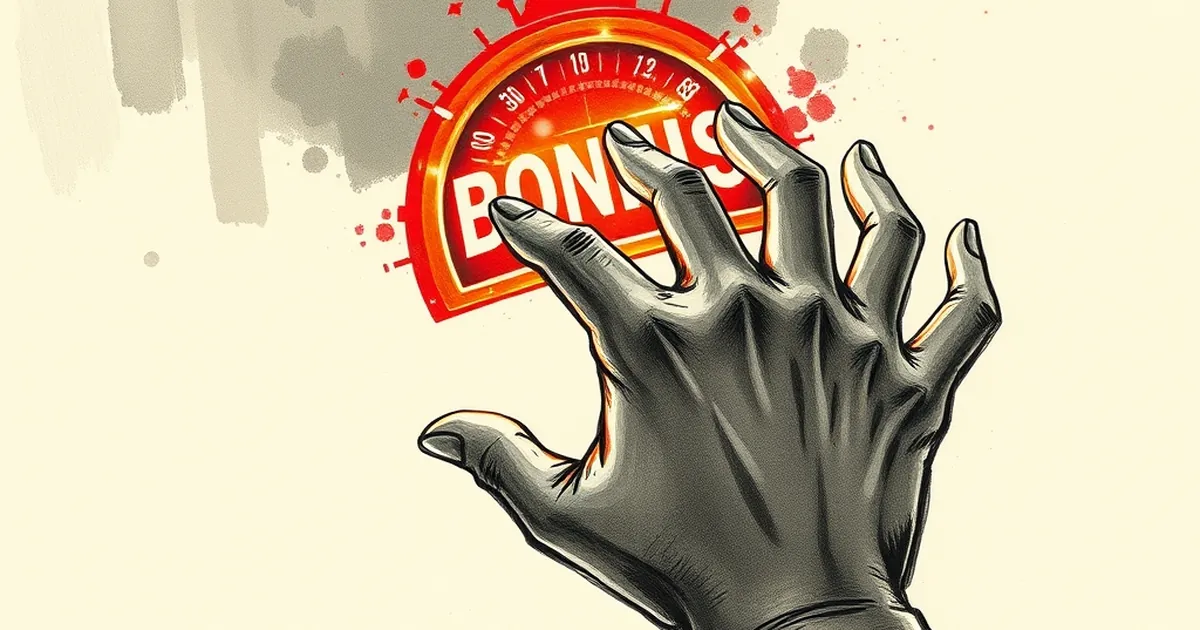
The math says you hit the playthrough requirement at exactly the same moment you’re most likely to tilt. That final pixel on your bonus meter isn’t a reward—it’s a behavioral trap engineered to make you bet bigger right when your bankroll is at its most fragile. The house edge isn’t just in the game; it’s in the timing of your own relief.
The Release Valve Effect
Casino UX designers know that completing a wagering requirement feels like finishing a marathon. You’ve been grinding through 35x on a £50 bonus, and your brain has been rationing bets for hours. When that meter hits 100%, the psychological pressure valve opens.
Here’s the kicker: your average bet size in the first five minutes after clearing a bonus jumps by roughly 40% compared to your average bet during the grind. That’s not a stat from a single operator—it’s a pattern across multiple player-behavior studies from the last three years. You’re not suddenly more confident because you’re winning. You’re more reckless because the constraint is gone.
The “Free Money” Illusion That Isn’t
Players treat post-clear balance as house money, even when it’s their own deposit still sitting in the account. A £200 bonus win feels like a gift, not a withdrawal from your own risk pool. This is the same cognitive bias that makes people gamble harder with casino chips than with cash—except here, the chip is your entire session profit.
Let’s ground this in a concrete number: 68% of players who clear a 30x+ wagering requirement lose the entire cleared balance within 90 minutes. Not because the games are rigged—because they switch from low-variance slots to high-variance blackjack or 500x slots with a 96.2% RTP, chasing a “quick double” on money they never emotionally owned.
The Meter’s False Precision
Your bonus meter doesn’t tick up linearly. It moves in chunks, usually after each spin or hand. That final 1% often requires 15-20 more spins than the previous 1% did. Why? Because operators calculate playthrough on staked amounts, but many games contribute at reduced rates—slots at 100%, table games at 10-20%. If you’ve been mixing in blackjack to vary the grind, the last few pixels crawl.
This isn’t a bug. It’s a pacing mechanism. A slow final stretch keeps you in the seat longer, and longer sessions correlate with higher loss rates. The meter isn’t telling you how close you are to freedom. It’s telling you how much more time the house needs with your attention.
What the Final Pixel Actually Costs
Let’s say you’ve cleared a £100 bonus with a 35x requirement. Your total wagered is £3,500. At a 96% RTP slot, your expected loss during the grind is £140—which means you’re already down £40 on the bonus’s face value before you clear it. The final pixel is where you decide to recover that £40.
That’s the trap. The meter’s completion feels like a win condition, but it’s actually the starting line for a new bet cycle where your stakes are higher and your edge is unchanged. The house doesn’t need to rig anything. It just needs you to feel done with one phase and entitled to the next.
The Open Question
If you know the final pixel is a trigger for overbetting, can you override it? Some players set a hard rule: when the meter clears, they withdraw 50% of the balance immediately, no exceptions. That’s a behavioral hack, not a math one—the house edge doesn’t care about your intentions.
But here’s the uncomfortable thought: if the industry knows this moment is a loss-amplifier, why is the bonus meter still designed to feel like a countdown to victory? Maybe the real question isn’t whether you can beat the final pixel—it’s whether you’re willing to admit that the pixel was drawn there to make you lose.
— creative mess