VIP Tiers Downgrade 12 Hours Before the Email Says You Did
VIP tier downgrades often take effect hours before the notification email arrives, revealing how loyalty programs really time their changes
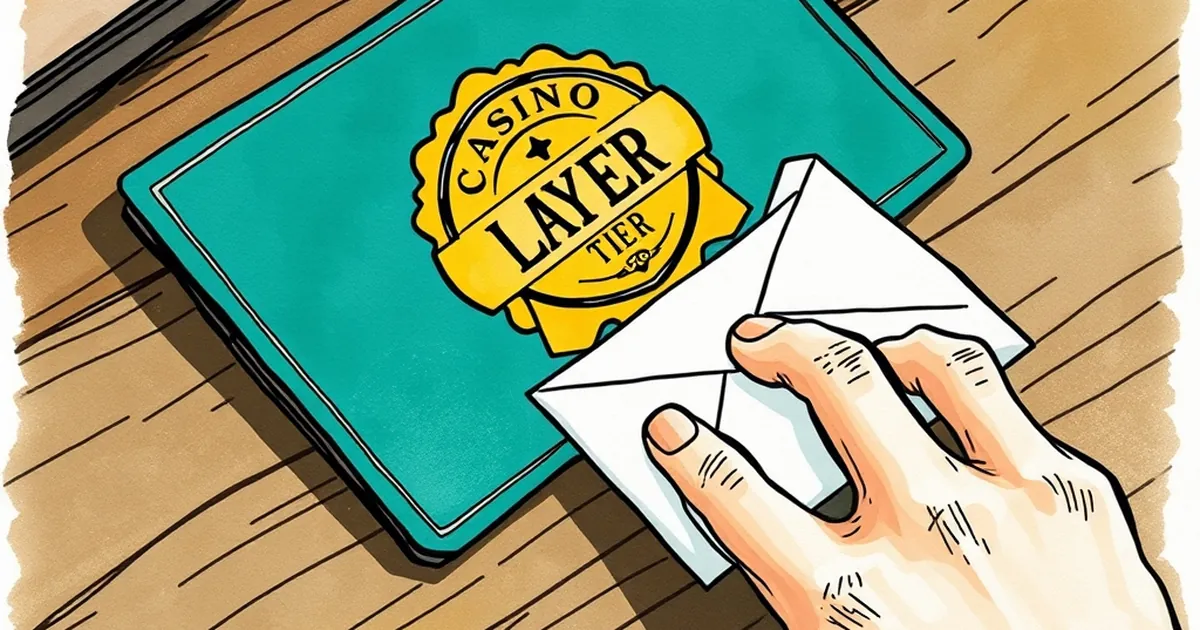
A player on a mid-tier VIP program logs in on a Tuesday morning and finds their cashback rate has dropped from 0.15% to 0.08%. The email explaining the change arrives that evening, timestamped 14 hours after the downgrade already took effect. This isn't a glitch. It's a pattern in how loyalty programs are structured, and it's worth understanding before you assume your tier status is locked in for the month.
The gap between "effective" and "notified"
Most VIP systems run on automated review cycles. A script checks your 30-day rolling wagering volume, compares it against tier thresholds, and reassigns you at a fixed hour — often 00:00 UTC or 03:00 local server time. The notification email is a separate process, usually batched and sent by a CRM tool that queues messages for a "reasonable" send window.
That queue is where the lag lives. If your downgrade triggers at 00:00 and the CRM batch runs at 14:00, you've played a full session at a lower rate before anyone told you. On a $40,000 wagering day at a 0.15% cashback rate, the difference between the old and new tier is $28. Small money per player. Multiply by a few thousand accounts and it's a meaningful line item for the operator.
Why the thresholds move more than the tiers
Tier tables look static. They aren't. Operators quietly adjust the volume required to hold a tier far more often than they adjust the tier names or headline perks.
A program that required $250,000 in monthly wagering for Gold in 2023 might require $400,000 by mid-2024, with the same Gold label and the same 0.15% cashback. Nothing in your account changes visually. Your rate only drops when you fail to hit the new, undisclosed threshold — and by then the review has already run.
This is the part most players miss: the downgrade isn't triggered by inactivity. It's triggered by relative inactivity against a moving bar.
The rolling window problem
Thirty-day rolling windows are common because they smooth out variance for the operator. They also mean a single quiet week — travel, a losing streak, a bankroll reset — can pull your average below threshold even if your quarterly volume is up. A player who wagered $1.2M over 90 days but only $180,000 in the trailing 30 can lose a tier they'd "earned" by any annual measure.
What the terms actually say
Read the VIP terms, not the marketing page. You'll typically find language like "tier status is reviewed periodically and may be adjusted at the operator's discretion" and "benefits are subject to change without prior notice." That clause is what makes a 12-hour notification gap legally unremarkable in most jurisdictions.
Some licensed markets — the UK, for instance, under Gambling Commission rules tightened in 2020 — require operators to be transparent about significant changes to VIP schemes and to reassess affordability. But "transparent" has been interpreted loosely. A change posted to a terms page counts. A personal email ahead of time often doesn't.
The practical move
If you're in a tier that matters to your effective return, don't rely on the email. Check your cashback rate manually at the start of each session, and screenshot it. If you see a drop before notification, you have a documented complaint — and a real question to ask your account manager about when the review ran and what threshold you missed.
The bigger question isn't whether a 12-hour gap is fair. It's why loyalty programs are designed so that the moment you're most likely to notice a downgrade — mid-session, rate already applied — is the moment you're least likely to be told about it.
— creative mess