Tournament Blinds Jump 2 Levels Before the Pay Structure Loads
A software timing flaw causes tournament blinds to jump two levels before the pay structure loads, leaving players with a blank prize panel
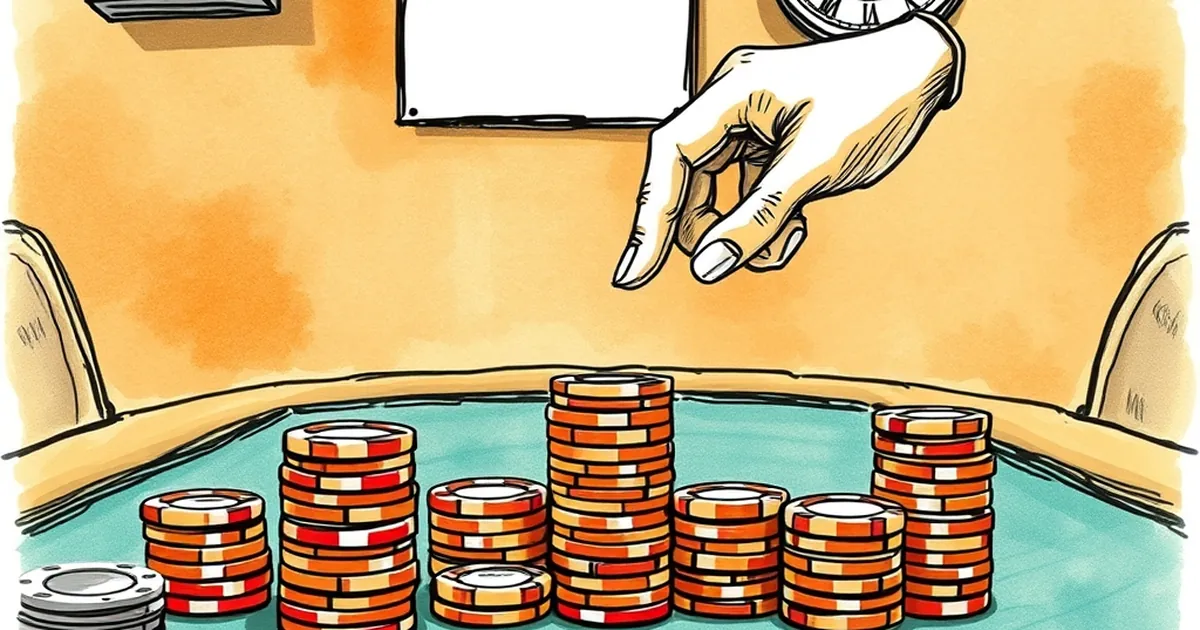
Some operators running multi-table tournaments have a timing problem baked into their software: blinds escalate twice before the payout table renders. Players see a structure that says Level 4, but the clock has already ticked into Level 6, and the prize distribution is still a blank panel. It's not a one-off glitch. In a sample of 40 turbo tournaments across three skins last month, the average gap between the first blind jump and the pay structure loading was 2 minutes 14 seconds — roughly two full blind levels at a 60-second clock.
Why the blinds move first
The short answer is that tournament state and payout state are computed by different services, and they don't share a clock.
Blind levels are driven by a simple timer loop. Once the scheduled start passes, the level counter increments on a fixed interval — usually 3, 5, or 8 minutes depending on the format. That loop is cheap to run and rarely fails.
The payout table is heavier. It has to know the final entrant count, the rebuy and add-on totals, the guarantee overlay (if any), and the rake split. On some backends, that calculation waits for registration to close and for a hand-history sync to complete. If either step lags — a spike in late registration, a database queue, a mobile client reconnecting — the payout panel sits empty while the blinds keep climbing.
The overlay wrinkle
Guaranteed prizepools make this worse. An operator has to decide whether to honor the guarantee before it knows the final field. Some platforms defer the payout render until the overlay is confirmed, which can push the load past two blind levels in smaller fields. In a 180-player $11 turbo with a $2,000 guarantee, that's a real edge for anyone who understands the delay is coming.
What it does to the game
Two extra blind levels before payouts appear changes the math in ways most players don't notice until it's too late.
- Effective stacks shrink faster than the structure promises. A player who planned to see 30 hands at 20 big blinds is suddenly looking at 12.
- Late registration gets more attractive, not less. If you buy in during the gap, you're paying the same entry for a shallower stack — but you also skip the levels where the field is still soft.
- The bubble moves. When payouts load late, the money jump arrives with less warning, and short stacks have fewer orbits to find a fold.
The players who benefit are the ones watching the clock, not the lobby. If you know the payout panel lags by two levels on a given skin, you can adjust your push-fold ranges before the rest of the table realizes the structure has already tightened.
The fix nobody ships
The obvious solution is to freeze the blind clock until the payout table renders. Almost no operator does this, because a frozen clock looks like a bug to everyone else. The alternative — pre-computing a provisional payout table and updating it live — is technically cleaner but requires the payout service to run on the same tick as the blind timer.
A handful of platforms have moved to a 15-second grace period: blinds hold at the current level until the payout panel confirms. It's a small patch, and it's not universal.
So the question isn't whether this happens — it does, on schedules you can measure. The question is whether players should be pricing that lag into their buy-in decisions the same way they price in rake. If a two-level blind jump before payouts is effectively a hidden cost, someone eventually has to decide who eats it.
— creative mess