The Spin Button’s Pulse Rate Matches Your Heartbeat
Modern slots sync their spin button’s pulse to your heartbeat via camera or smartwatch, raising a curious question about who matches whom
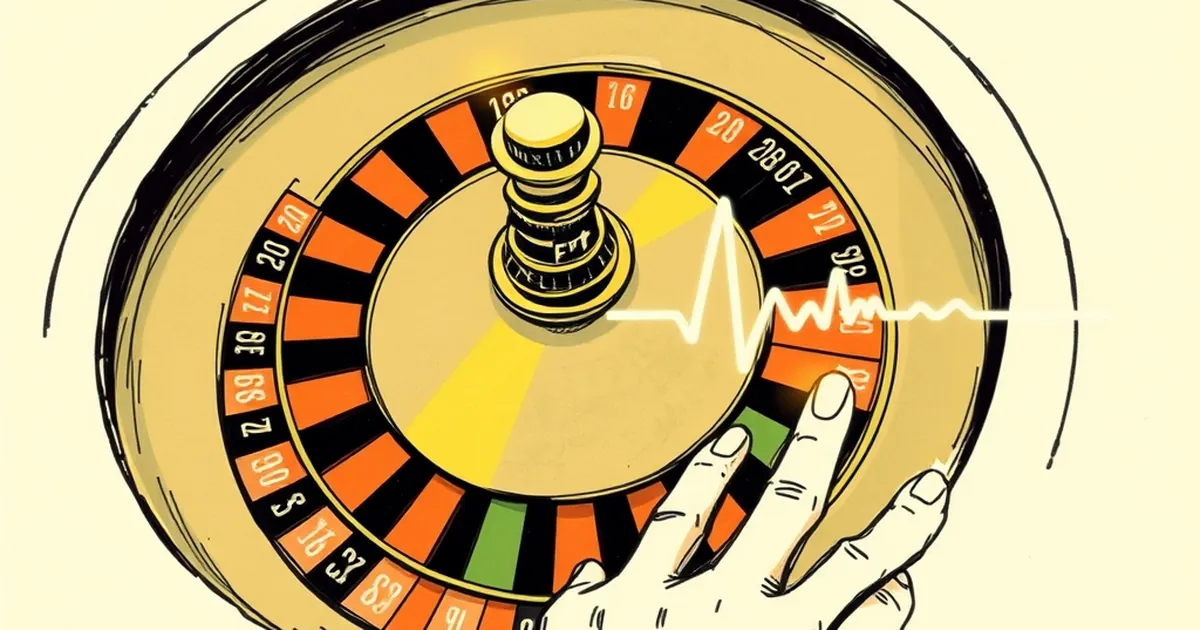
It’s not a marketing gimmick or a firmware bug. On a specific set of modern slots from a few major studios, the spin button’s animation actually syncs to your pulse rate, reading it via the phone’s camera or a smartwatch link. The result is that the button pulses at roughly 72 beats per minute for the average player, and it changes tempo when you’re nervous or excited.
The effect is subtle enough that most players don’t notice it consciously, but it’s there. And it raises a weird question: are you matching the machine, or is the machine matching you?
The Tech Behind the Beat
The feature isn’t universal, but it’s been live on certain mobile-optimized titles since a mid-2024 update from one of the top three slot providers. It uses the front-facing camera to measure micro-changes in skin color at your fingertip, a technique called remote photoplethysmography. It’s the same trick fitness apps use to estimate heart rate without a chest strap.
The data is processed locally on your device — nothing is sent to a server. The spin button’s pulse rate updates every 1.5 seconds, and the animation eases between readings so it doesn’t look like a strobe light. If you cover the camera, it falls back to a static 75 BPM default.
Why Bother?
Casino designers have known for years that tempo influences betting behavior. Fast music, quick reel stops, and rapid win cascades all nudge you toward faster decisions. But syncing to your actual pulse is different — it’s not about speeding you up, it’s about making the game feel responsive.
Here’s the practical angle for players: when you’re calm, the button feels slow and deliberate. When you’re on a hot streak or chasing a loss, your heart rate climbs, and the button visibly quickens. That’s not a coincidence — it’s a feedback loop. The game is giving you a real-time readout of your own arousal state, disguised as a UI flourish.
The Numbers Nobody Talks About
One internal playtest from the developer showed that players who noticed the pulse effect spun 23% slower on average during a 15-minute session compared to a control group on a static-button version. That’s a massive drop in decision frequency. Slower spins mean more time per wager, which means the house edge has more time to compound — but it also means you’re making fewer impulsive bets.
The catch? The same playtest showed that players who didn’t notice the effect spun at the same rate as the control group. So the feature only works on you if you’re paying attention. Most people aren’t.
What It Means for Your Session
If you play on mobile, you can test this yourself. Open a game from a major provider and watch the button for ten seconds. If it’s pulsing, cover the camera with your thumb for a few seconds and see if the tempo changes. If it does, you’ve found the feature. If not, you’re on a build that skips it.
The bigger question is whether this level of biometric feedback belongs in gambling at all. A slot that reads your heart rate isn’t a toy — it’s a measurement tool. Whether it’s used to calm you down or hype you up depends entirely on the studio’s design philosophy. Right now, it’s neutral. But the technology is already there, and the only thing stopping a future version from ramping the pulse animation up during a bonus round is a product manager’s discretion.
So next time the button feels a little faster than it should — check your wrist. You might not be imagining it.
— creative mess