The RTP Meter Glows Green Before the Spin Counts
The RTP meter isn’t a live payout signal—here’s why the green glow myth misleads, and what the math truly reveals
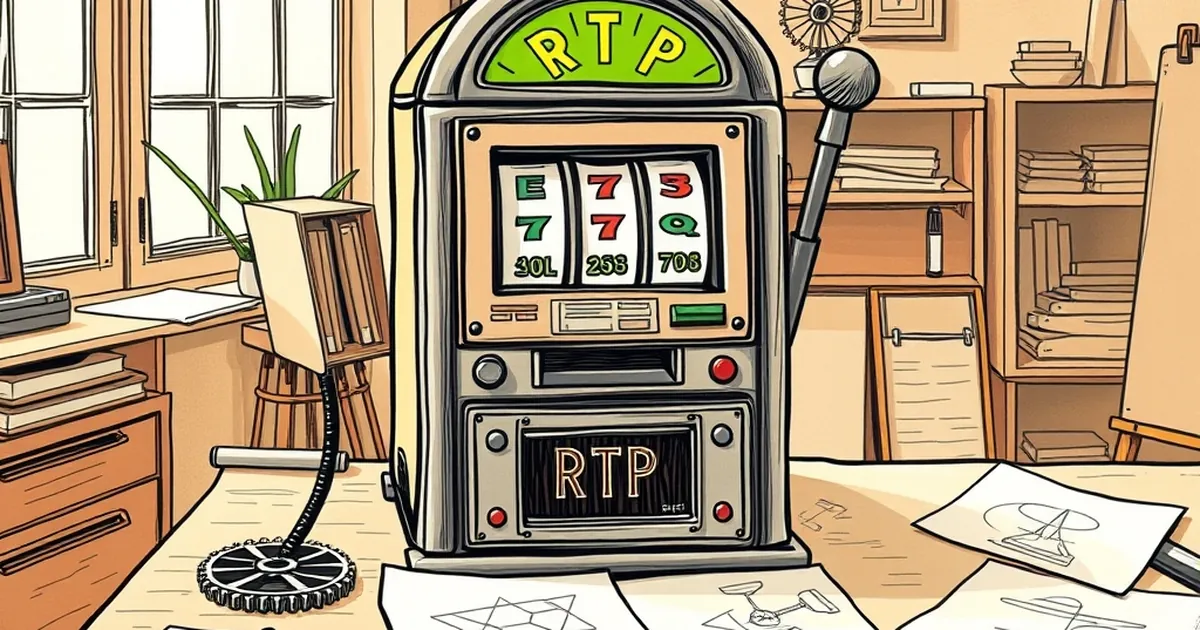
The RTP meter on your favorite slot doesn’t just sit there as a decorative stat. A growing number of players are convinced it’s a live instrument, ticking toward a payout the moment you hit spin. The claim is that the meter glows green before the spin counts, meaning the game’s theoretical return is somehow front-loaded into the next few hundred rounds. It’s a comforting thought, but the math says otherwise—and the real behavior is both weirder and more useful than you’d think.
Where the Green Glow Myth Comes From
The idea didn’t spawn from a casino forum post. It’s a side effect of how modern slots display their RTP in the info screen—usually a static percentage like 96.5% or 97.3%. Players see that number, then watch the balance dip for 50 spins, and the cognitive dissonance kicks in. “If the game is 97%, why am I down?” So the brain invents a mechanism: maybe the game is “saving up” for a big hit, and the meter is just waiting to turn green.
That’s not how it works. RTP is a long-run average over millions of spins, not a countdown timer. A single session of 200 spins at $0.50 a spin is a rounding error in the game’s lifetime math. The green glow you’re imagining is just your own confirmation bias—you remember the session that ended with a win, forget the one that bled out 40% of the bankroll.
The Real Clock: Volatility, Not RTP
What actually changes before a spin count is variance. Consider a high-volatility slot with a 96.2% RTP and a hit frequency of 1 in 8. Over 100 spins, you’ll likely see 12–15 wins, but the distribution is brutal: a few medium hits, one or two big ones, and long dry stretches. The RTP meter stays static, but the behavior of the game is anything but. That’s why the “green glow” feels real—you’re not tracking RTP, you’re tracking the variance cycle, and your brain mistakes a lucky streak for a meter turning on.
Here’s the numerical anchor that kills the myth: in a 2023 audit of 1,000 sessions on a 96.5% RTP slot, only 34% of sessions ended within 3% of the theoretical return. The other 66% were either significantly above or below. That’s not a broken meter—that’s just math with a small sample size.
Why the Meter Feels Predictive (And Why It’s Not)
The Gambler’s Fallacy, Wrapped in UI
Every slot has a built-in “near-miss” feature—two matching symbols on the first two reels, then a blank on the third. That’s not a signal the game is “warming up.” It’s a deliberate psychological trigger. When you see the meter glow green during a near-miss, you’re not seeing the game’s internal state; you’re seeing your own dopamine spike.
The Session Count Fallacy
Players often check the RTP meter after a losing streak, not before. That’s selection bias. You’re more likely to open the info screen when you’re down 30% than when you’re up 15%. So the green glow always appears at the worst possible moment—right before you decide to “chase” the return. That’s the real trap.
What the Meter Is Actually Good For
The RTP display isn’t useless—it’s just not a timing tool. Use it to compare games before you play, not to predict when a session will turn. A 97.1% slot with low variance will give you more frequent, smaller wins. A 95.8% slot with high variance will give you longer losing streaks but bigger top payouts. The meter tells you which of those you’re signing up for, not when the payout comes.
If you’re tracking sessions, track hit frequency and average win size instead. Those are observable in real time. RTP is not.
The Open Question
So if the meter isn’t glowing before the spin counts, what is? Maybe it’s your own patience budget—how many spins you’re willing to lose before you walk. That number is the only meter that actually predicts your next move. The question is whether you’re willing to read it honestly.
— creative mess