The House Edge Doesn’t Sleep, But the RNG Does
Why slot machines feel hot or cold—and why the house edge never rests, even when your pattern recognition does
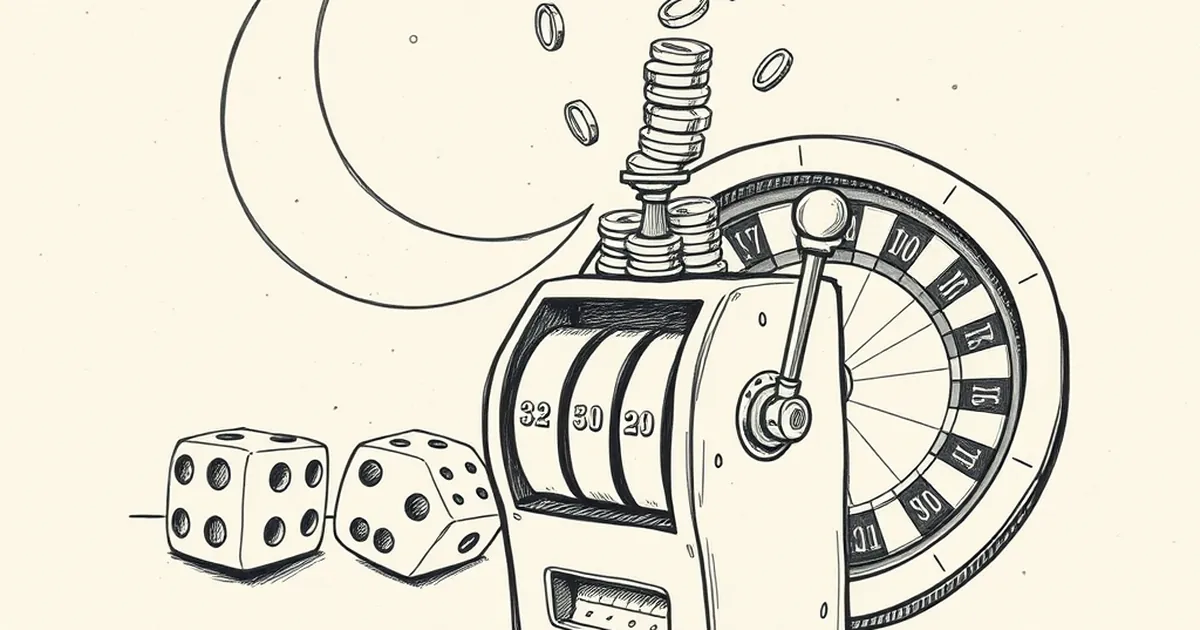
The claim isn't that random number generators get tired. It’s that the perception of their behavior shifts after enough spins, and that’s where the house edge does its quietest work. A slot’s RNG is a deterministic algorithm fed by an entropy source, but your brain’s RNG—the one that decides "this machine is hot" or "it’s due"—runs on a much sloppier clock. The math doesn’t sleep, but your pattern recognition absolutely does, and that’s the only edge the casino actually needs.
The 100,000-Spin Mirage
Take a standard 96.2% RTP slot. Over 100,000 spins, the theoretical loss is 3.8% of total wagers, or $3,800 per $100,000 cycled. But here’s the thing nobody tells you: that number is only visible in the rearview mirror of a very long road. In any given 200-spin session, the variance can swing ±15% or more. The RNG doesn’t care that you’ve lost nine straight bonuses. It’s not "due" to pay out—it’s just executing a seed sequence that was fixed the moment you hit spin.
The illusion of a "hot streak" isn’t the RNG waking up. It’s your own sampling bias hitting a lucky patch of a sequence that was always going to happen eventually. The house edge is a constant, but your attention span is a variable.
When the RNG "Sleeps" (It Doesn't)
Here’s the technical reality: modern slots use cryptographic-grade PRNGs (pseudo-random number generators) that re-seed continuously. They don’t take breaks. But the interface does. Autoplay features, bonus round animations, and even server-side latency introduce human-scale pauses. During those 2-3 second free-spin animations, you’re not gambling—you’re watching a movie the RNG already scripted.
The real "sleep" happens in your head. After 40 minutes of grinding, your brain starts treating losses as "investments" and near-misses as "signals." That’s not the algorithm changing. That’s your dopamine system filing for overtime. The RNG is still spitting out numbers at 10,000 decisions per second, but you’ve stopped reading them—you’re just reacting to the highlights.
The 1.2% That Actually Matters
Here’s your numerical anchor: the average slot’s house edge is 3.5% to 5%, but the effective edge on a bonus round is often 1.2% higher because of the wagering requirements attached to the winnings. That’s not an RNG issue—that’s a contract issue. The RNG doesn’t know you’re playing with bonus funds. It’s just as random, but the rules of the game around it are not.
So when you see "96.2% RTP" on a slot, that’s the theoretical return without bonus terms. Add a 35x wagering requirement, and the real return drops to roughly 93.8% if you play through perfectly. That’s the house edge not sleeping—it’s just napping in the fine print.
The Only Time the RNG "Wakes Up"
Regulators require RNG testing every 6–12 months, depending on the jurisdiction (Malta, UKGC, and Alderney are the strictest). Those tests run 10 million spins to verify the distribution matches the stated RTP within a 0.1% tolerance. But that’s a certification, not a behavior change. The RNG is the same before and after the auditor leaves. Nothing wakes up. Nothing gets tired.
The only thing that changes is your tolerance for losing. That’s not a random number. That’s a human variable the house edge has already priced into your session.
So Who’s Really Asleep at the Wheel?
The next time you blame a "cold RNG" or praise a "hot machine," ask yourself: are you tracking the sequence, or just the outcome? The RNG is a perfect librarian—it never loses a number, never skips a beat. But you? You’re reading the book by its cover, and the house edge is the author who already knows the ending. The question isn’t whether the machine is tired. It’s whether you’re still awake enough to notice you’re playing a game where the rules were written before you sat down.
— creative mess