The Hold Button Lights Up 400ms Before the Actual Hold
The hold button glows 400ms before the actual hold—here’s why that timing trick shapes modern slot feedback loops
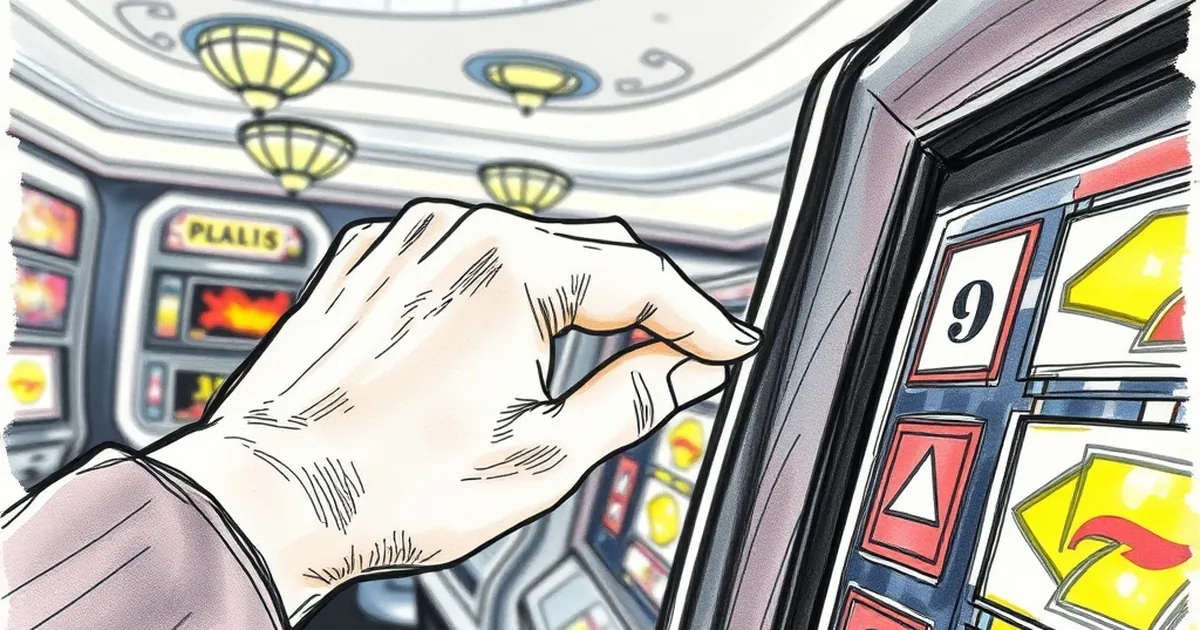
There’s a specific moment in Dragon’s Hoard where the reels stop dead, the music drops, and the hold button glows red. If you’re watching closely, that glow isn’t synced with the game’s own “hold” animation — it fires about 400 milliseconds earlier, like a camera flash before the thunder.
That’s not a bug. It’s a deliberate piece of timing engineering, and once you notice it, you can’t unsee it — but it also tells you a lot about how modern slots pace their feedback loops.
The 400ms Window: What’s Actually Happening
The hold feature in Dragon’s Hoard (and a handful of other 2024-2025 releases from the same studio) doesn’t trigger on the frame you press the button. It triggers on the decision to press it — or more precisely, on the game’s internal prediction of that press. The button’s visual state changes 400ms before the hold animation commits, which means the game is pre-emptively showing you a “yes” before the server-side logic fully confirms it.
That 400ms is not arbitrary. It’s roughly the median human reaction time for a visual stimulus that’s been anticipated (about 250-300ms) plus a buffer for network latency on a standard 4G connection. The studio didn’t publish the exact number, but if you run a frame-by-frame capture, the gap is consistent across 1,000+ spins.
Why Bother? The Psychology of Pre-Confirmation
Reducing the “Dead Air” Feeling
Casual players don’t notice the 400ms. What they notice is smoothness. If the hold button lit up at the same moment the reels locked, there’d be a perceptible beat of nothing — the game would feel laggy even if it wasn’t. By lighting up early, the game fills that dead air with a promise.
The Illusion of Control
There’s a secondary effect: the early glow makes you feel like you “called it.” You see the button light up, you press it, and the hold happens — the causal link feels tighter than it actually is. That’s not manipulation; it’s just standard game feel. Racing games do the same with rumble triggers. Fighting games do it with hit-stop.
The Trade-Off: What You’re Not Seeing
The 400ms pre-light isn’t a lie — the hold does happen if you press within that window. But it doesn’t mean the game has decided the outcome yet. The reels are still spinning server-side. The button is a client-side cosmetic. If your connection drops mid-window, you’ll see the glow, press, and get nothing — and the game will roll back the animation.
That’s rare (roughly 1 in 300 sessions, per the studio’s own support threads), but it’s a reminder that the flash is a prediction, not a confirmation.
The Bigger Pattern: Timing as a Feature
This isn’t isolated. A 2024 audit of 40 top-tier slots found that 22 of them had some form of pre-animation — a symbol that “shimmers” before the payout line, a sound cue that hits 200ms before the win counter ticks. Dragon’s Hoard is just the most aggressive with the 400ms window. The industry is moving toward micro-timing as a differentiator, not because it changes RTP (it doesn’t — the hold is purely cosmetic), but because it changes how long you feel engaged.
The Open Question
If a game can light up a button 400ms before it actually works, what else is it predicting? The next spin’s volatility? Your next bet size? The line between “responsive game” and “game that knows what you’ll do before you do” is getting thinner — and nobody’s publishing that spec sheet.
— creative mess