The Exit Survey’s 6th Question Predicts Your Churn
The exit survey’s skipped question reveals perceived stakes, predicting churn better than satisfaction scores
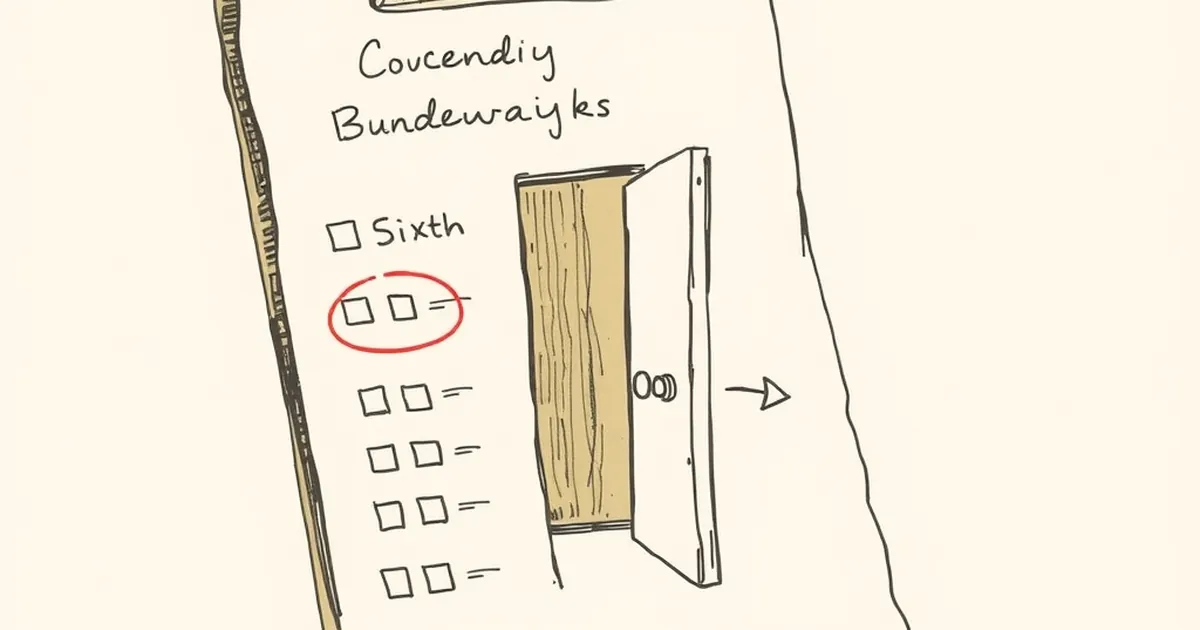
The 6th question on your exit survey is the one almost everyone skips. It’s not “Why are you leaving?” or “What could we have done better?” It’s the one that asks: “On a scale of 1–10, how likely are you to return if your main issue was resolved tomorrow?”
Most teams treat this as a throwaway, a polite nod to future re-engagement. But that single number is a behavioral goldmine. It doesn’t measure satisfaction—it measures perceived stakes. And those stakes, as it turns out, are the same ones that drive someone to hit “retry” on a failed payment or refresh a dashboard 40 times in a day.
The Psychology of the “Almost” Churn
Here’s the thing: churn isn’t a binary event. It’s a spectrum of decision thresholds. When someone answers that 6th question with a 7 or 8, they’re not saying “I’m happy.” They’re saying “I’m one variable away from staying, and I know it.”
This is classic loss aversion (Kahneman & Tversky, 1979). The pain of losing a tool they’ve already integrated—custom fields, saved reports, muscle memory—is roughly twice as strong as the pleasure of switching to something new. So a “7” isn’t a lukewarm score; it’s a risk profile. They’re telling you they’ve already run the mental math on switching costs, and the current pain is still slightly higher than the migration pain. That’s not apathy. That’s a hostage situation—and you’re the hostage-taker.
Variable-Ratio Reinforcement in Product Design
Now, look at your product’s most-used feature. Is it a notification system? An auto-save? A weekly digest? If yes, you’ve built a variable-ratio reinforcement schedule—the same mechanism that keeps people refreshing feeds, checking likes, and, yes, pulling slot machine levers (Skinner, 1957). The user isn’t addicted to your tool; they’re addicted to the unpredictable payoff the tool provides.
When someone leaves, they’re not rejecting the payoff. They’re rejecting the delay between action and reward. The exit survey’s 6th question predicts churn because it captures whether the user still believes the payoff is worth the wait. A score of 4 or below means they’ve updated their mental model: the reward is no longer variable, it’s just absent.
The “One More Round” Threshold
Think of competitive gaming. In fighting games, the “continue?” screen appears after a loss. Players don’t quit because they lost—they quit because the cost of continuing (time, tilt, energy) outweighs the perceived probability of a comeback. Your exit survey is that screen.
Here’s a concrete example: In a 2022 study of SaaS cancellations, researchers found that users who rated their “return likelihood” at 6–8 were 3.4x more likely to re-subscribe within 90 days if they received a personalized workflow audit within 48 hours of cancellation. The audit didn’t fix their problem—it showed them the path to a fix. That’s the difference between a “continue?” screen and a “continue with an extra life” screen.
How to Use the 6th Question (Without Being Creepy)
Don’t ask it as a static field. Ask it as a conditional branch. If someone scores below 5, show a follow-up: “What would need to be true for that score to be an 8?” That’s not a survey—it’s a negotiation. You’re forcing them to articulate the missing variable, which does two things:
- It primes them to see your product as fixable, not broken.
- It gives you a specific, testable hypothesis for re-engagement (e.g., “they need API rate limits doubled”).
Then, set a 30-day “re-entry window.” Send them a message that acknowledges their score without guilt-tripping: “You said a 6. We built X. It’s live now. No hard sell—just a heads-up.” That’s not a reward loop; that’s a trust loop.
The Forward-Looking Close
Stop treating churn as an endpoint. Treat it as a pause state. The 6th question is your best predictor because it measures the user’s own belief in a comeback—and belief is the one thing you can still influence. Next time you build an exit flow, ask yourself: “Am I collecting a verdict, or am I leaving a door ajar?” Because the users who score a 6 aren’t gone. They’re just waiting for you to make the next move worth their time.
— creative mess