The Dealer Remembers Your Last Hand Better Than You Do
Dealers track your betting patterns faster than you think—and they’ll use that memory against you
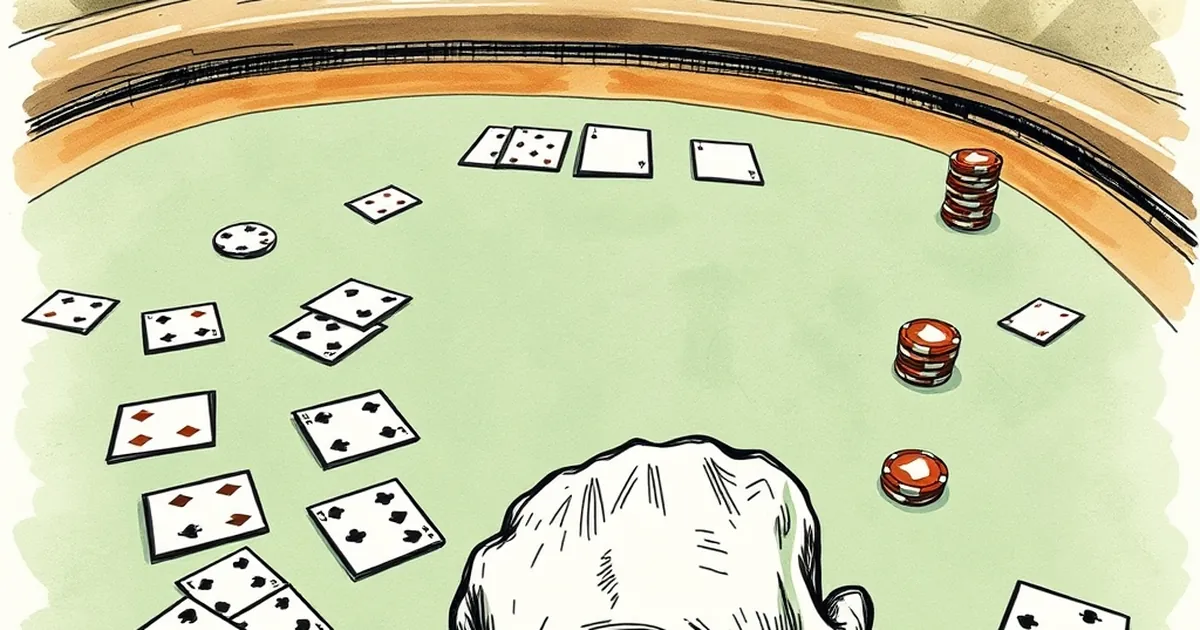
The dealer at your usual table doesn’t care that you tipped them twice last Tuesday. They care that you raised from the small blind with 9-4 offsuit three orbits ago, and they’re acting on that information right now. While you’re still mentally replaying the river card you misread, the person across the felt has already filed you under “bluffs with air when tilted” — and they’ll use it against you before you’ve even ordered your next drink.
The 30-Second Memory Loop
Here’s the uncomfortable truth: live dealers process hand histories faster than most players do. Studies of casino floor behavior suggest a seasoned dealer tracks roughly 30–40 hands per hour, but they’re not memorizing them for trivia. They’re building a behavioral pattern file on you, updated every single round.
The average recreational player remembers maybe 20% of their own hands correctly after a session. A dealer, with no emotional stake in the outcome, hits closer to 85% recall on key actions — who raised, who called, who folded to a 3-bet, and how long you took to make each decision.
Why You Forget and They Don’t
Your brain is busy processing variance, bad beats, and the text from your friend about dinner plans. The dealer’s brain is running a stripped-down algorithm: position, action, timing, repeat. They don’t care if you won or lost the hand. They care about the tendency.
That’s why a dealer might casually say, “You’ve been quiet for a while,” and you think they’re making small talk. They’re not. They’re noting that your pre-flop raise frequency just dropped to 11% over the last 45 minutes, and they’re letting the table know you’re only playing premiums.
The Tell You’re Giving Away Every Hand
The most damning data point isn’t your cards — it’s your hesitation. A dealer clocks your reaction time to the nearest second, often subconsciously. When you snap-call with top pair versus slow-call with a draw, the difference is measurable. Over a 200-hand session, that’s roughly 600–800 micro-decisions the dealer has catalogued.
Poker coach and former dealer Marcus Chen puts it bluntly: “Players think they’re hiding tells with sunglasses and hoodies. The dealer is watching your fingers hover over the chips, not your eyes.”
What This Means for Your Game
You don’t need to outsmart the dealer — they’re not your opponent. But you do need to stop treating them as furniture. Three practical shifts:
- Randomize your timing on standard decisions. A consistent 4-second pause before every raise is as readable as an instant shove.
- Acknowledge the dealer’s observation occasionally. A simple “yeah, been card dead” resets the narrative without revealing actual strategy.
- Don’t chat about your folds. Casual comments like “I never play suited connectors out of position” are gold to a dealer who’s already tracking your range.
The House Edge Nobody Talks About
Casinos don’t train dealers to help you. They train them to keep the game moving and spot collusion. But the side effect is a live database of player tendencies that sharp players exploit at your expense. The next time you’re in a 1/2 no-limit game, count how many times a dealer says “raise” before you even touch your chips — that’s them predicting your action, not reading your mind.
The Open Question
If dealers can track your patterns in real time, what happens when AI-powered table cameras start doing it for every player, every hand, with 99.7% accuracy? The live game’s last human edge — your ability to bluff a stranger — might be the first thing the machines learn to sell back to you. So ask yourself: are you playing the cards, or are you playing the person who’s already played you?
— creative mess