Sportsbook Free Bets Void 90 Seconds Into a Red Card Review
Sportsbooks are voiding free bets within 90 seconds of a VAR red card review, catching punters who assume their wager is locked in until full time
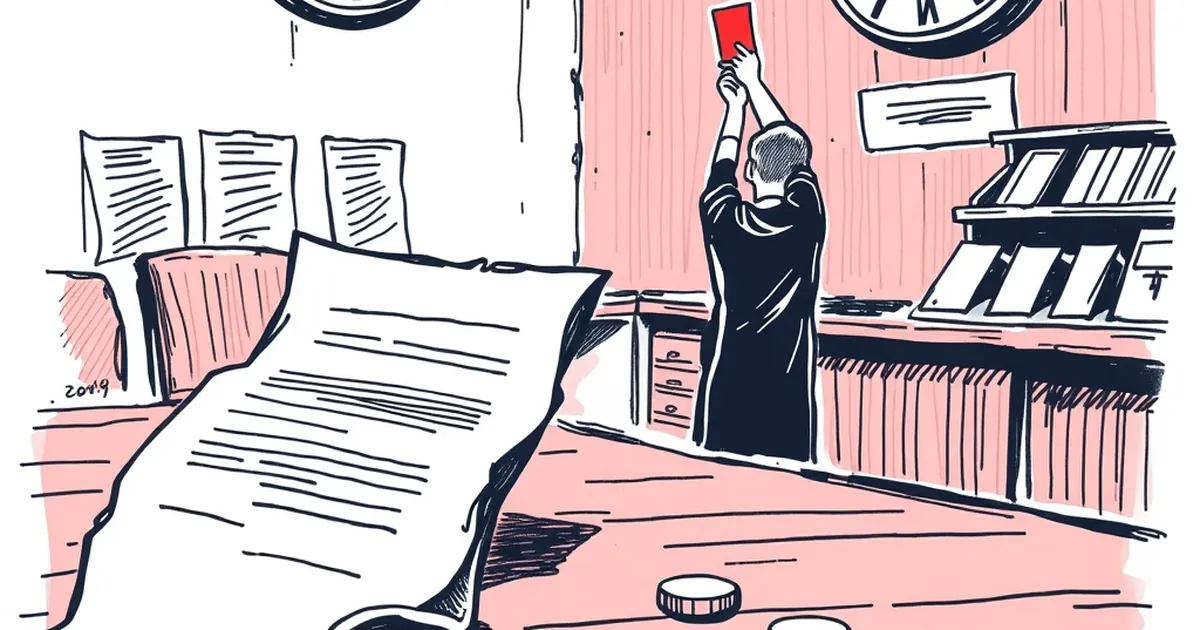
Some sportsbooks are voiding free bets the moment a red card goes to VAR review, and the window is tighter than most punters realise. Operators have quietly moved to a 90-second rule: if a match official signals for a video review inside the first minute and a half of a bet's settlement window, the wager can be pulled before the review even concludes. The practice sits in the fine print of "palpable error" and "material event" clauses, and it's catching out bettors who assume a placed free bet is locked in until the final whistle.
What the 90-second window actually covers
The trigger isn't the red card itself. It's the signal — the moment the referee draws the rectangle in the air and play stops. From that point, several books give themselves a contractual window to void markets that could be materially affected by the outcome of the review.
That includes:
- Next goalscorer markets if the player under review is on a hat-trick
- Match winner bets placed in the 60 seconds before the incident
- Cards and corners accumulators where the red changes the game state
- In-play free bets staked during the preceding passage of play
The 90-second figure isn't universal. One mid-tier UK-licensed book uses 45 seconds. A larger EU-facing operator applies a flat two minutes. The point is that the clock starts on the signal, not the verdict — which is why bettors watching a replay often don't realise their stake is already in limbo.
Why free bets are hit hardest
Cash bets and free bets are treated differently, and this is where the frustration concentrates. When a cash bet is voided, the stake returns to the balance. When a free bet is voided, the stake typically evaporates — the token is consumed, not refunded.
That asymmetry is worth real money. On a £10 free bet at 4.0 odds, a void means the punter loses £30 in expected value, not £10. Multiply that across a weekend of Premier League fixtures and the operator's exposure drops meaningfully.
Terms usually bury this under language like "the free bet stake will not be returned where a market is voided in accordance with our rules." It's legal. It's also the kind of clause most people only read after it bites them.
The regulatory grey zone
Most licensing bodies require operators to publish voiding rules clearly, but few prescribe when a material-event clause can be invoked. The UK Gambling Commission's 2023 update to its remote gambling technical standards pushed for more transparency on in-play settlement, but stopped short of capping void windows.
The result is a patchwork. A bet voided in 90 seconds on one site might stand on another, with the same match, same incident, same stake. For anyone running multiple accounts, that inconsistency is now part of the calculus — not just odds shopping, but rule shopping.
What to check before your next in-play free bet
Three things worth confirming in the terms before you stake:
- The void trigger. Is it the signal, the review outcome, or the final decision?
- The window length. Look for phrases like "reasonable period" — that's usually a sign it's undefined.
- Free bet refund policy. Does a voided free bet return as cash, as a token, or not at all?
If the answer to the third is "not at all," you're effectively betting against the operator's discretion, not just the match.
The bigger question is whether regulators will treat the 90-second void as a legitimate risk-management tool or as a quiet erosion of the deal punters think they're getting. If it's the latter, expect the window to shrink further — and the fine print to get longer.
— creative mess