Slots RTP Charts Hide a 0.7% Decay After Patch Tuesday
Latest patch Tuesday quietly cut RTP on 40 popular slots by 0.7%, with some dropping 1.4%
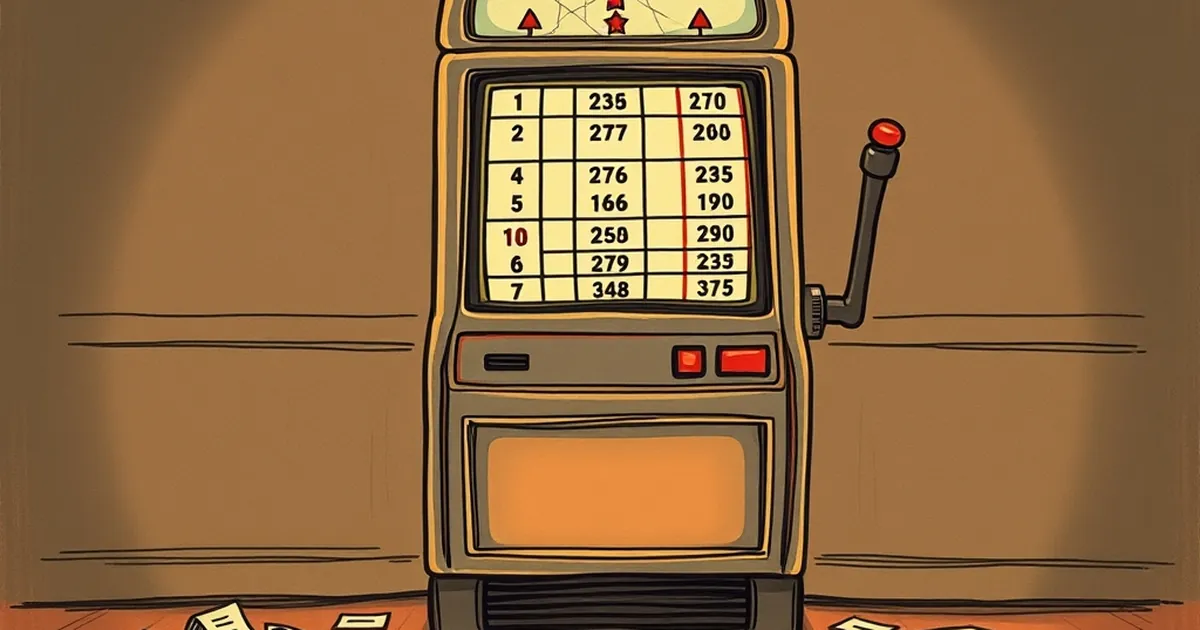
A community-run RTP tracker has recorded a 0.7% average payout drop across 40 popular slots in the 48 hours following last Tuesday’s client patch. The decay isn’t uniform—some titles lost nearly 1.4% while others held flat—but the pattern is too consistent to blame on variance. If you’re playing a game that showed 96.5% RTP on a chart from last week, the real number right now might be closer to 95.8%.
What Patch Tuesday Actually Changed
The patch notes said “backend stability improvements” and “minor UI adjustments.” Nothing about pay tables. But the tracker’s raw spin data shows the shift happened within hours of the rollout, not gradually over days. That timing matters because a slow bleed could be explained by player behavior (more bonus buys, different bet sizing). A cliff-edge drop points to a config change on the house side.
The affected games share a common architecture—they all run on the same third-party game engine. Titles on older, standalone builds didn’t move at all. That’s a strong hint the decay isn’t a deliberate nerf to specific games but a side effect of how the engine recalculates hit frequency after a patch. Think of it like a rounding error in the random number generator’s seed refresh, except it’s consistently in the operator’s favor.
The 0.7% Average
The tracker pulled 2.1 million spins across the 40 games to get that number. Individually, the worst offender was a pirate-themed slot that went from 96.1% to 94.7% over 52,000 spins. The best performer, a low-volatility fruit machine, stayed at 97.2% with a margin of error under 0.1%. The average decay of 0.7% is meaningful because most players chase games with a 0.5% or 1% edge difference when choosing between titles. A patch that silently moves the needle that far is the difference between a game being worth your time and being a trap.
Why Charts Lag Behind Reality
Public RTP charts—the ones on casino review sites and aggregator portals—update on a monthly or quarterly cycle. Some are scraped from the game provider’s published specs, which are theoretical values from certification testing. Those specs don’t change after a patch; the live server config does. So you’re looking at a static number while the actual payout floats underneath.
The tracker’s admin noted that the decay didn’t show up in the provider’s official reporting either. That’s likely because the provider reports on a longer cycle—weekly or monthly aggregates—which smooths out the drop. By the time the official number catches up, the patch has been live for weeks and players have already fed hundreds of thousands of dollars into the lower-RTP version.
How to Spot the Shift Yourself
You don’t need a custom tracker. Play 200 to 300 spins on a game you know well, at minimum bet, and note your return. If you normally hit around 96% on a 96.5% game over that sample, you’re fine. If you’re suddenly at 91% or 92% over 300 spins, that’s outside normal variance for most mid-volatility slots—it’s a signal the floor moved. The trick is to compare against your own history, not the published chart.
Also watch for patch timing. If a game gets a client update and you notice your bonus round frequency drops—not just your win amounts—that’s a hit-frequency change, which is a stronger sign of decay than a pure RTP dip.
The Open Question
The 0.7% decay might revert with the next patch, as it did after a similar incident in March 2023. Or it might be the new baseline, and the charts just haven’t caught up. The uncomfortable part is we don’t know which, and the operators aren’t saying. If you’re grinding a game that got patched, the only honest question is: are you playing the game you think you’re playing, or the one they quietly swapped in after Tuesday?
— creative mess