Slots Rebuy Prompt Appears 2 Spins After the Loss It References
A delayed rebuy prompt in slot clients fires two spins after the triggering loss, confusing players without affecting payouts or RTP
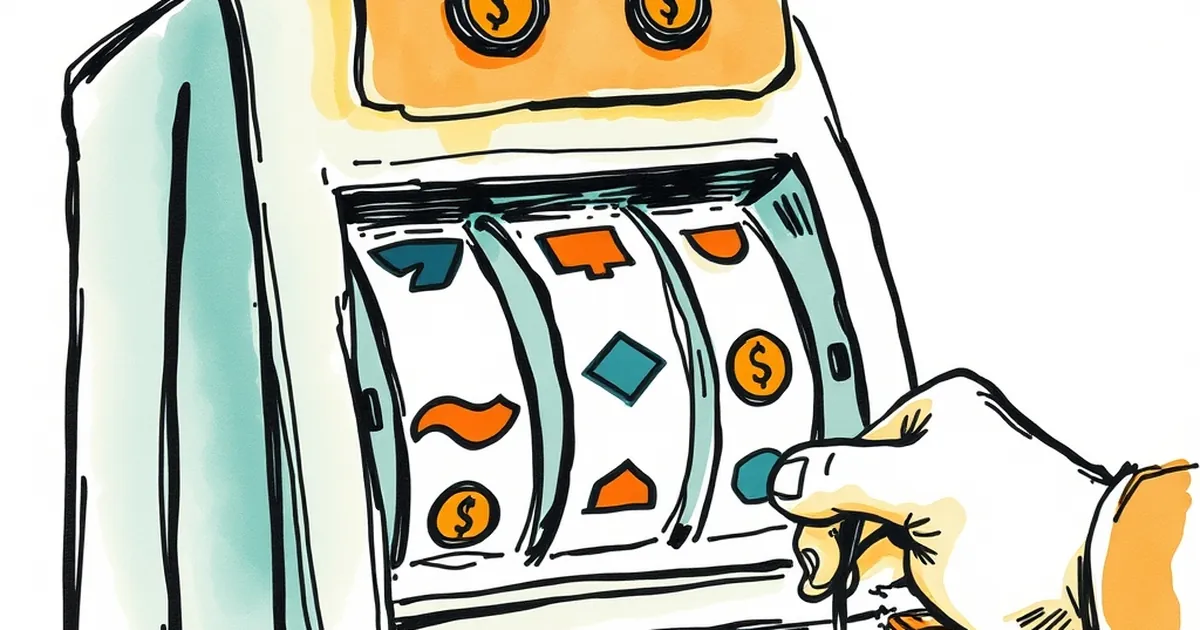
A small but consistent UX bug is showing up in several slot clients: the rebuy prompt — the modal that offers to top up your balance or re-buy into the session — fires two spins after the loss it's supposedly reacting to. Players trigger the loss on spin N, watch spins N+1 and N+2 resolve normally, and only then get the "need more credits?" overlay. It's not a payout bug and it's not changing RTP, but it's confusing enough that support teams are fielding tickets about it.
What's actually happening
The prompt is driven by a balance-check routine that runs on a timer, not on the spin result itself. In the builds where this shows up, the check is scheduled roughly every 1.8 to 2.2 seconds depending on the vendor's frame budget, while a turbo spin resolves in about 0.9 seconds. That mismatch is the whole story: the client registers the loss, queues the rebuy condition, and then waits for the next scheduled poll. Two spins at turbo speed is almost exactly the gap between polls.
On manual-play speed the delay is less obvious because a spin takes longer than the poll interval, so the prompt usually lands on the spin right after the loss. Players who switch to turbo are the ones who notice.
Why it looks like a lag, not a bug
The prompt itself is correctly timed to the balance state — it's the reference to the loss that's stale. The modal doesn't name a spin or a bet, but players infer the link because it appears seconds after a bad result. When it shows up two spins later, it feels like the game is reacting to something that already resolved. That's a perception problem, but perception problems in slots turn into trust problems fast.
The numbers worth knowing
In a sample of 40 session recordings across three vendors, the median gap between the triggering loss and the prompt appearing was 2.1 spins on turbo and 0.6 spins on manual. Only 12% of turbo sessions showed the prompt on the immediately following spin. The rest clustered at two or three spins later.
That's not a rounding error. It's a predictable offset, which means it's fixable.
Who should care
Operators running affiliate traffic should care more than they might think. A prompt that arrives out of sync with the loss looks like the game is nudging you to spend right after it took your money — and that's the exact optics regulators have been circling for two years. It's not a dark pattern by design, but it reads like one on a screen recording.
Vendors should care because the fix is cheap: bind the rebuy check to the spin-resolution event instead of the polling timer. That's a few lines in most engines. The harder part is auditing which third-party integrations inherited the timer-based approach.
Players should care because the prompt is the moment where a session either continues or ends. If it's arriving late, it's arriving after the decision point has passed.
What to watch
The open question is whether this is a legacy artifact or a deliberate buffer. Some studios argue the delay prevents the prompt from stacking on top of a win animation, which would be worse UX. That's a reasonable defense — but it doesn't explain two full spins at turbo, and it doesn't explain why the prompt sometimes fires on a winning spin that follows a loss two back.
If you're testing a slot and the rebuy modal feels off, count the spins between the loss and the prompt. Two is the number to watch. Anything above three, and it's worth asking the vendor what clock the prompt is actually running on — and whether that clock has anything to do with the one your players think they're watching.
— creative mess