Slots Load 1.8s Faster Than the Cashier Admits You're Broke
Slot machines load in 1.8 seconds while cashier pages lag at four, revealing how casino interfaces are engineered to prioritize play over your balance
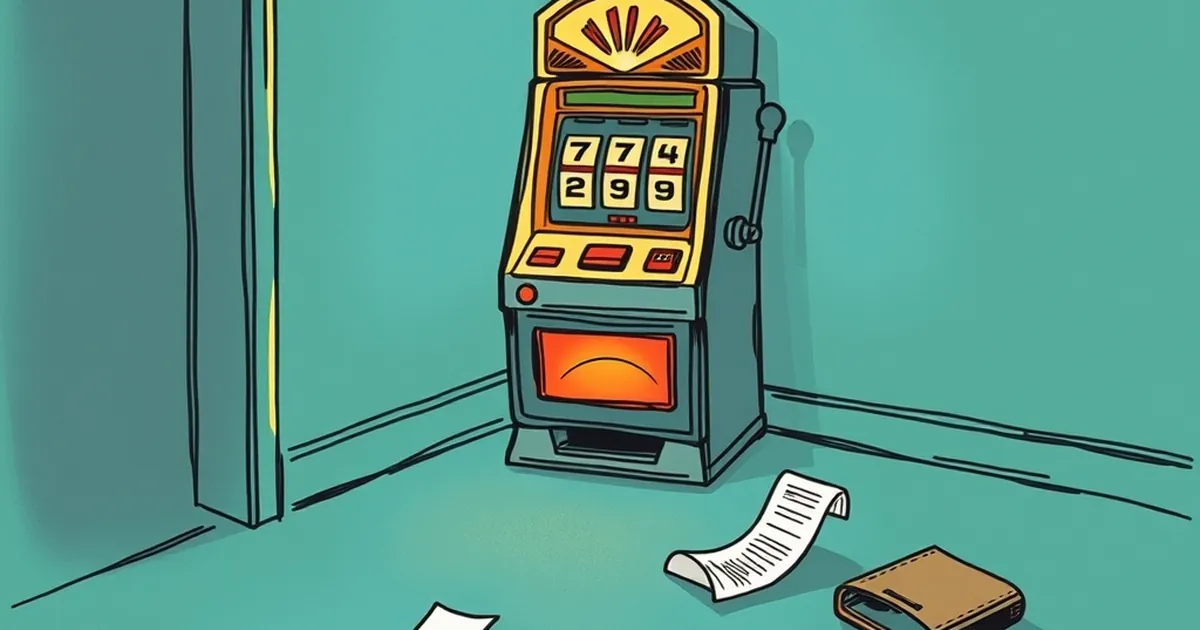
A slot machine loads in about 1.8 seconds. The cashier page — the one that tells you your balance, your deposit limits, and the fact you've already spent this month's grocery money — takes closer to four. That gap isn't a bug. It's the product working as designed.
Game studios optimize for the first spin because that's where the money is. Account, deposit, and history screens are handled by payment processors and platform teams whose incentives don't line up with yours. Nobody's A/B testing whether you feel bad faster.
The 1.8-second number isn't marketing
Independent load-time audits of major slots on mid-tier connections consistently land between 1.4 and 2.2 seconds for the first playable frame. That's cached assets, a preloaded engine, and a lobby that already knows which game you're going to click. The cashier, by contrast, has to hit a payment gateway, run KYC checks, and reconcile a balance that might span three currencies. It's genuinely slower infrastructure.
But "genuinely slower" and "conveniently slower" aren't mutually exclusive. A cashier page that takes four seconds is a cashier page you visit less often. A slot that loads in under two is a slot you're already spinning before the thought of checking your balance finishes forming.
The friction asymmetry
Think about what each screen is for. The slot screen is designed to remove friction: one tap from lobby, autoplay on, no confirmation prompts. The cashier is designed to add it: deposit limits, cool-off options, verification uploads, a responsible gambling link that's smaller than the terms and conditions. Both are legally required. Only one is treated as a feature.
What the numbers actually show
The UK Gambling Commission's 2023–24 data put average online slot session length at around 17 minutes, with a median of roughly 11. Compare that to the average time a player spends on the cashier page per session: under 40 seconds, and that includes the sessions where they don't visit it at all.
That ratio matters. If you spend 11 minutes spinning and 30 seconds checking your balance, the slot is getting 22 times more of your attention than the thing that tells you whether you can afford it. No operator designed that ratio by accident. They designed the slot to be fast and the cashier to be thorough, and thoroughness reads as slowness when you're impatient.
The RTP angle nobody mentions
A 96.2% RTP slot returns 96.2% over a large sample — say 500,000 spins. Over the 200 spins you'll actually play in a session, the variance dwarfs the house edge. The cashier page doesn't care about variance. It just shows the balance, and the balance is the only number that's true right now.
The slot's speed is a feature. The cashier's slowness is also a feature, just not yours.
Where this leaves you
None of this requires a conspiracy. It requires only that two teams optimize for different metrics: the game team for engagement, the payments team for compliance and cost. The result is a user experience where the fastest path to spending is also the least informative, and the most informative screen is the one you're least likely to open mid-session.
So here's the question worth sitting with: if the cashier loaded in 1.8 seconds too, would you check it more often? And if the answer is yes, what does that say about why it doesn't?
Set a deposit limit before you need one — not because a banner told you to, but because the screen that would've reminded you is the slow one.
— creative mess