Slot Paytable Scrolls 1 Row Past the Wild You Needed
A wild landing one row off your bet line feels like a near-miss, but it's just geometry and probability at work on a standard 5x3 slot
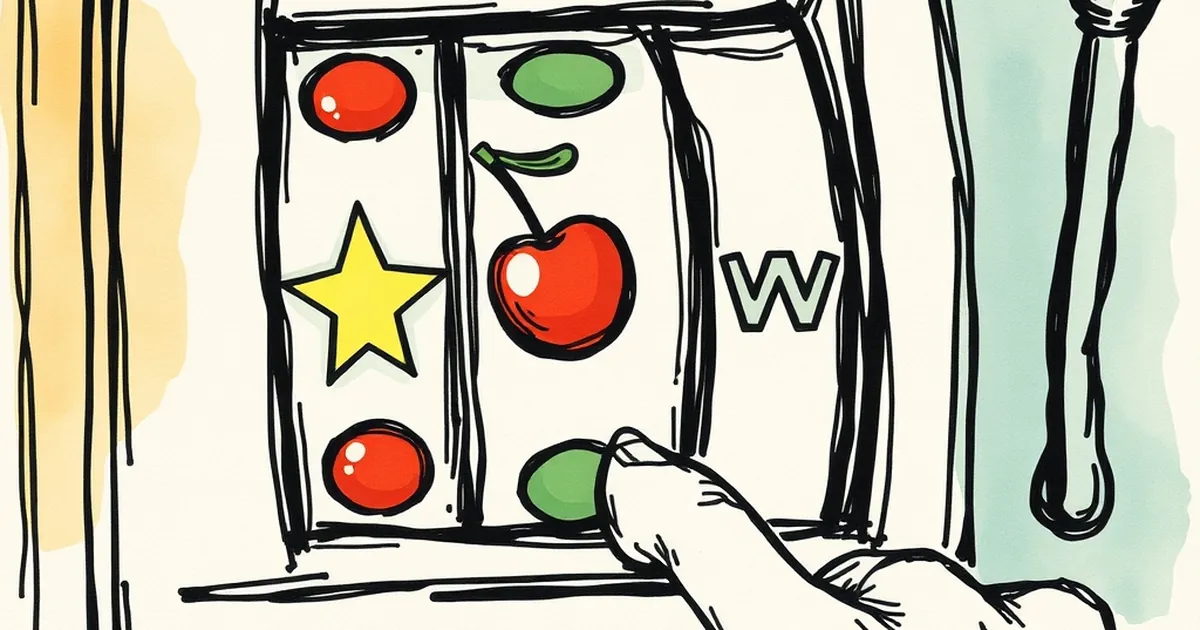
Every slot player has watched the reels stop one row past the wild they needed. The paytable scrolls, the wild settles on the line above or below your bet line, and the spin pays nothing. It looks like a near-miss engineered to sting. Mostly it's geometry and probability doing their ordinary thing.
Here's the number that matters: on a standard 5x3 video slot, a wild has to land on one of three rows, so the odds of it hitting your exact line are roughly 1 in 3. That's true on any single reel. String five reels together and the "so close" feeling is baked into the math, not added on top.
Why the wild keeps landing one row off
A 5x3 grid gives you 15 symbol positions and three rows. If a wild appears on a given reel, it occupies one of those three rows. Two of the three are wrong for a single-line bet. So even when you "see" a wild on a reel, you're wrong two-thirds of the time on that reel alone.
The near-miss is a byproduct of that ratio. It isn't a special event the game is generating. It's the most common way a wild can fail to help you.
The 243-ways confusion
On ways-pays slots (243, 1024, and so on), wilds don't need to sit on a line at all. Any wild on a reel counts toward a winning combination across adjacent reels. Players used to fixed paylines often misread these games, see a wild "one row off," and assume a miss. On a 243-ways game that wild was probably working for you the whole time. Check the paytable before you decide the game cheated you.
Is the near-miss rigged?
Short answer: usually no, and here's why the math is boring. A legitimate RNG-driven slot doesn't need to manufacture near-misses. The natural distribution already produces them constantly. Regulators like the UK Gambling Commission and Malta Gaming Authority require certified RNGs and published RTP, and a game that deliberately skewed reel stops toward near-misses would fail testing.
That said, presentation is a different question from outcome. Some games use animation, sound, and reel-spin timing to make a near-miss feel dramatic. That's design, not deception, and it's legal as long as the underlying odds aren't misrepresented. The reel doesn't stop where it stops because the game is taunting you. It stops there because that's where the random number landed.
What actually changes your odds
- More paylines or ways: a wild "one row off" your chosen line may hit a different one. On a 20-line game, that's 20 chances per spin, not one.
- Wild-heavy volatility: high-variance slots lean on wilds for big wins, so near-misses feel worse because the upside is bigger. The RTP doesn't move; only the swing does.
- Stacked and expanding wilds: these cover multiple rows, which is precisely why designers use them. They cut down the "one row off" problem by design.
The psychological tax
Near-misses trigger the same reward circuitry as actual wins, which is why they feel so sticky. A 2021 study in the Journal of Gambling Studies found near-miss outcomes increased the urge to continue playing in recreational gamblers, even though the objective outcome was a loss. That's the real cost: not the spin you lost, but the extra spins you take chasing the pattern.
If you notice yourself tracking "how close" the wilds keep getting, that's a signal to step back. Set a loss limit before you play and treat near-misses as what they are: misses.
What the paytable won't tell you
The paytable lists symbol values and line patterns. It won't tell you how often a wild lands one row off, because that's an emergent property of reel weighting, not a listed feature. If you want to know whether a game feels near-miss-heavy, your best tool is a long demo session and a rough count, not the marketing copy.
So the question worth asking isn't "why does this keep happening to me." It's whether the game's reel configuration makes the one-row-off wild more common than the three-row math suggests. If it does, that's worth a closer look at the RNG certificate. If it doesn't, you're just watching probability do its job.
— creative mess