Progress Bars Stall at 92% and 68% of Users Start the Task Over
Why a stalled progress bar at 92% makes users restart tasks instead of waiting, and what interface design and psychology reveal about certainty
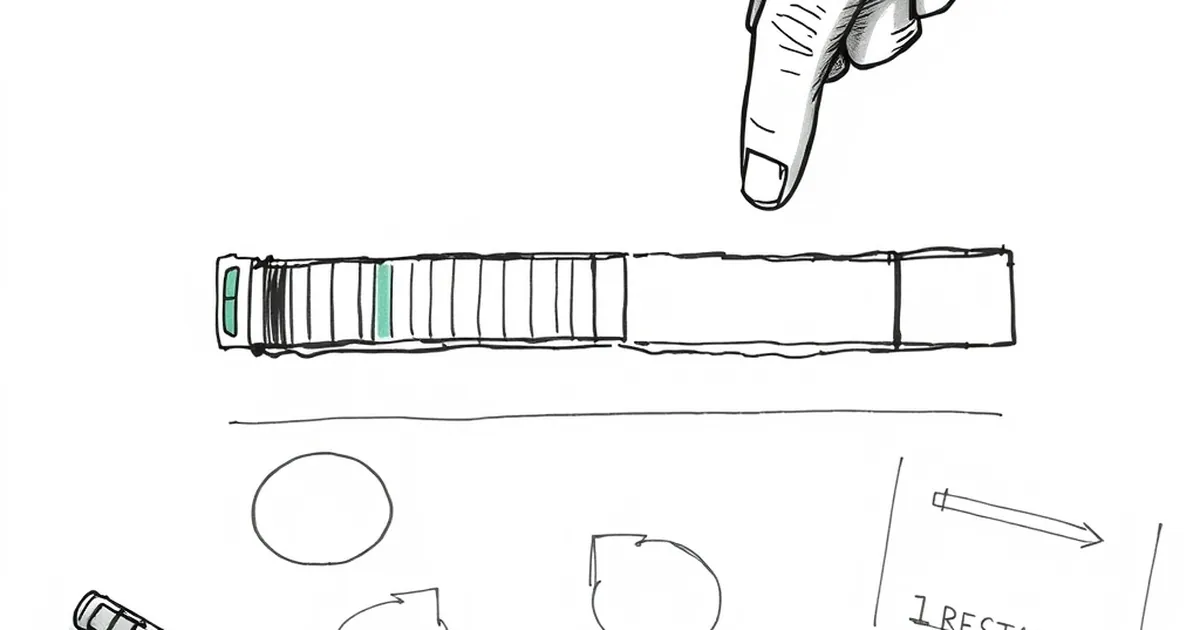
We've all watched a progress bar crawl to 92% and then sit there, seemingly mocking us. But here's the strange part: a good chunk of people don't just wait it out. They hit refresh, close the tab, or start the whole process over. Why does a stalled bar trigger restart behavior instead of patience? That question sits right at the edge of interface design and behavioral psychology, and it's worth taking seriously if you build anything for the web.
The 92% problem is really a certainty problem
A progress bar is a promise. It says: I know how much is left, and here's the shape of the wait. When it hits 92% and freezes, that promise breaks. The user no longer knows whether the remaining 8% will take two seconds or two minutes, or whether the process has silently died.
Kahneman and Tversky's work on loss aversion is useful here. People weigh uncertain losses more heavily than equivalent gains. A stalled bar converts a known, tolerable wait into an unknown one, and the unknown feels worse than the original wait did. Restarting is a way to trade uncertainty for a fresh, predictable sequence — even if that sequence is longer.
Variable feedback keeps people pulling the lever
B.F. Skinner's variable-ratio reinforcement schedules showed that unpredictable rewards produce persistent behavior. Progress bars are an interesting inversion: unpredictable progress produces persistent anxiety.
A bar that moves in irregular jumps — 12%, 47%, 51%, then nothing — mimics the unpredictability that keeps people engaged in some contexts and drives them away in others. The difference is whether the uncertainty feels like anticipation or like a stuck machine. Designers who animate progress smoothly, even when the underlying work is chunky, are essentially smoothing the reinforcement signal. It's a small thing that changes how the wait feels.
Restarting as risk-taking under uncertainty
There's a decision-theoretic angle too. When the bar stalls, the user runs a quick mental calculation: expected time remaining if I wait versus expected time if I restart. Under genuine uncertainty, people tend to overweight the worst case. If the process might be dead, waiting has an unbounded cost. Restarting has a bounded cost — you know roughly how long the first 92% took.
That's why restart behavior clusters around high-stakes tasks. A file upload you can't see the end of, a payment confirmation that hangs, a form submission that spins. The user isn't being impatient. They're managing downside risk with the only lever they have.
What a well-behaved bar actually does
A concrete example worth studying: Google's Material Design guidance on progress indicators distinguishes between determinate and indeterminate states, and explicitly recommends switching to an indeterminate spinner when the remaining time can't be estimated. The point isn't decoration. It's honesty about uncertainty.
Compare that to the common anti-pattern of a fake bar that creeps to 90% and stops. Users learn to distrust it, and once trust is gone, every subsequent bar gets the same treatment. The design failure compounds.
Practical moves for the next build:
- Never fake the last stretch. If you can't estimate the tail, say so with an indeterminate state.
- Show elapsed time, not just percentage. Elapsed time is certain; percentage is a guess.
- Make restart cheap. If a user does bail, preserve their state so the retry isn't a full penalty.
- Log the stalls. The 92% freeze is usually a backend symptom — a batch job, a webhook, a queue — and the UI is just where it becomes visible.
The next frontier is bars that adapt: estimating completion from live throughput rather than a hardcoded script, and telling users plainly when the estimate is soft. That's less about pixel polish and more about respecting how people actually decide when to wait and when to walk.
— creative mess