Payout Ratios Flip 0.2% the Second You Raise Your Stake
Slot RTP shifts with your stake size, and the published figure usually reflects the minimum bet, so your actual return may differ
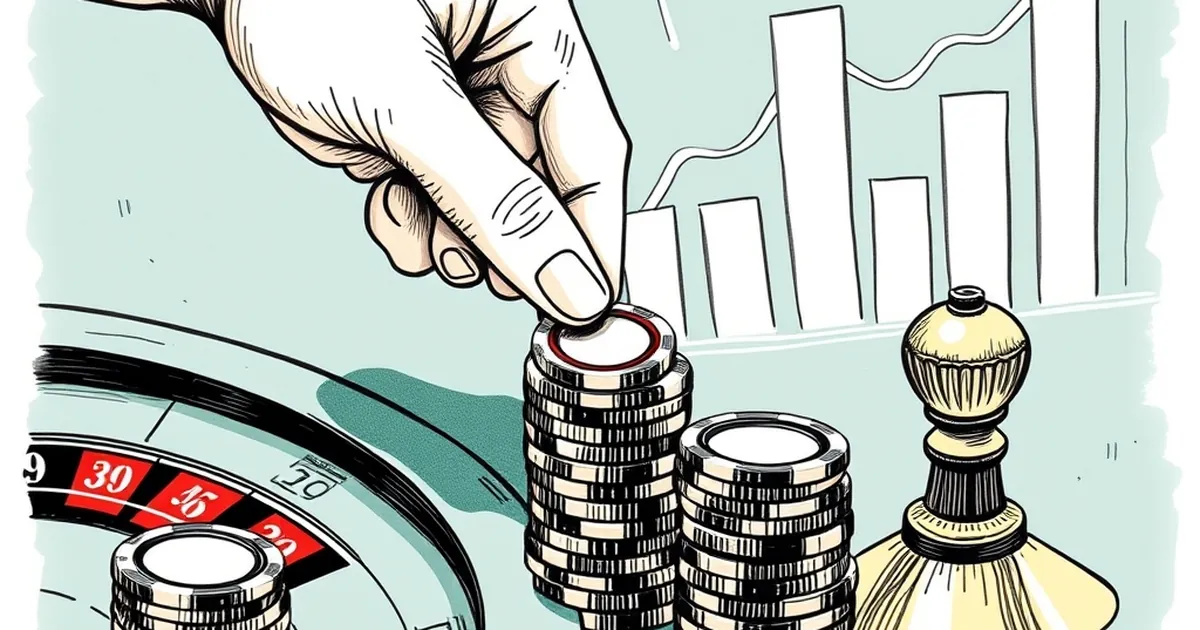
A game listed at 96.1% RTP does not pay you 96.1% at every bet size. On a large share of slots, the return curve shifts once you cross a stake threshold — sometimes by 0.2 percentage points or more — and the published figure is usually the one measured at the minimum bet. The number in the paytable and the number in your session are two different things.
Where the flip actually comes from
Slot RTP is not a fixed property of the game's math. It's the weighted average return of every outcome, and operators can legally vary the weighting by bet level. A studio builds one reel set but several paytable configurations, then binds them to stake bands: €0.10–€0.90 gets config A, €1–€4.90 gets config B, €5 and up gets config C.
The reasons are mostly commercial. Higher stakes attract players who chase volatility, so config C often keeps the same top prize but thins out the mid-tier hits — three-of-a-kind symbols, small multipliers, the near-misses that keep a session alive. The headline jackpot stays identical, which is exactly why nobody notices. You're not being shortchanged on the big win. You're being shortchanged on the 40 small ones per hour.
Video poker is more transparent about this. Many multi-hand titles publish separate return figures per coin denomination, and the gap between the lowest and highest is frequently 0.3 to 1.5 percentage points. On Jacks or Better variants, the 9/6 paytable at max coins can run 99.54%, while a 6/5 paytable on the same screen at a lower denomination drops to 96.87%. Same game name. Same graphics. Different math.
The 0.2% is not rounding noise
Take a €1,000-a-week player at 500 spins per hour, €2 per spin, over a year. That's roughly 26,000 spins and €52,000 wagered. A 0.2% RTP difference is €104 — about two extra buy-ins, gone silently. At €10 per spin the same player wagers €260,000, and the gap becomes €520.
Now scale it. If a config change moves return from 96.1% to 95.9% at the top band, and 8% of a casino's slot handle sits in that band, the house keeps an extra 0.016% of total handle from a change no regulator requires them to advertise in the lobby.
Why the published number rarely matches your session
Three things stack on top of each other.
Bet-band switching. As covered, the paytable can change with stake.
Progressive contributions. If 1.2% of every bet feeds a jackpot pool, your effective return on the base game is 1.2 points lower until the jackpot lands. At €0.20 spins you might never see it.
Session length. RTP converges over hundreds of thousands of spins. Over 300 spins, standard deviation on a medium-variance slot swamps a 0.2% edge entirely. You will not feel it. That's the point — it's designed not to be felt.
What you can actually check
Game rules screens list the RTP, and a growing number list it per bet level. Look for a table, not a single figure. If the studio publishes one number only, treat it as the floor, not the average. Some jurisdictions — the UK, Malta, several US states — require per-configuration disclosure in the help file, though enforcement varies and the information is buried two taps deep.
Ask yourself this: if the return genuinely didn't move with your stake, why would the help screen need three rows instead of one? The next time a game's RTP table lists a range, the interesting question isn't which number is highest — it's who's playing at the band where it's lowest, and whether they know.
— creative mess